Brooklyn Nets Logo History: Meaning, Symbolism & Brand Heritage
The story of the Brooklyn Nets is one of constant reinvention. Few franchises in professional basketball have changed locations, identities, and visual languages as often as the Nets. From their early ABA days to their modern Brooklyn rebirth, the team’s logo history reads like a timeline of American sports branding itself.
Unlike franchises that built their myth on uninterrupted success, the Nets built theirs on transformation. Their visual identity reflects every chapter of that journey, from patriotic symbolism and regional pride to stark minimalism inspired by urban culture. Within the broader context of NBA logo history, the Nets stand as one of the clearest examples of how branding can redefine perception.
Meaning and History: From Nomads to Brooklyn Identity
Founded in 1967, the franchise began life as the New Jersey Americans in the ABA. Over the decades, the team relocated repeatedly, becoming the New York Nets, then the New Jersey Nets, before finally settling in Brooklyn in 2012. Each move brought not just a new address, but a new sense of purpose and visual direction.
For years, the Nets struggled with a fragmented identity. Even during competitive periods, such as the Jason Kidd–led Finals runs in the early 2000s, the brand lacked a strong cultural anchor. The move to Brooklyn changed that. It was not simply a relocation; it was a full reset.
The logo meaning shifted dramatically at that point. Instead of trying to balance state pride, national imagery, or traditional sports aesthetics, the Nets embraced Brooklyn’s raw, minimalist, street-driven identity. The result was one of the boldest branding pivots in modern NBA history.
Brooklyn Nets Logo History Timeline
1967 – 1968: New Jersey Americans
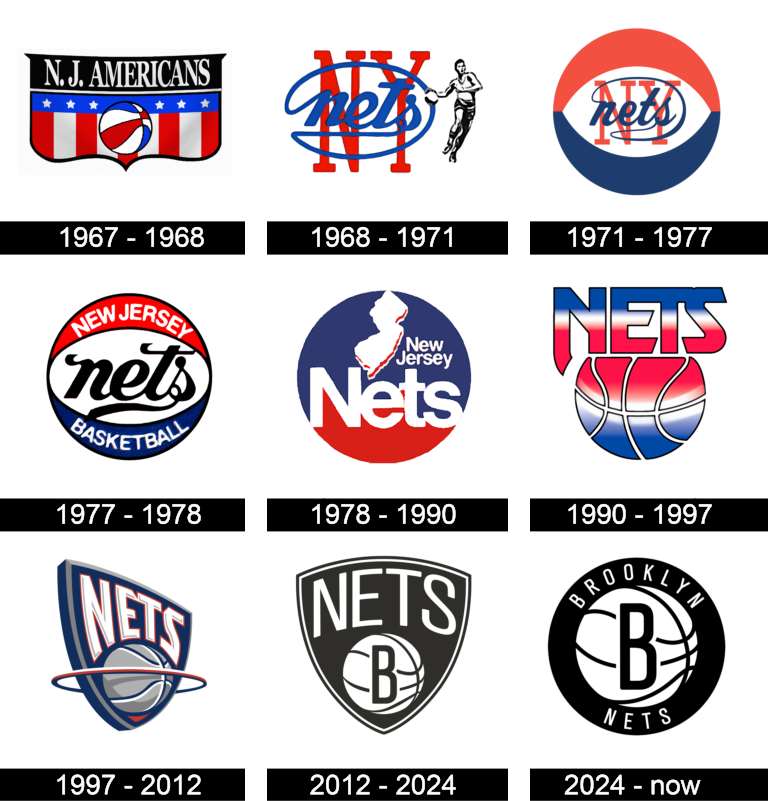
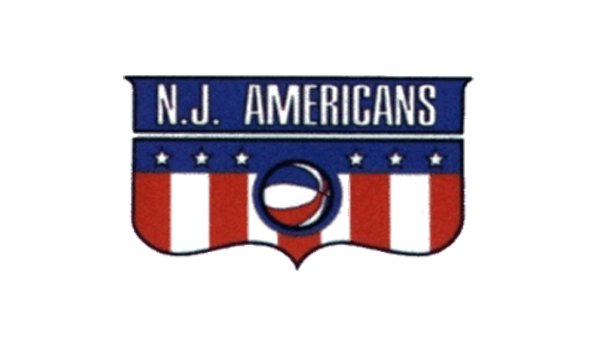
The franchise’s first logo appeared in 1967 and featured a shield inspired by the United States flag. Red, white, and blue dominated the design, with a basketball placed centrally. The team name appeared at the top in white lettering. This emblem reflected ABA-era patriotism and traditional sports symbolism.
1968 – 1971: New York Nets
Following the move to Long Island, the logo was redesigned entirely. The shield disappeared, replaced by a clean wordmark in red and blue on a white background. A black silhouette of a basketball player appeared alongside the text, reinforcing the sport-specific identity.
1971 – 1977: ABA Basketball Era
In 1971, the logo adopted the look of the ABA game ball itself, using red, white, and blue striping. The basketball player silhouette was removed, leaving a simpler, more cohesive emblem that aligned with league aesthetics.
1977 – 1978: Move to New Jersey
When the franchise returned to New Jersey, the logo reflected the change with updated lettering. “NJ” replaced “NY,” while the color palette intensified. White sans-serif lettering framed the emblem, emphasizing clarity and transition.
1978 – 1990: State Silhouette Identity
The late 1970s introduced a radical departure. The logo abandoned basketball imagery altogether, featuring a white silhouette of New Jersey against a solid background. This was a period where regional identity outweighed sport symbolism.
1990 – 1997: Nets in Focus
In 1990, the logo was simplified to the word “NETS,” rendered in a three-dimensional gradient of red, white, and blue. A basketball sat beneath the lettering, referencing the franchise’s ABA heritage while adopting a more modern aesthetic.
1997 – 2012: Shield and Net Motif
The shield returned in 1997, now integrated into a basketball net design with a ball dropping through it. Darker tones of blue, gray, and silver gave the logo a more serious, corporate feel, aligning with late-1990s NBA branding trends.
2012 – 2024: The Brooklyn Revolution
The move to Brooklyn marked the most significant visual transformation in franchise history. Designed with direct involvement from Jay-Z, the new logo embraced stark black-and-white minimalism inspired by New York City subway signage.
The shield shape remained, but the imagery was stripped down to essentials. A basketball with a bold “B” at its center became the focal point, accompanied by the word “Brooklyn.” A secondary circular emblem reinforced the new identity. This redesign positioned the Nets as a cultural brand, not just a sports team.
2024 – Today: Pure Minimalism
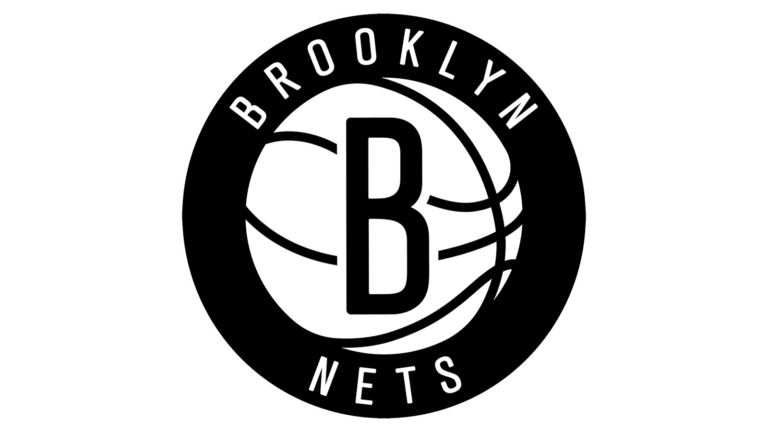
The latest redesign refined the Brooklyn concept even further. The logo now features a minimalist basketball icon within a circular medallion, framed by a thick black ring. Narrow white lettering completes the composition. The result is restrained, confident, and unmistakably modern.
Logo Symbolism: Urban Identity Over Tradition
The Brooklyn Nets logo symbolism is rooted in place rather than legacy. Black and white represent clarity, strength, and timelessness, while rejecting the colorful excess often associated with sports branding.
The basketball remains present, but abstracted. The emphasis is not on aggression or motion, but on identity. The logo communicates seriousness, discipline, and cultural awareness, aligning with Brooklyn’s reputation for authenticity and edge.
Typography and Color Palette
Typography plays a central role in the Nets’ modern identity. The custom sans-serif lettering is narrow, geometric, and utilitarian, echoing industrial signage and public transit typography. It feels deliberate and urban.
The monochrome palette is a defining feature. For the first time in franchise history, red was eliminated entirely. Black and white create maximum contrast and flexibility, allowing the logo to function seamlessly across uniforms, merchandise, and digital platforms.
Brooklyn Nets Logo Heritage and Cultural Impact
The Brooklyn Nets logo heritage demonstrates how branding can reshape a franchise’s narrative. The move to Brooklyn did not immediately produce championships, but it created something arguably more valuable: relevance.
Within the broader scope of sports logo heritage, the Nets represent a modern approach where identity, culture, and design converge. The logo does not lean on nostalgia. It looks forward, signaling intent rather than memory.
As the franchise continues to build toward long-term success, the visual identity stands as one of the most distinctive in the NBA, proving that reinvention, when done with purpose, can be powerful.
FAQ: Brooklyn Nets Logo Meaning and History
Why did the Brooklyn Nets switch to black and white?
The monochrome palette reflects Brooklyn’s urban identity and modern design sensibility.
Who designed the Brooklyn Nets logo?
The 2012 logo was developed with input from Jay-Z and the team’s ownership group.
When did the Nets move to Brooklyn?
The franchise relocated to Brooklyn in 2012.
Has the Nets logo changed often?
Yes. The Nets have one of the most frequently redesigned logos in NBA history, reflecting multiple relocations and rebrands.