Boston Celtics Logo History: Meaning, Symbolism & Brand Heritage
Few franchises in professional sports embody legacy as completely as the Boston Celtics. Founded in 1946 as one of the original members of the NBA, the Celtics did not simply accumulate championships—they defined what sustained success looks like. Their identity is inseparable from tradition, discipline, and an unmistakable sense of cultural heritage rooted deeply in Boston’s Irish-American history.
Within the broader context of NBA logo history, the Celtics stand apart. While many teams have repeatedly reinvented their visual identities, Boston built one of the most enduring and symbolically rich logos in sports. Much like the permanence of the Chicago Bulls logo heritage, the Celtics emblem has evolved carefully, never losing sight of its original meaning.
Meaning and History: The Roots of the Celtics Identity
The Boston Celtics were named deliberately. Team founder Walter A. Brown chose the name as a tribute to Boston’s strong Irish community and to honor the Original Celtics, a dominant basketball team of the early 20th century. From the beginning, Irish symbolism was not decoration—it was identity.
This cultural foundation shaped the logo meaning. The shamrock, the leprechaun, and the signature green color all point to luck, wit, resilience, and tradition. Unlike aggressive animal mascots common in sports branding, the Celtics chose cleverness and confidence over intimidation. Their logo communicates mastery rather than menace.
As the team went on to become the most successful franchise in NBA history, winning championship after championship, the visual identity matured alongside the organization. The logo became not just a badge, but a seal of excellence.
Boston Celtics Logo History Timeline
1946 – 1950: The Shamrock Beginning
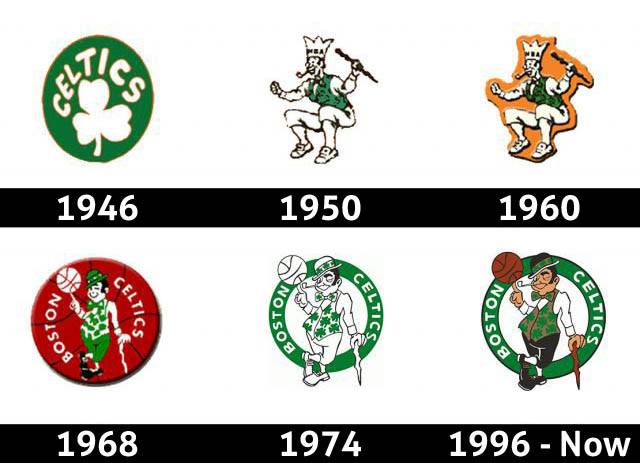
The first Celtics logo was simple and symbolic. A green circular badge featured a white shamrock at its center, with an arched “Celtics” wordmark above it. The design leaned heavily on Irish symbolism and set the foundation for everything that followed. Though short-lived, it established green as the franchise’s defining color.
1950 – 1960: Birth of the Leprechaun
In 1950, the Celtics introduced the leprechaun character that would become their visual cornerstone. Designed by Zang Auerbach, the figure wore a crown hat with “NBA” lettering, held a pipe, and leaned on a cane. Rendered in white and green, the leprechaun embodied confidence, humor, and tradition.
1960 – 1968: Contrast and Experimentation
During the 1960s, the leprechaun was placed on an orange background to increase visibility. Though visually striking, this version was transitional, reflecting a period of experimentation rather than a final identity.
1968 – 1974: Basketball Integration
In 1968, the logo took a major step toward its modern form. The leprechaun stood upright, spinning a basketball on his finger and leaning casually on his cane. The figure was placed against a red basketball background, with “Boston Celtics” lettering wrapping around the perimeter. The imagery suggested effortless dominance, a visual metaphor for the team’s on-court success.
1974 – 1996: The Definitive Emblem
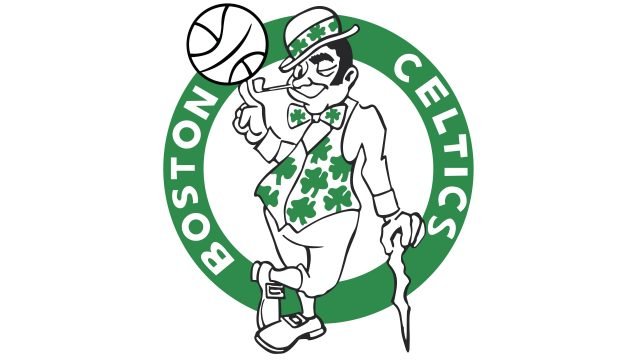
The 1974 redesign introduced the logo that would become iconic. The leprechaun was refined with sharper lines and greater detail, his sly smile reinforcing a sense of intelligence and control. The basketball extended beyond the green circular frame, adding depth and movement.
The color palette of green, white, and black conveyed growth, loyalty, stability, and professionalism. Typography was bold, clean, and authoritative, matching the franchise’s stature during its championship-heavy decades.
1996 – Today: Color Realism and Continuity
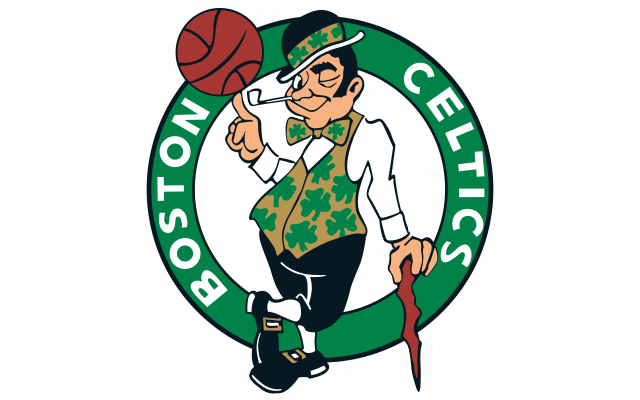
The 1996 update preserved the core design while enhancing realism. Skin tones were added, the green deepened into mossy shades, and brown accents appeared on the ball and cane. Black trousers and shoes grounded the figure visually.
Importantly, the structure, composition, and symbolism remained unchanged. This version is still in use today, accompanied by secondary shamrock emblems introduced in 1998, reinforcing brand flexibility without diluting identity.
Logo Symbolism: Intelligence Over Intimidation
The Celtics logo is unique in professional sports. Rather than projecting brute force, it celebrates cleverness and confidence. The leprechaun, known as Lucky, is not aggressive. He is relaxed, smiling, and in control. Spinning the basketball effortlessly, he represents mastery rather than struggle.
The pipe and cane reinforce tradition and patience, while the shamrock symbolizes luck and heritage. Together, these elements create a layered symbol that feels cultural rather than corporate.
Typography and Color Palette
The Celtics wordmark is set in uppercase lettering with strong, balanced proportions. The typeface feels sturdy and timeless, reinforcing authority without unnecessary flair. While hand-drawn in origin, it aligns closely with classic sans-serif forms.
Green dominates the palette, symbolizing growth, loyalty, and continuity. Gold and brown add warmth and depth, while black provides contrast and structure. The result is one of the most recognizable color systems in global sports branding.
Boston Celtics Logo Heritage and Legacy
The Boston Celtics logo heritage demonstrates how symbolism, culture, and success can align perfectly. The logo never chased trends because it never needed to. It matured naturally, reflecting the team’s sustained excellence and unwavering identity.
In the larger conversation around sports logo heritage, the Celtics stand as proof that strong cultural roots can outlast any design trend. Their emblem is not just a logo—it is a visual history of winning.
FAQ: Boston Celtics Logo Meaning and History
Why is the Boston Celtics logo Irish-themed?
Because the team was named to honor Boston’s Irish community and the Original Celtics basketball team.
Who is the character on the Celtics logo?
The character is a leprechaun known as Lucky, the official mascot of the team.
When was the current Celtics logo introduced?
The current version was introduced in 1996.
Has the Celtics logo changed significantly over time?
No. While details and colors evolved, the core design has remained consistent since the 1970s.