Best Western Logo History: Meaning, Symbolism & Brand Heritage

Best Western is one of the most recognizable names in global hospitality, a brand that evolved from a loose association of American roadside motels into a structured international hotel group with thousands of properties worldwide. Its visual identity has followed this transformation closely, reflecting each stage of growth, repositioning, and strategic refinement. The Best Western logo history reveals a gradual shift from descriptive signage to a modern corporate mark, mirroring the brand’s transition from regional lodging network to global hotel operator. Within the broader context of hotel logo history, Best Western occupies a unique position, bridging traditional American motel heritage and contemporary hospitality branding, a trajectory comparable to developments seen in the Holiday Inn logo history and the value-driven evolution present in the Hampton logo heritage.
The Best Western logo meaning is rooted in reassurance. Across decades, the brand’s visual language has consistently emphasized trust, recognition, and standardized comfort, adapting stylistically while preserving its core promise.
Meaning and History: The Origin of the Best Western Identity
Best Western was established in 1946 in the United States as an informal association of independent motels operating under shared quality standards. The idea was simple yet innovative for its time: provide travelers with reliable accommodations along expanding highway networks while allowing property owners to retain operational independence.
As automobile travel increased across North America, Best Western expanded rapidly, first solidifying its presence in the United States and Canada before entering international markets. Over time, the company moved away from its original motel-focused identity, repositioning itself as a full-scale hotel brand with properties spanning multiple service categories.
This operational evolution required a visual identity capable of maintaining familiarity while signaling progress. The logo origin reflects this balance, beginning as descriptive signage and gradually evolving into a cohesive brand system.
Logo Symbolism: Trust, Recognition, and Institutional Authority
The Best Western logo symbolism has consistently relied on traditional visual cues associated with hospitality and authority. Early crowns symbolized assurance and elevated standards, while later geometric forms communicated structure and modernity. Throughout its history, the brand avoided abstract symbolism, favoring clear identifiers that could be easily recognized from a distance.
Color played a central role in this symbolism. Yellow conveyed warmth and visibility, particularly effective for roadside signage, while blue introduced a sense of calm, professionalism, and reliability as the brand matured into a global hotel group.
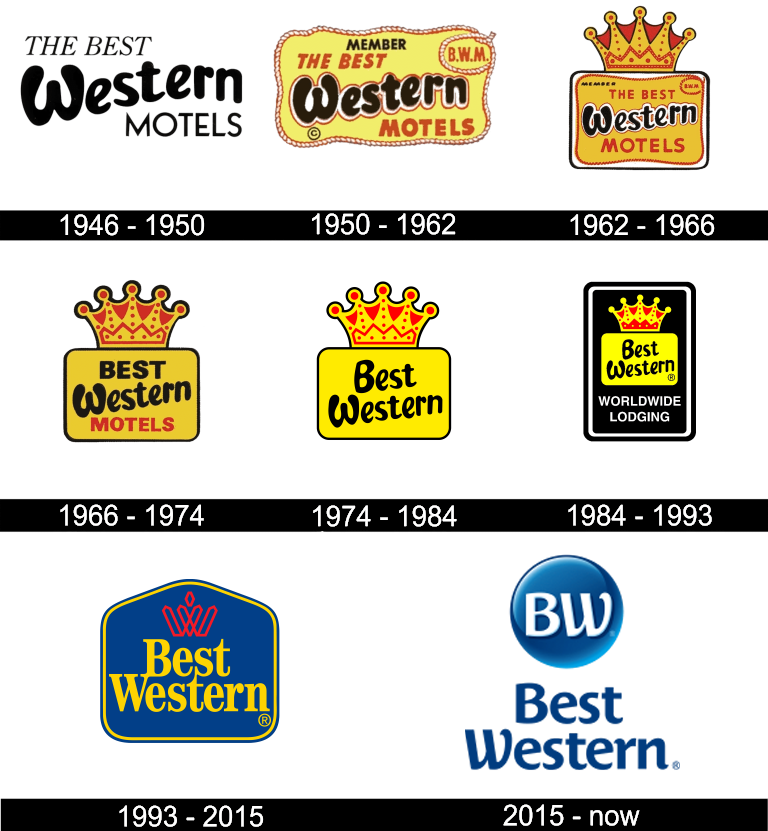
Best Western Logo History Timeline
1946–1950: Descriptive Signage and Motel Identity
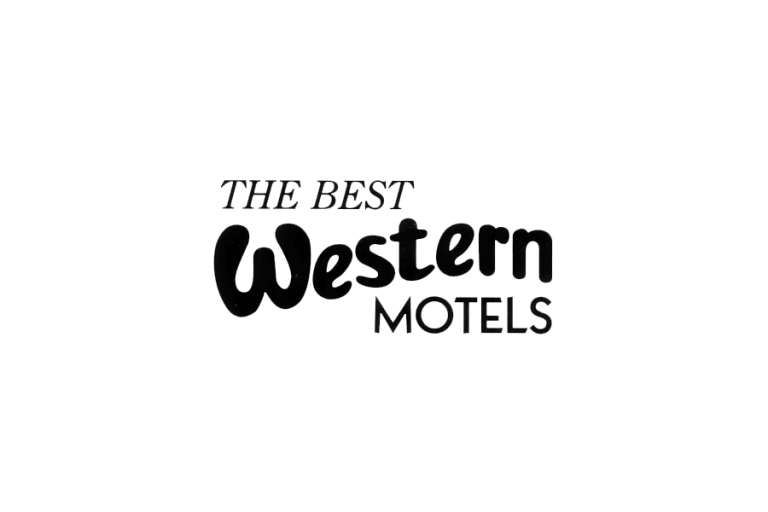
The first Best Western logo introduced in 1946 reflected the brand’s origins as a motel association. The emblem consisted of a monochrome banner featuring a large “Western” wordmark in a rounded custom typeface. Above it appeared “The Best” in a slanted serif style, while “Motels” was placed below in a modern sans-serif.
This design functioned primarily as informational signage, clearly communicating the nature of the business to motorists. Visual hierarchy emphasized the word “Western,” reinforcing geographic familiarity and roadside appeal.
1950–1962: Framed Wordmark and Early Standardization
In 1950, Best Western introduced a more structured logo. The emblem adopted a smooth rectangular frame containing bold blue lettering. The “Western” component remained dominant, centered and emphasized, while supporting text was reduced in scale.
This refinement marked the brand’s early efforts toward standardization, helping properties present a unified appearance across locations.
1962–1966: Crown Introduction and Brand Visibility
The 1962 redesign significantly increased visual impact. A bright yellow rectangular field was introduced, topped with a red-and-yellow crown. The wordmark appeared in red and brown tones, with “Western” again emphasized.
The crown symbolized elevated standards and reliability, while the vibrant palette ensured high visibility, particularly important during the era of highway-based travel.
1966–1974: Brand Name Consolidation
Following the official adoption of the name “Best Western Motels” in 1966, the logo was refined. The crown became wider and more rounded, while the typography was cleaned and strengthened. Yellow remained dominant, though slightly lightened to modernize the look.
This version reinforced Best Western’s identity as a recognizable national chain rather than a loose motel association.
1974–1984: Transition Beyond Motels
In 1974, the word “Motels” was removed from the brand name, signaling a broader hospitality scope. The logo retained its crown and color palette but introduced a smoother custom typeface with both words given equal visual weight.
This change marked Best Western’s transition from roadside lodging to more diversified hotel offerings.
1984–1993: Corporate Framing and Global Ambitions
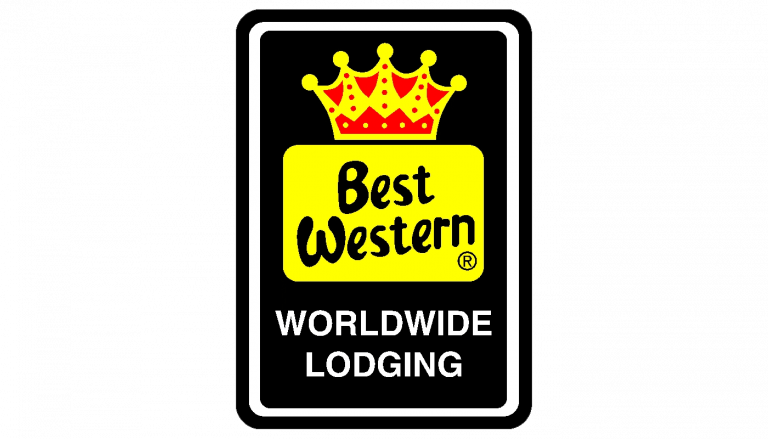
The 1984 redesign placed the yellow crown emblem within a vertically oriented black rectangle framed by double outlines. Beneath the emblem, a bold “Worldwide Lodging” tagline appeared in white uppercase lettering.
This composition reflected Best Western’s growing international presence and desire to be perceived as a global hospitality organization.
1993–2015: Crest Revival and Heritage Emphasis
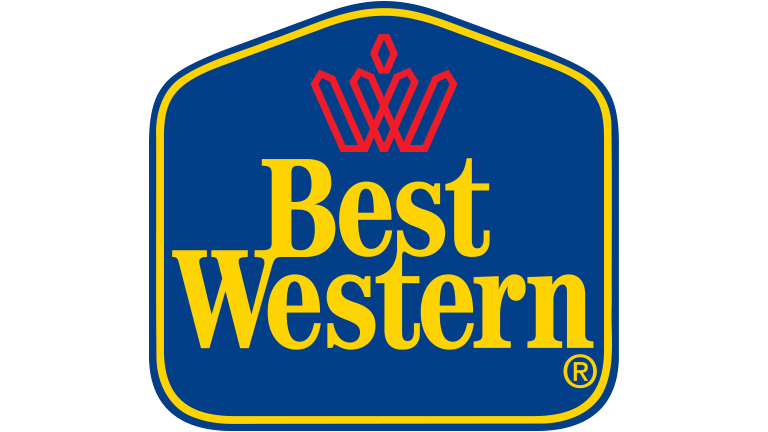
In 1993, Best Western introduced one of its most recognizable logos. The emblem featured a yellow serif wordmark set against a blue geometric background, topped by a stylized red crown resembling the letter “W.”
This version combined heritage symbolism with improved legibility and brand recognition. It remained in use for over two decades and is still visible at some legacy locations.
2015–Today: Modern Monogram and Brand Simplification
The 2015 redesign marked a decisive shift toward modern branding. The crown was retired, replaced by a glossy blue circular emblem containing a white “BW” monogram rendered in a smooth custom typeface. The accompanying wordmark featured rounded terminals and refined proportions.
This logo reflects Best Western’s repositioning as a contemporary hotel group, emphasizing comfort, reliability, and global consistency through minimalistic design.
Typography and Visual Construction
Typography in the Best Western logo meaning evolved from descriptive serif and sans-serif combinations to a proprietary, softened custom typeface. The modern lettering features rounded curves and balanced spacing, conveying approachability without sacrificing professionalism.
The “BW” monogram functions as a flexible brand asset, easily adaptable across digital platforms, signage, and loyalty materials.
Best Western Logo Heritage and Brand Positioning
The Best Western logo heritage illustrates a brand shaped by adaptation. Each redesign corresponded to a strategic shift, from motel network to international hotel group. Despite stylistic changes, the logo consistently communicated trust and familiarity, crucial for a brand serving a broad, value-conscious audience.
Positioned between economy and midscale hospitality, Best Western uses its visual identity to reassure rather than impress, signaling dependable quality across diverse markets.
Best Western Logo History and Evolving Hospitality Identity
The Best Western logo history tells the story of an American hospitality institution adapting to changing travel habits and global expansion. From descriptive motel signage to a refined modern monogram, the brand’s visual identity evolved in step with its operational ambitions. Within the landscape of hotel logo heritage, Best Western stands as a case study in gradual transformation guided by consistency and trust.
FAQ: Best Western Logo Meaning and History
What does the Best Western logo represent?
The logo represents trust, standardization, and dependable hospitality through clear typography and stable geometric forms.
Why did Best Western remove the crown from its logo?
The crown was retired in 2015 to modernize the brand and simplify its visual identity for global and digital use.
When was the current Best Western logo introduced?
The current monogram-based logo was introduced in 2015.
What colors define the Best Western logo today?
Blue and white are the primary colors, symbolizing reliability, comfort, and professionalism.