Baojun Logo History: Meaning, Symbolism & Brand Heritage
Baojun is a relatively young automotive brand, yet its rise within the Chinese market reflects the broader transformation of China’s car industry over the past two decades. Created to serve a new generation of cost-conscious urban buyers, Baojun positioned itself at the intersection of affordability, modern design, and dependable engineering. Although its vehicles target the mass market, the brand’s visual identity was developed with unusual care, signaling ambition well beyond the budget segment.
The Baojun logo history reveals a deliberate effort to balance strength and modernity. From its introduction, the logo meaning was closely tied to motion, reliability, and technological confidence. Rather than relying on abstract geometry alone, Baojun adopted a symbol rooted in traditional automotive imagery, later refining it to align with contemporary design language. This evolution reflects the brand’s growing maturity and its desire to compete visually with more established manufacturers.
Owned by SAIC-GM-Wuling, a partnership between SAIC Motor, General Motors, and Wuling Motors, Baojun benefits from a unique blend of global engineering expertise and local market understanding. This hybrid origin plays a central role in the brand’s logo heritage and its visual storytelling.
Meaning and History: The Origin of the Baojun Logo
Baojun was founded in 2010 as a strategic response to the rapidly expanding demand for affordable passenger vehicles in China. The brand’s mission was clear from the outset: to deliver practical, reliable cars equipped with modern technology at accessible prices. This positioning required a visual identity that conveyed trust and technical competence without appearing overly luxurious or intimidating.
The logo origin reflects this intent. Baojun’s early emblem centered on the image of a horse, a symbol long associated with strength, endurance, and forward movement. In the context of Chinese automotive branding, the horse carries additional cultural significance, representing reliability and steady progress rather than aggression or excess speed.
As Baojun expanded its lineup to include sedans, SUVs, and electric vehicles, the logo became an important unifying element across diverse product categories. Its restrained evolution mirrors the brand’s steady growth, emphasizing continuity rather than dramatic visual change.
Baojun Logo History Timeline
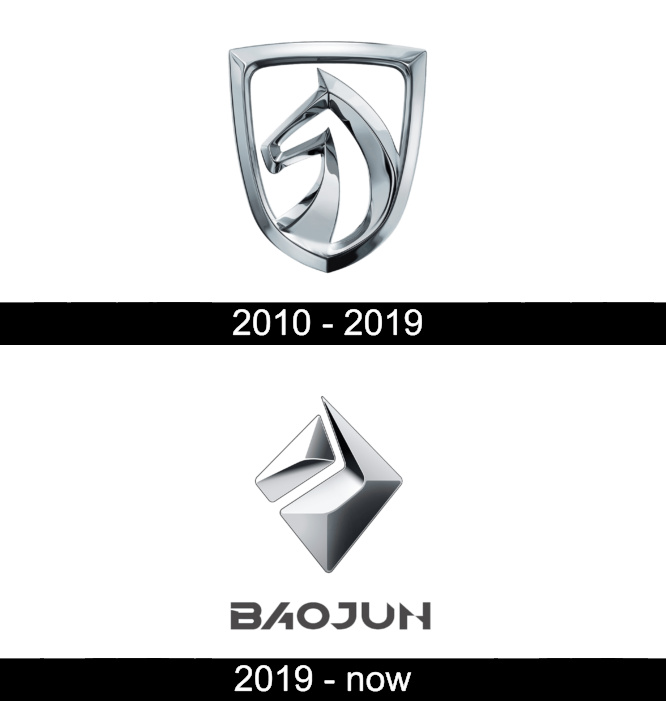
2010–2019: The Shield and Stallion Emblem
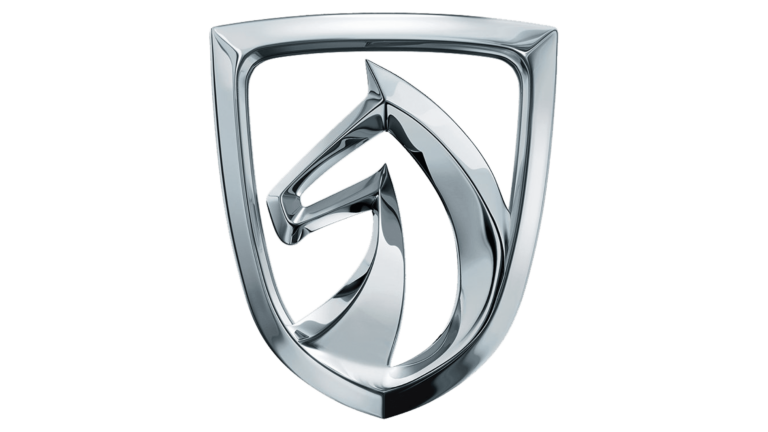
The original Baojun logo featured a stylized profile of a stallion placed within a shield-shaped frame. Rendered in metallic silver, the emblem had a three-dimensional appearance that emphasized precision and modern manufacturing. The shield form suggested protection and reliability, while the horse symbolized power and technological confidence.
This combination positioned Baojun as a serious automotive player despite its focus on affordability. The reflective silver finish reinforced associations with advanced engineering and contemporary design, helping the brand establish credibility in a competitive market.
2019–Today: The Diamond Emblem and Modern Abstraction
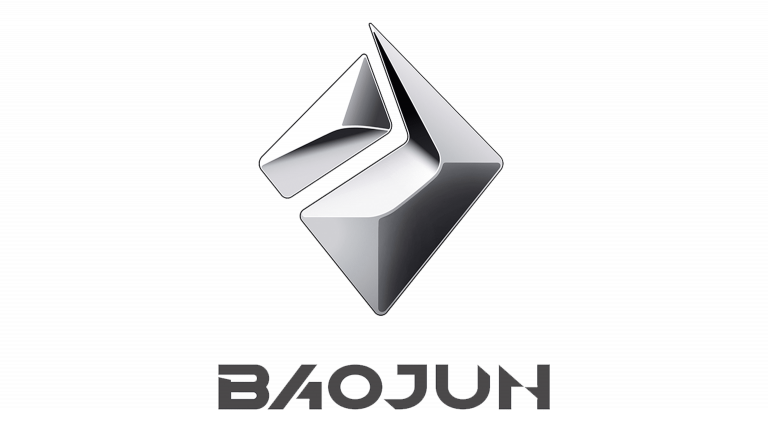
In 2019, Baojun introduced a redesigned logo that marked a shift toward abstraction. The new emblem adopted a diamond-shaped form, retaining the visual essence of the horse through angular geometry rather than literal depiction. This transformation aligned the brand with global design trends favoring simplicity and versatility across digital and physical platforms.
The updated emblem maintained a three-dimensional metallic look, preserving continuity with the original logo heritage. Beneath the symbol, the bold “BAOJUN” wordmark appeared in dark gray, reinforcing stability and professionalism. The redesign signaled Baojun’s transition into a more mature phase, particularly as it expanded into electric vehicles and technology-driven mobility solutions.
Logo Symbolism: Strength Reimagined
The symbolism of the Baojun logo revolves around strength, motion, and dependability. In its original form, the stallion communicated these qualities directly, drawing on familiar automotive iconography. In the newer version, the symbolism becomes more conceptual, suggesting strength through structure and balance rather than explicit imagery.
This shift reflects Baojun’s broader brand evolution. As the company moved beyond entry-level vehicles and embraced smarter, more connected models, the logo symbolism adapted accordingly. The abstract diamond form implies precision and innovation, while still echoing the brand’s original emphasis on reliability.
Typography and Color in the Baojun Logo
Typography plays a supporting but important role in Baojun’s visual identity. The uppercase “BAOJUN” wordmark uses a bold sans-serif typeface designed for clarity and legibility. Its clean lines communicate efficiency and straightforwardness, qualities closely aligned with the brand’s value-driven positioning.
Color choice reinforces this message. Metallic silver dominates the emblem, symbolizing technology, modern manufacturing, and neutrality. The dark gray wordmark adds seriousness and balance, ensuring the logo feels professional rather than decorative. Together, these elements create a visual identity that supports trust without appearing overly premium or distant.
Baojun Logo Heritage and Brand Positioning
Although Baojun lacks the long history of legacy automotive marques, its logo heritage demonstrates a clear and consistent design philosophy. The brand has avoided frequent redesigns, choosing instead to evolve its emblem in a controlled and meaningful way. This approach mirrors the strategy of other emerging automotive brands that prioritize long-term recognition over short-term visual novelty.
Within the broader SAIC-GM-Wuling portfolio, Baojun’s logo serves as a distinct identifier, separating it from both domestic and international siblings while maintaining a shared sense of engineering credibility.
A Young Brand with a Focused Visual Identity
The Baojun logo history illustrates how a young automotive brand can build recognition through thoughtful design rather than constant reinvention. From the stallion within a shield to the modern diamond emblem, the logo’s evolution reflects Baojun’s growth from a value-focused newcomer to a confident participant in China’s competitive automotive market.
By preserving core symbolic elements while adapting to contemporary aesthetics, Baojun has established a logo heritage rooted in reliability, strength, and forward movement. As the brand continues to evolve, its visual identity remains a steady anchor, reinforcing trust among consumers and signaling long-term ambition.
FAQ: Baojun Logo Meaning, Symbolism, and History
What does the Baojun logo represent?
The Baojun logo represents strength, reliability, and technological confidence, originally symbolized by a horse and later expressed through abstract geometry.
When was the Baojun brand founded?
Baojun was founded in 2010 in China.
Who owns the Baojun automotive brand?
Baojun is owned by SAIC-GM-Wuling, a joint venture between SAIC Motor, General Motors, and Wuling Motors.
Why did Baojun change its logo in 2019?
The logo was updated to reflect a more modern, abstract design language aligned with digital platforms and evolving vehicle technology.
What does the diamond shape in the new Baojun logo mean?
The diamond shape symbolizes precision, stability, and modern engineering, while subtly referencing the original horse emblem.
Is Baojun focused only on affordable cars?
While affordability is central to the brand, Baojun also emphasizes modern technology, efficiency, and contemporary design.