
Auntie Anne’s Logo History: Meaning, Symbolism & Brand Heritage
Few bakery brands have achieved global recognition through a single product as effectively as Auntie Anne’s. Built around the comforting aroma and familiar shape of freshly baked pretzels, the brand transformed a simple market-stand concept into an international franchise spanning more than 30 countries. Its visual identity evolved alongside this growth, yet the logo history never strayed far from the product that defined its success.
This product-led branding philosophy mirrors the approach explored in Cinnabon logo history, while the steady refinement of typography and form recalls the evolution seen in Jimmy John’s logo heritage. Within the broader landscape of bakery and snack brand logo heritage, Auntie Anne’s stands as a case study in how consistency, warmth, and recognizability can anchor a brand across cultures. The logo meaning has always been direct, tactile, and rooted in handmade authenticity.
Meaning and History: The Origin of the Auntie Anne’s Identity
Auntie Anne’s began in 1988 when Anne F. Beiler and her husband, Jonas, purchased a small market stand in Downingtown, Pennsylvania. Selling pretzels and lemonade, the business grew rapidly, expanding to 90 locations across 12 states within just three years. This early momentum shaped the brand’s identity around approachability, simplicity, and community appeal.
As the company expanded internationally, including its first location outside the United States in 1995 in Indonesia, the need for a recognizable and adaptable visual identity became increasingly important. The logo history reflects this journey, evolving from ornate, traditional typography into cleaner, more modern forms while preserving the pretzel as the brand’s unmistakable symbol.
Following its acquisition by Focus Brands, now GoTo Foods, in 2010, Auntie Anne’s continued refining its image to suit contemporary retail environments and digital platforms. Yet the logo meaning remained anchored in the same promise that defined its origin: freshly baked comfort and familiar quality.
Logo Symbolism: Craft, Warmth, and Product Authenticity
The Auntie Anne’s logo symbolism is inseparable from the pretzel itself. Appearing in every iteration of the logo, the pretzel serves not as a decorative element but as the central identity marker. Its looping form conveys handmade craftsmanship, reinforcing the idea of fresh preparation and artisanal care.
Typography has played a crucial symbolic role as well. Early Gothic-inspired lettering echoed tradition and complexity, while later rounded and simplified typefaces aligned with accessibility and modern taste. Each typographic shift mirrored broader changes in consumer expectations without undermining brand recognition.
Color further enhances the logo description. Yellow, inspired by the golden hue of baked dough, signals warmth and appetite. Complementary purples and blues add contrast and depth, ensuring visual clarity while elevating the logo beyond a purely utilitarian food mark.
Auntie Anne’s Logo History Timeline
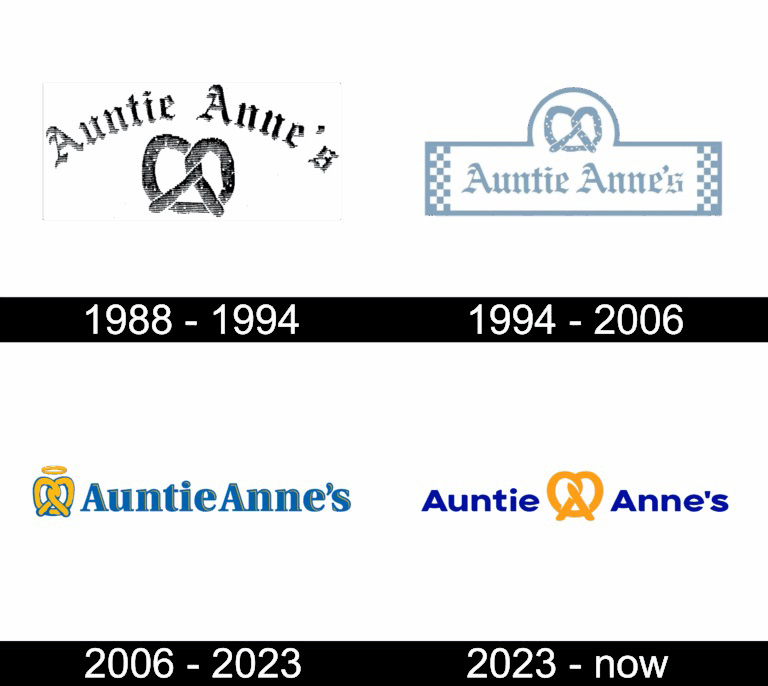
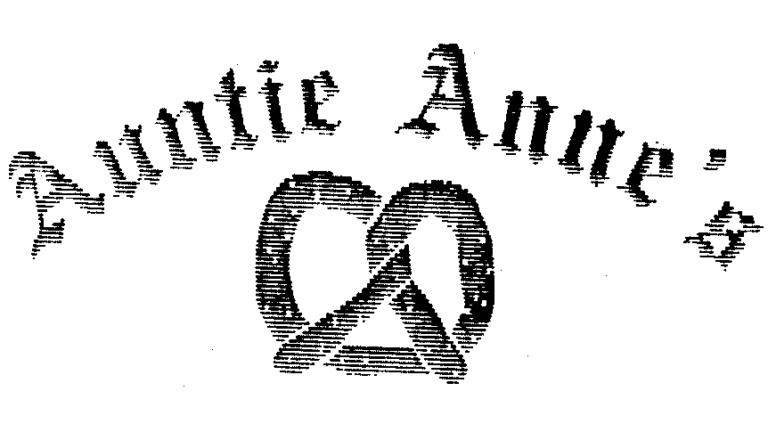
1988–1994: Gothic Wordmark and Pretzel Emblem
The original Auntie Anne’s logo featured the brand name arched above a prominently displayed pretzel. Set in Old English Std Regular, the wordmark carried a Gothic tone that echoed the intricate twists of the pretzel itself. This design emphasized tradition and craftsmanship, aligning with the brand’s handmade image during its early growth.
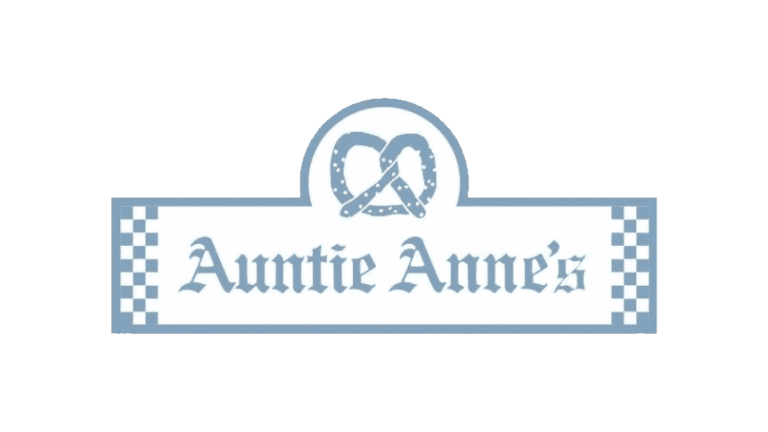
1994–2006: Structured Layout and Decorative Accents
In 1994, the logo was restructured for improved balance and clarity. The arched wordmark was straightened and repositioned below the pretzel, while an outline was added around the emblem. Checker patterns appeared on both sides, introducing a sense of motion and retail visibility. Despite these changes, the continued use of the original typeface preserved brand continuity.
2006–2023: Rounded Typography and Modern Refinement
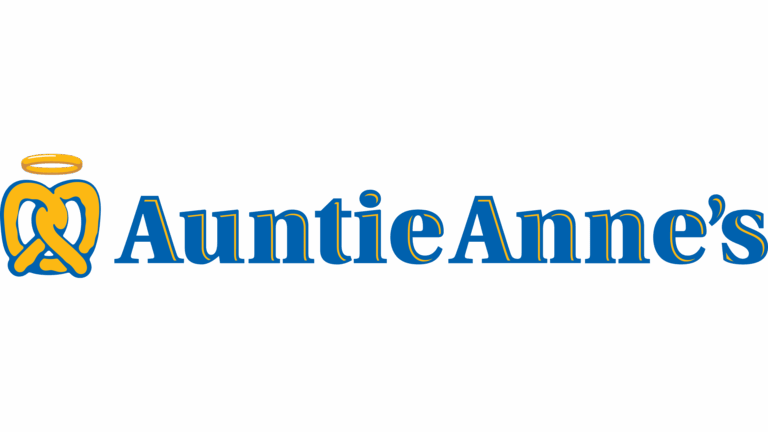
A major redesign in 2006 replaced the Gothic typeface with Oldstyle Figu Regular. The new lettering was fuller and more rounded, visually echoing the thickness and softness of the pretzel. The pretzel illustration itself became more symmetrical, striking a balance between handmade charm and visual consistency suitable for global branding.
2023–Present: Minimalist Identity and Product Harmony
The most recent update embraced minimalism. Serif elements were removed, and the typography was refined into a clean, custom sans-serif form. Subtle letter modifications, such as the curved stroke in the “A,” were designed to visually align with the pretzel’s shape. This iteration reflects modern branding sensibilities while preserving the brand’s unmistakable product connection.
Auntie Anne’s Logo Heritage and Global Comfort Branding
The Auntie Anne’s logo history demonstrates how a product-centric visual identity can scale globally without losing authenticity. Each redesign refined form and typography, yet the logo meaning remained constant, celebrating warmth, craftsmanship, and familiarity. Rather than reinventing its symbolism, the brand chose evolution through restraint.
Within the competitive snack and bakery sector, Auntie Anne’s logo heritage stands as an example of how visual consistency, anchored in a beloved product, can build trust and emotional resonance across generations and cultures.
FAQ: Auntie Anne’s Logo Meaning and History
What does the Auntie Anne’s logo represent?
The logo represents warmth, craftsmanship, and freshness, centered on the iconic pretzel.
Why has the pretzel always remained in the logo?
The pretzel is the brand’s core product and strongest recognition element, ensuring instant association.
Has the Auntie Anne’s logo changed significantly over time?
The logo evolved stylistically, but its central symbolism and product focus have remained consistent.
What do the colors in the Auntie Anne’s logo symbolize?
Yellow reflects the golden color of baked goods, while purple and blue provide contrast and visual balance.