
Aston Martin Logo History: Meaning, Symbolism & Brand Heritage

Few automotive brands embody British elegance, craftsmanship, and performance as completely as Aston Martin. Founded in 1913 in Great Britain under the name Bamford & Martin, the company began as a small, ambitious enterprise driven by a passion for speed and engineering excellence. Although the original name survived for only a year, the spirit behind it shaped one of the most prestigious automotive brands in the world.
Today, Aston Martin is synonymous with luxury sports cars, timeless design, and refined power. Operating in more than 50 countries, the brand produces state-of-the-art vehicles that balance performance and sophistication in a way few manufacturers can replicate. Central to this identity is the Aston Martin logo, a symbol that has evolved carefully over a century while preserving its unmistakable character.
Aston Martin Logo Meaning and Brand Identity
The Aston Martin logo meaning is deeply connected to the brand’s philosophy of freedom, speed, and refined engineering. At its heart lies the iconic winged emblem, a universal symbol of motion and aspiration. The wings represent the thrill of driving, the pursuit of performance, and the brand’s dedication to pushing boundaries while maintaining elegance.
Unlike many automotive logos that rely on aggressive or mechanical symbolism, Aston Martin’s emblem communicates luxury through restraint. Its clean lines, balanced proportions, and understated typography convey confidence without excess, reflecting a brand that does not need to shout to be recognized.
Aston Martin Logo History: A Century of Visual Evolution
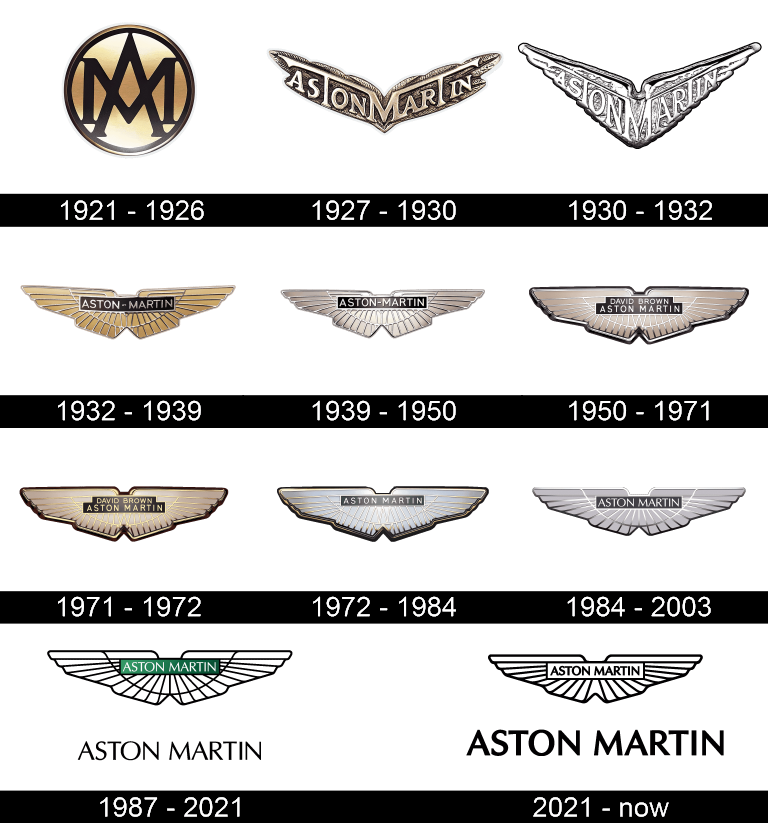
1921–1926: The First Aston Martin Logo and the AM Monogram
The first official Aston Martin logo appeared in 1921, several years after the company’s founding. This early emblem was a circular badge rendered in black and gold, featuring a stylized “AM” monogram. The letters were sharp and geometric, with triangular serifs that conveyed strength, precision, and ambition.
Encased within a gold roundel and framed by a bold black outline, the logo projected exclusivity and craftsmanship, positioning Aston Martin as a premium manufacturer even in its earliest years.
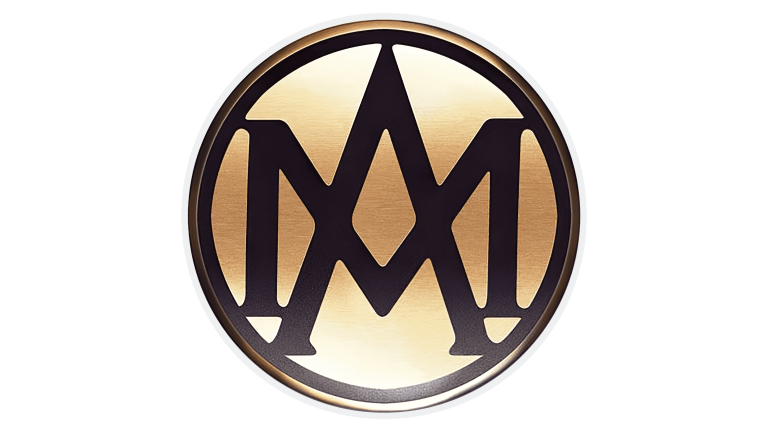
1927–1930: Birth of the Winged Aston Martin Emblem
In 1927, Aston Martin introduced the concept that would define its logo heritage forever: the wings. This early winged emblem featured bronze-toned wings stretching horizontally, with the brand name placed across them and a prominent “M” extending into the wing structure.
Though still experimental, this design laid the foundation for one of the most recognizable automotive symbols in history, linking the brand visually to speed, aviation, and freedom.
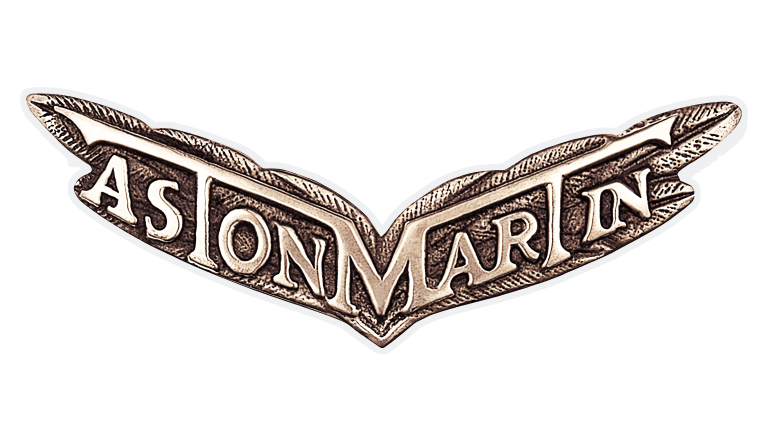
1930–1932: Sharper Geometry and Silver Refinement
By 1930, the winged logo was refined into a more angular and aggressive form. The color palette shifted to silver, and the emblem adopted sharper, more triangular lines. This version emphasized precision and performance but remained in use for only a short period.
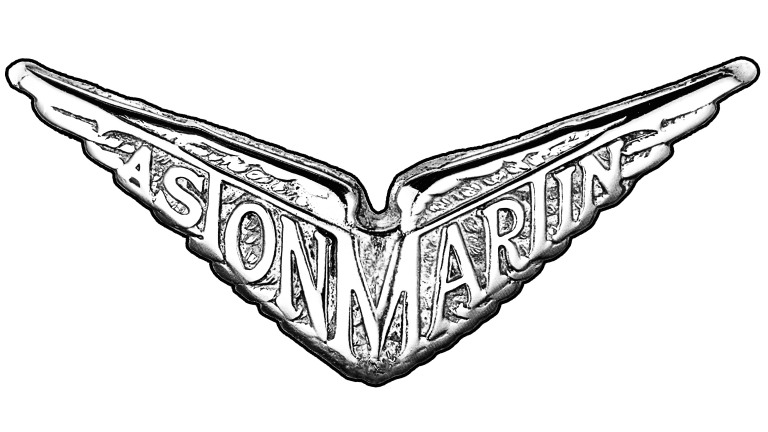
1932–1939: Simplification and Luxury Balance
In 1932, Aston Martin moved toward a cleaner, more modern aesthetic. The wings became flatter and more symmetrical, while the wordmark was placed inside a small rectangular panel at the center of the emblem. The gold-and-black color palette returned, reinforcing the brand’s association with luxury and exclusivity.
This redesign marked a turning point, balancing elegance with clarity and setting the visual tone for future iterations.
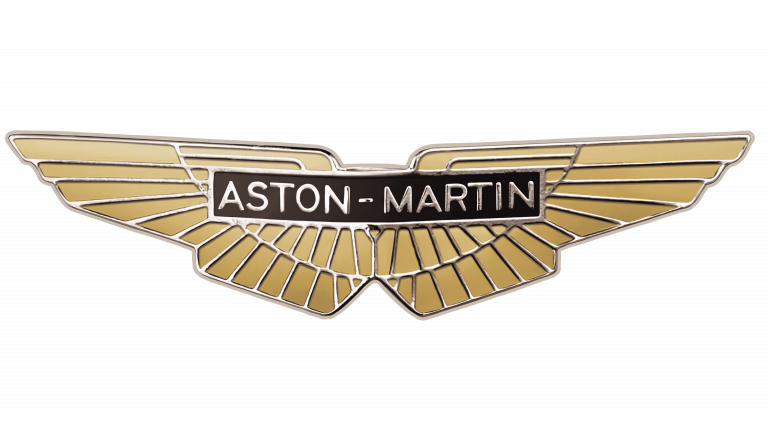
1939–1950: Defining the Classic Aston Martin Look
The 1939 redesign introduced a silver-and-black palette and more defined, angular wings. This version established the core structure that still underpins the Aston Martin logo today. It conveyed authority, stability, and a sense of permanence, qualities essential for a brand entering a more competitive global market.
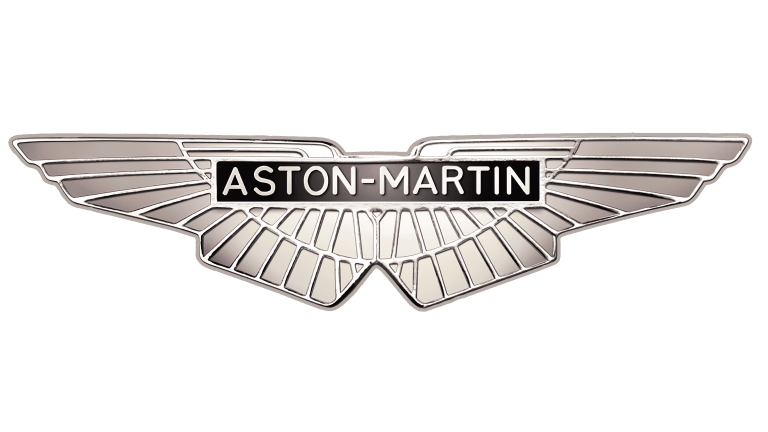
1950–1971: The David Brown Era and Brand Expansion
Following David Brown’s acquisition of the company in 1947, Aston Martin updated its logo in 1950 to include his name above the main wordmark. The background adopted a light beige tone, accented with thin silver lines that added a sense of airiness and refinement.
This period coincided with Aston Martin’s growing reputation in motorsport and luxury grand touring, and the logo reflected both heritage and progress.
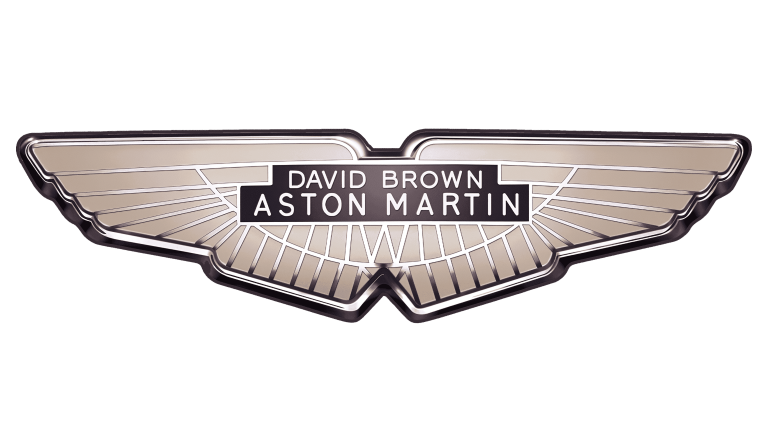
1971–1972: A More Opulent Color Direction
In the early 1970s, the logo retained the “David Brown” designation but shifted from silver to gold accents. This change amplified the sense of luxury and prestige, aligning with Aston Martin’s positioning as a high-end manufacturer.
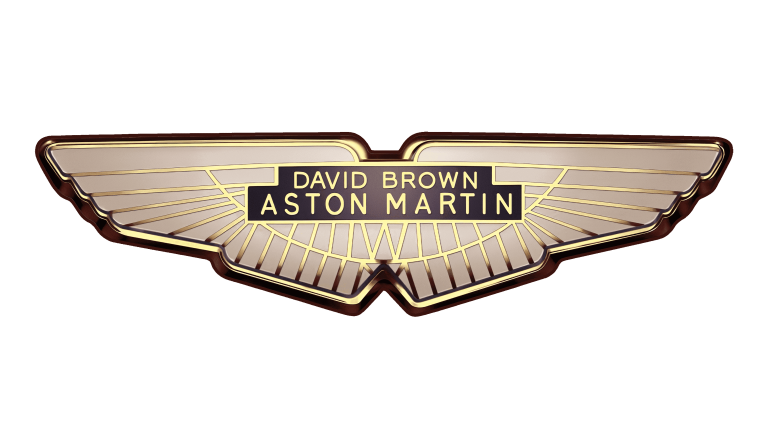
1972–1984: Ownership Change and Visual Reset
After the brand was sold to Company Developments Ltd in 1972, David Brown’s name was removed from the logo. The emblem adopted a cooler gray background, while the gold outlines became lighter and more restrained. This version signaled a new chapter while maintaining continuity with the past.
1984–2003: Heavier Lines and a Loss of Elegance
The 1984 redesign introduced thicker outlines and a larger wordmark, resulting in a more aggressive and less refined appearance. The narrowed letterforms disrupted the balance that had defined earlier logos. While this version remained in use for many years, it is often considered one of the weaker moments in Aston Martin logo history.
2003–2021: Modern Refinement and British Racing Green
A major refinement arrived in the early 2000s. The wings became more elegant and precisely drawn, while the wordmark was placed within a dark green rectangular panel. The elongated, finely spaced lettering conveyed sophistication and exclusivity, and the deep green color added a distinctly British character associated with motorsport heritage.

2021–Present: Minimalist Luxury for a New Era
In 2021, Aston Martin introduced a minimalist black-and-white logo. The iconic wing shape was preserved, but the lines were emboldened for clarity and digital versatility. The wordmark beneath the emblem was enlarged, with thicker strokes that improved legibility while maintaining elegance.
This redesign reflects Aston Martin’s modern identity: confident, refined, and ready for a future shaped by technology and sustainability.
Aston Martin Logo Symbolism Explained
The winged emblem, first introduced in 1927, remains one of the most iconic symbols in the automotive world. The wings represent speed, freedom, and aspiration, while their symmetry conveys balance and control. Over time, the emblem has been simplified, reinforcing its timeless quality.
The restrained use of color and clean typography further emphasize Aston Martin’s values of precision, heritage, and understated luxury.
Aston Martin Logo Typography and Color Meaning
The Aston Martin wordmark is set in a refined uppercase sans-serif typeface with smooth, confident lines and well-proportioned characters. Fonts similar in spirit include Carisma Classic DemiBold and Faber Sans Pro 75 Halbfett, though the brand’s lettering is custom-modified to ensure uniqueness.
The current black-and-white color palette reinforces clarity, authority, and timelessness. Earlier versions featuring gold, silver, and British racing green reflected different aspects of luxury, performance, and national heritage, all integral to Aston Martin logo meaning.
Aston Martin Logo Heritage and Timeless Elegance
The Aston Martin logo heritage is a masterclass in disciplined evolution. Rather than abandoning its identity, the brand has refined its iconic wings over decades, ensuring relevance without sacrificing recognition. The result is a logo that feels as powerful today as it did nearly a century ago, a visual symbol worthy of the cars it represents.
Aston Martin Logo FAQ: Common Questions About the Iconic Emblem
What does the Aston Martin logo represent?
The Aston Martin logo represents speed, freedom, and refined performance, symbolized by its iconic winged emblem.
When was the Aston Martin winged logo first introduced?
The winged Aston Martin emblem was first introduced in 1927 and has remained central to the brand’s visual identity ever since.
Why did Aston Martin change its logo in 2021?
The 2021 redesign simplified the logo to improve clarity, modernize the brand, and ensure adaptability across digital platforms while preserving its heritage.
Is Aston Martin still a British brand?
Yes. Although owned by an international group of investors, Aston Martin remains a British brand in identity, design philosophy, and heritage.