
Asquith Motor Company Logo History: Meaning, Symbolism & Brand Heritage
Asquith Motor Company occupies a rare and carefully defined niche within the automotive world. Rather than competing on scale or speed, the English brand built its identity around the revival of early twentieth-century commercial vehicles, reimagined through modern engineering. Founded from the vision of Bruce West, Asquith blends nostalgia with practicality, producing vehicles that look as though they belong to the 1920s while performing to contemporary standards.
The Asquith logo history mirrors this philosophy with remarkable precision. From the outset, the brand embraced a visual identity rooted in heritage, craftsmanship, and timeless elegance. The logo meaning is not tied to mass mobility or technological disruption, but to tradition, ceremony, and character. In an industry dominated by aggressive modernism, Asquith’s logo heritage stands apart as a conscious return to grace and restraint.
Frequently seen at promotional events, luxury brand activations, and weddings, Asquith vehicles function as moving symbols of nostalgia. Their logo plays a crucial role in this perception, acting as a visual bridge between past and present.
Meaning and History: The Origin of the Asquith Logo
Asquith Motor Company was established in England in the late twentieth century, at a time when automotive design was increasingly driven by aerodynamics and efficiency. In deliberate contrast, Asquith looked backward for inspiration, reviving the forms of classic vans and taxis from the interwar period. This design direction required a logo that could convincingly anchor the brand in a historical narrative.
The logo origin reflects this intent. Rather than adopting minimalist typography or abstract geometry, Asquith chose a heraldic approach reminiscent of traditional British craftsmanship. The emblem was designed to feel established rather than contemporary, aligning the brand visually with a bygone era even as its vehicles relied on modern mechanics beneath the surface.
This strategy positioned Asquith not as a novelty, but as a curator of automotive heritage, a philosophy also seen in other niche manufacturers focused on craftsmanship over volume, such as Carlsson, where brand identity emphasizes tradition and exclusivity rather than mass appeal.

Asquith Logo History Timeline
A Singular Identity Rooted in Tradition
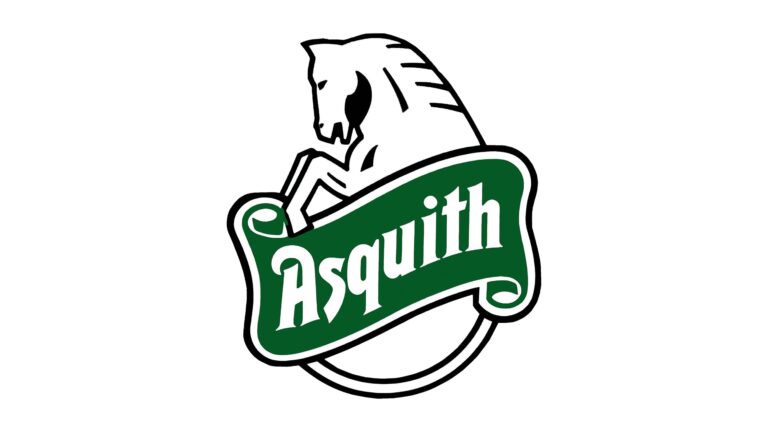
Unlike mainstream automotive brands with complex redesign histories, Asquith Motor Company has relied on a single, consistent logo concept. The emblem features a stylized horse in profile, rendered with poise rather than aggression. Positioned above a flowing script wordmark, the symbol evokes the aesthetics of early motoring badges and coachbuilder insignias.
Over time, the logo has seen only minor refinements related to reproduction and application. Its structure, symbolism, and overall composition have remained intact, reinforcing Asquith’s commitment to visual continuity. This restrained approach reflects the brand’s broader philosophy: evolution through refinement, not reinvention.
Logo Symbolism: Nobility, Motion, and Heritage
The symbolism of the Asquith logo is deeply rooted in classical imagery. The horse, long associated with transport, nobility, and disciplined motion, serves as a natural emblem for a brand inspired by pre-automotive carriage culture. Unlike racing-oriented horse symbols that emphasize speed and aggression, Asquith’s horse appears calm and regal, suggesting elegance rather than urgency.
The banner beneath the horse reinforces this message. Its shape and typographic treatment recall traditional signage and craftsmanship, lending the logo a ceremonial quality. Together, these elements communicate reliability, heritage, and a respect for tradition, aligning seamlessly with the brand’s vintage-inspired vehicles.
Typography and Color in the Asquith Logo
Typography plays a central role in conveying Asquith’s identity. The brand name is rendered in a bold, flowing script that echoes hand-painted signage and early twentieth-century commercial lettering. This typographic choice distances Asquith from modern industrial branding and reinforces its nostalgic positioning.
Color further strengthens the logo meaning. The deep green backdrop is strongly associated with British heritage, stability, and refinement. Green has long been used in traditional British transport and motorsport, lending the logo cultural authenticity. Paired with lighter contrasting tones, the palette feels timeless rather than trendy, ensuring the emblem remains visually relevant across different contexts.
Asquith Logo Heritage and Brand Positioning
Asquith’s logo heritage is inseparable from its product philosophy. The emblem does not attempt to modernize the brand’s appearance; instead, it deliberately anchors it in the past. This consistency allows Asquith vehicles to function as visual storytelling tools, instantly communicating their purpose and character before a single detail is examined.
In niche automotive markets, where differentiation relies on identity rather than performance metrics, the logo serves as a guarantee of authenticity. It signals that the vehicle is not merely styled retro, but conceived with a genuine respect for historical design language.
A Logo as a Time Capsule
The Asquith logo history demonstrates how visual identity can become a cornerstone of brand storytelling. By adopting a heraldic emblem centered on elegance, heritage, and controlled motion, Asquith Motor Company created a logo that perfectly complements its vintage-inspired vehicles.
Rather than evolving toward modern minimalism, the brand preserved a visual language rooted in tradition. This decision transformed the logo into a time capsule, one that reinforces Asquith’s role as a custodian of automotive nostalgia while supporting modern functionality beneath the surface.
FAQ: Asquith Logo Meaning, Symbolism, and History
What does the Asquith logo represent?
The logo represents heritage, elegance, and traditional transport values, symbolized by a regal horse emblem.
Who founded Asquith Motor Company?
Asquith Motor Company was founded by Bruce West in England.
What type of vehicles does Asquith produce?
Asquith specializes in vintage-style commercial vehicles inspired by 1920s vans and taxis, built with modern technology.
Why does the Asquith logo feature a horse?
The horse symbolizes noble motion, transport heritage, and timeless elegance, aligning with the brand’s historical inspiration.
Has the Asquith logo changed over time?
The logo has remained largely unchanged, with only minor refinements for application and reproduction.
What does the green color in the Asquith logo mean?
Green represents tradition, reliability, and British heritage, reinforcing the brand’s classic identity.