
Allianz Logo History: Meaning, Symbolism & Brand Heritage
Allianz is one of the most powerful and enduring names in the global insurance and financial services industry. Founded in Germany in 1890, the company has grown from a national insurer into Europe’s largest insurance group and one of the most influential financial institutions worldwide. This long-standing success is reflected not only in Allianz’s business performance, but also in its visual identity, which has remained remarkably consistent in meaning despite evolving in form.
The Allianz logo history is deeply connected to the company’s German roots, institutional authority, and commitment to reliability. Across more than a century, its visual identity has evolved carefully, preserving symbolic continuity while adapting to changing design standards and global markets. As a result, Allianz represents a strong example of logo heritage shaped by tradition, precision, and strategic restraint.
Meaning and History of the Allianz Logo
From its earliest days, Allianz embraced visual symbolism associated with protection, authority, and stability. The brand’s identity has always been rooted in heraldic and institutional imagery, reflecting its origins in late nineteenth-century Germany. The eagle, a recurring symbol throughout Allianz logo history, has played a central role in expressing power, vigilance, and trust.
Despite several redesigns over time, the Allianz logo meaning has remained consistent. Each iteration retained core visual ideas while refining form and clarity. This approach allowed Allianz to modernize its appearance without abandoning its heritage, reinforcing its reputation as a dependable and highly professional organization.
Allianz Logo Evolution Timeline
1891 – A Heraldic Emblem Rooted in German Tradition
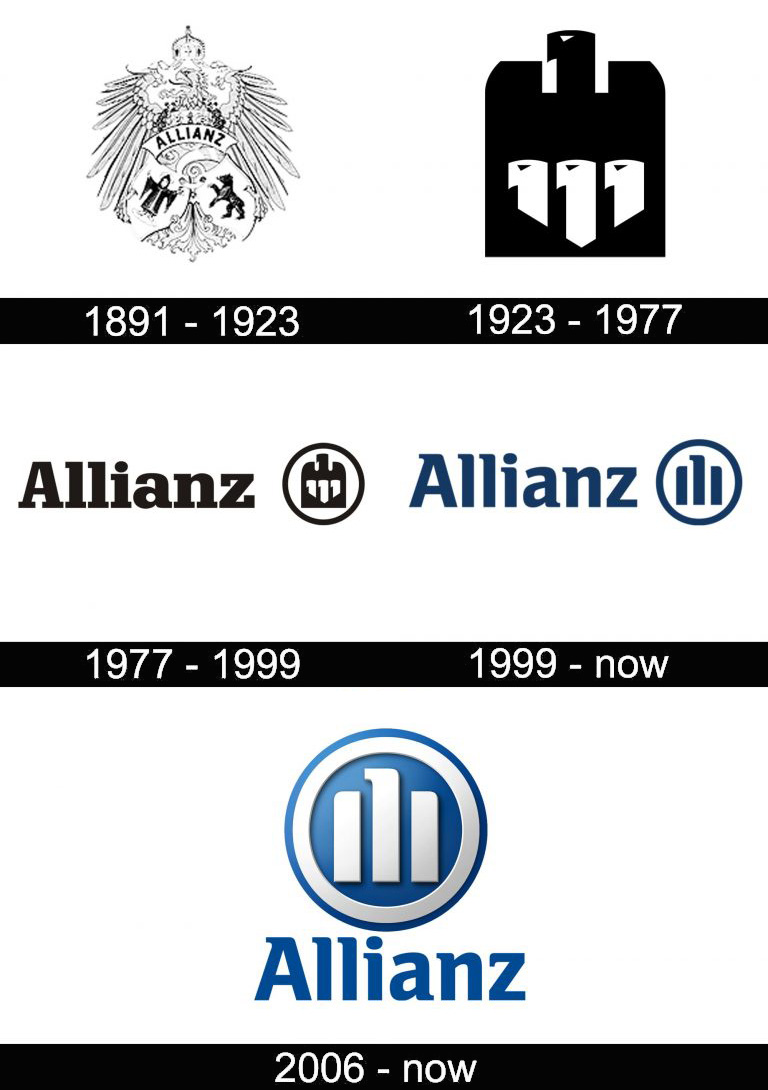
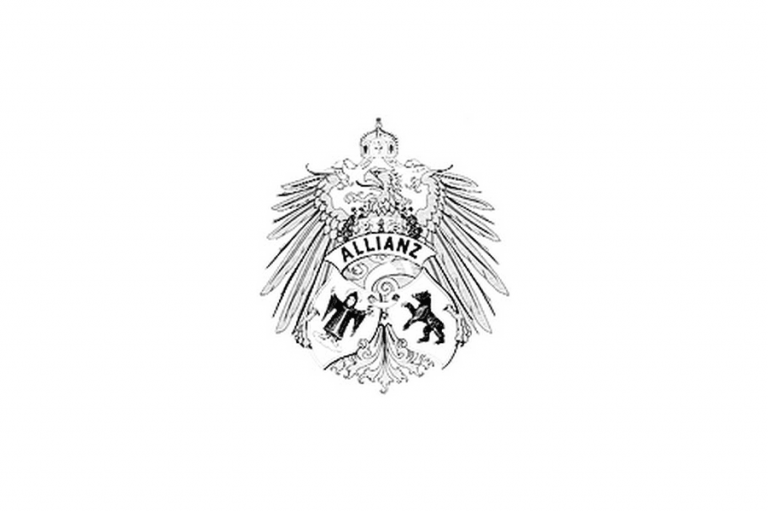
The first Allianz logo was introduced in 1891 and reflected the visual language of European institutions at the time. It featured an ornate coat of arms centered around a crowned eagle with its head turned to the left. The bird symbolized authority and protection, while an arched ribbon bearing the Allianz wordmark crossed its body.
Beneath the eagle’s wings were two smaller shields, one depicting a monk and the other a bear. These elements reinforced the emblem’s heraldic nature and connected the company to regional and cultural symbolism. This design remained in use for more than three decades and represents the most traditional expression of Allianz’s logo heritage.
1923 – A Modernized Eagle for a New Corporate Era
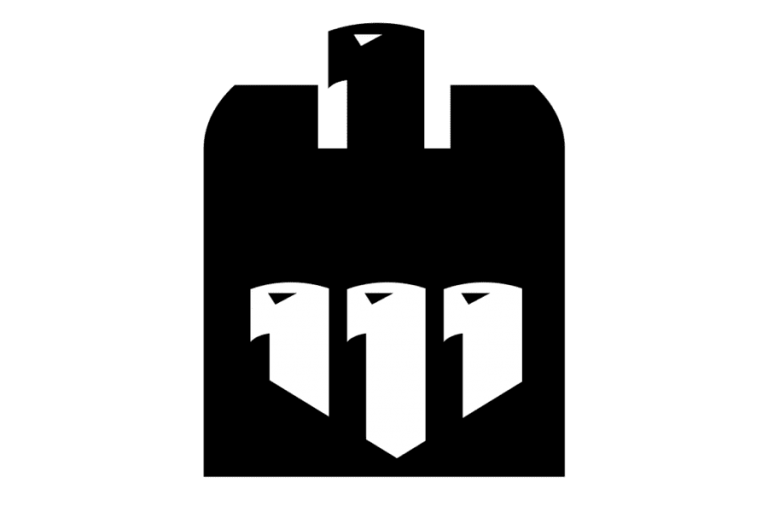
In the early 1920s, Allianz introduced a radically different logo that marked a decisive shift toward modernism. Designed by Karl Schulpig, the new emblem replaced ornamentation with a bold, minimalist interpretation of the German Imperial Eagle.
The bird was rendered as a solid black silhouette with clean contours and three vertical internal lines. These lines featured curved upper ends and triangular lower cuts, creating a powerful and highly abstract symbol. This version of the logo reflected strength, discipline, and national identity, reinforcing Allianz’s position as a serious and authoritative institution.
1977 – Structure, Balance, and Corporate Formality
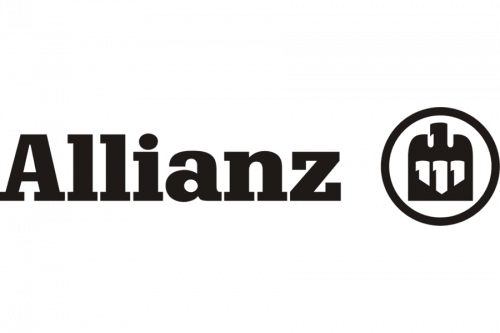
In 1977, the Allianz logo was refined by Hans Jörg Dorschel. The eagle emblem was enclosed within a circular frame, softening the sharpness of the previous design while preserving its symbolic power. Above the circle, a wordmark was added, reinforcing brand recognition and corporate presence.
The monochrome palette was initially retained, emphasizing seriousness and formality. Later, Allianz adopted a blue and white color scheme, strengthening associations with trust and reliability. The wordmark was executed in a bold serif typeface similar to the Schadow family, adding elegance and tradition to the brand’s visual identity.
1999 – Abstract Symbolism for a Global Brand
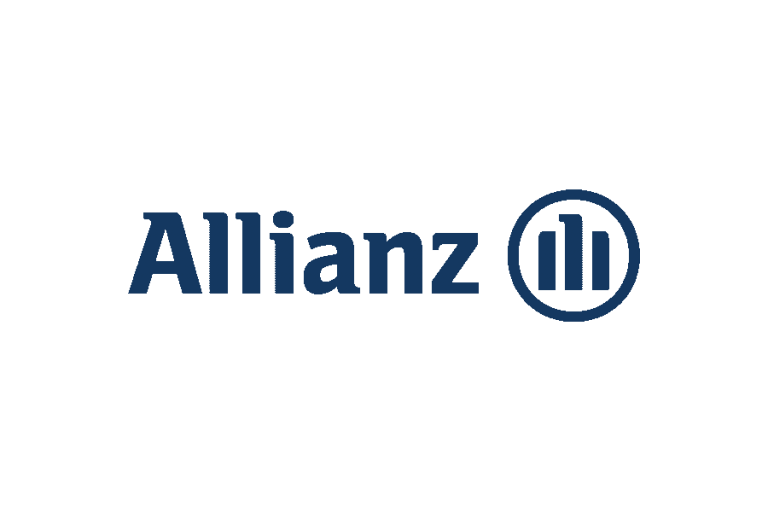
The most significant transformation in Allianz logo history occurred in 1999. The imperial eagle was replaced with a highly abstract graphical symbol derived from its essential form. The new emblem consisted of three vertical lines, with the central line subtly curved at the top to suggest the eagle’s head, while the two shorter lines represented wings.
This simplification reflected Allianz’s evolution into a global financial brand. The updated wordmark adopted a more modern and refined serif typeface, maintaining authority while improving legibility across international markets. The blue and white palette was preserved, reinforcing continuity within the brand’s logo heritage.
2006 – Dimensional Refinement and Contemporary Expression
In 2006, Allianz introduced a refined three-dimensional version of its logo, designed by Gerard Unger. While the core structure remained unchanged, the emblem gained depth, softer gradients, and a lighter shade of blue. A thick white circular outline was added, enhancing visibility and impact.
This version was designed for modern applications and large-scale branding. Both the flat and three-dimensional logos are still used today, depending on context, allowing Allianz to maintain consistency while adapting to different visual environments.
Allianz Logo Symbolism
Symbolism plays a central role in the Allianz logo meaning. The eagle, whether depicted literally or abstractly, represents strength, vigilance, and protection. Even in its modern abstract form, the symbol retains a clear connection to this heritage, ensuring continuity across generations.
The circular frame introduced in later versions adds an additional layer of meaning, suggesting unity, security, and completeness. Allianz’s ability to abstract its core symbol without losing recognizability is a defining strength of its logo heritage.
Typography and Color
Typography has been carefully refined throughout Allianz logo history. The current wordmark uses a custom serif typeface designed by Gerard Unger. The lettering features clean vertical strokes and delicate serifs applied selectively, giving the logo an elegant yet authoritative appearance.
This custom typeface is visually close to Rotis Semi Serif Bold 65 and Jotia Bold, though softened to enhance readability and approachability. The blue and white color palette reinforces reliability, professionalism, and protection, qualities essential to an insurance and financial services brand.
Allianz and the Endurance of Logo Heritage
The Allianz logo history is a powerful example of how visual identity can evolve without losing its essence. Over more than a century, Allianz has transformed its emblem from a detailed heraldic crest into a refined abstract symbol, all while preserving its core meaning.
By balancing tradition with modernization, Allianz has built one of the strongest examples of logo heritage in the financial sector. Its logo continues to communicate authority, trust, and professionalism, reinforcing the brand’s global reputation as a leader in insurance and financial services.
Allianz Logo FAQ
What does the Allianz logo symbolize?
The Allianz logo symbolizes strength, protection, and reliability, primarily through its abstract representation of the eagle and its structured geometric form.
How many times has the Allianz logo been redesigned?
The Allianz logo has undergone several refinements, with major redesigns in 1891, 1923, 1977, 1999, and a dimensional update in 2006.
Why did Allianz replace the eagle with an abstract symbol?
Allianz abstracted the eagle to modernize its visual identity and ensure scalability and clarity for global and digital use.
Who designed the modern Allianz logo?
The modern Allianz logo was refined by Gerard Unger, who also designed the brand’s custom typeface.
What do the colors in the Allianz logo represent?
Blue represents trust, stability, and professionalism, while white conveys clarity and protection.