Aeropelican Air Services Logo History: Meaning, Symbolism & Brand Heritage
The visual identity of Aeropelican Air Services reflects the practical, region-focused nature of Australian domestic aviation. Unlike large flag carriers built around global symbolism, Aeropelican’s branding was designed to communicate reliability, local connectivity, and operational clarity. Its logo history is closely tied to regional air travel in New South Wales and offers a concise example of how smaller airlines balanced symbolism with function.
Within airline logo history, Aeropelican Air Services fits alongside regional operators explored in Regional Express logo history and QantasLink logo meaning, where visual identity prioritizes trust and recognition over spectacle. As part of broader Australian airline logo heritage, Aeropelican demonstrates how modest, well-structured branding can effectively serve a clearly defined market.
Meaning and History: The Origin of the Aeropelican Identity
Aeropelican Air Services was founded in 1971 by Glenn Curry in Australia, initially operating as a charter airline before expanding into scheduled regional services. Headquartered in Newcastle, New South Wales, the airline focused on connecting smaller communities with major urban centers, filling a critical gap in domestic air travel.
From its earliest years, the logo meaning was shaped by geography and purpose. Rather than emphasizing speed or luxury, Aeropelican’s identity centered on dependability, accessibility, and regional presence. The pelican, a bird strongly associated with Australia’s coastal and inland waterways, was a natural symbolic choice, grounding the brand in local familiarity.
As the airline evolved and invested in fleet modernization, its visual identity remained consistent, reinforcing continuity and passenger trust across decades of operation.
Logo Symbolism: Regional Flight and Visual Clarity
The symbolism of the Aeropelican logo is understated yet deliberate. The pelican represents adaptability and long-distance travel, qualities well suited to regional aviation. Its stylized form avoids literal illustration, instead functioning as a clean, modern emblem that integrates seamlessly with the wordmark.
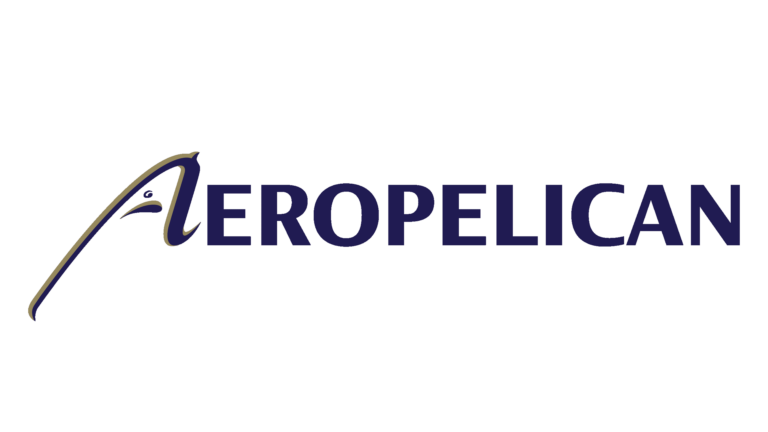
A key symbolic element is the subtle shaping of the pelican’s wing to form the letter “A,” directly linking image and name. This integration reinforces brand recognition while maintaining visual simplicity. The thin golden line extending from the “A” suggests a flight path, subtly referencing movement and connection without overwhelming the composition.
Color choices further support the symbolism. Dark blue conveys professionalism, stability, and safety, while gold introduces warmth and distinction, elevating the brand beyond purely utilitarian design.
Aeropelican Air Services Logo History Timeline
1968–2013: Integrated Pelican Wordmark Identity
The Aeropelican Air Services logo used throughout its mature operational period featured a stylized pelican positioned above or alongside the wordmark. The bird’s wing subtly formed the capital “A” in “Aeropelican,” creating a cohesive visual link between symbol and typography. The name appeared in a bold dark blue font, projecting reliability and clarity, while a thin golden line extended from the “A,” evoking a flight trajectory.
This logo remained largely unchanged for decades, reflecting the airline’s emphasis on consistency and recognition rather than frequent rebranding.
Aeropelican Logo Heritage and Regional Significance
Aeropelican’s logo heritage is closely tied to its role in regional Australian aviation. Rather than attempting to compete visually with major international carriers, the airline focused on a grounded identity that resonated with local passengers.
When compared with identities discussed in Virgin Australia logo history or Ansett Australia logo heritage, Aeropelican stands out for its restraint. Its logo avoided trends and excessive abstraction, opting instead for a clear, functional design that mirrored its operational philosophy.
Even after the airline ceased scheduled passenger operations, the logo remains a recognizable symbol of regional air connectivity in New South Wales.
Aeropelican Logo as a Model of Regional Airline Branding
The Aeropelican Air Services logo history illustrates how effective airline branding does not require constant reinvention. Through a single, well-considered identity built on local symbolism and visual clarity, Aeropelican established long-term recognition and trust. Within airline logo history and broader logo heritage analysis, the brand serves as a strong example of purpose-driven regional airline design.
FAQ: Aeropelican Air Services Logo Meaning and History
What does the Aeropelican logo represent?
The logo represents regional connectivity, reliability, and Australian identity through the pelican symbol.
When was the Aeropelican logo introduced?
The logo was introduced during the airline’s early operational period and remained in use until 2013.
Why was a pelican chosen as the symbol?
The pelican is closely associated with Australia and symbolizes adaptability and long-distance travel.
Is Aeropelican Air Services still operating today?
Aeropelican no longer operates scheduled passenger services but remains part of Australian aviation history.