
Aeroflot Logo History: Meaning, Symbolism & Brand Heritage
The visual identity of Aeroflot occupies a unique position in global aviation branding. Few airline logos carry such a strong ideological, historical, and symbolic charge, while also managing to survive dramatic political, economic, and cultural transitions. Aeroflot’s logo history is inseparable from the story of Russian civil aviation itself, reflecting nearly a century of transformation without fully abandoning its original visual core.
Within international airline logo history, Aeroflot stands apart from Western carriers such as Lufthansa logo history or Air France logo meaning, where corporate evolution followed relatively stable political systems. As part of the broader global airline logo heritage, Aeroflot demonstrates how a brand can modernize, internationalize, and commercialize while still preserving unmistakable visual references to its origin.
Meaning and History: The Origin of the Aeroflot Identity
Aeroflot was founded in 1923 under the name Dobrolet, following a decree of the Council of Labor and Defense of the Russian Soviet Federative Socialist Republic. From the outset, the airline was conceived not merely as a transportation company, but as a national project tied directly to state infrastructure and ideology. This positioning profoundly shaped its early visual identity.
In 1932, the Main Directorate of the Civil Air Fleet was established, and the abbreviated name “Aeroflot” was officially adopted. During the following decades, the airline grew into one of the largest air carriers in the world, operating domestic and international routes that symbolized technological progress and national ambition. The logo meaning during this period was explicit: aviation as a triumph of labor, industry, and collective advancement.
As Aeroflot expanded its fleet with aircraft such as the IL-12, IL-14, Tu-104, Tu-114, and Il-62, its visual identity became increasingly standardized and recognizable. The airline’s branding served not only commercial purposes but also diplomatic and symbolic ones, representing the Soviet Union abroad throughout much of the 20th century.
Logo Symbolism: Ideology, Flight, and Continuity
The central element of Aeroflot logo symbolism has long been the winged hammer and sickle. This emblem combined two powerful symbolic layers: the hammer and sickle as representations of labor and unity, and wings as a universal metaphor for flight, speed, and technological mastery. Together, they formed a uniquely aviation-specific interpretation of Soviet symbolism.
Unlike purely decorative airline logos, Aeroflot’s emblem communicated authority, scale, and national significance. Even as political systems changed, the persistence of this symbol underscored continuity rather than nostalgia. The later introduction of national tricolor accents reinforced this symbolism by shifting emphasis from ideology to state identity.
Typography also plays a critical symbolic role. The bold, extended sans-serif lettering conveys stability, confidence, and institutional presence, while italicized secondary text suggests motion and progress.
Aeroflot Logo History Timeline
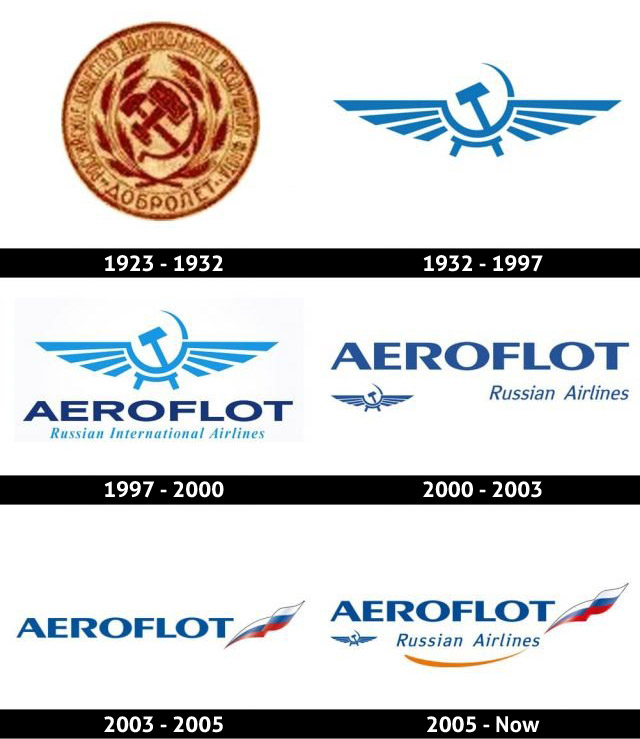
1923–1931: Dobrolet Revolutionary Emblem
The earliest Aeroflot logo appeared in 1923 under the Dobrolet name. It featured a circular red badge with a hammer and sickle enclosed by a wheat wreath. The composition reflected revolutionary aesthetics of the era, emphasizing agriculture, labor, and collective strength, while establishing aviation as a state-driven enterprise.

1932–1996: Winged Hammer and Sickle Identity
In 1932, a new emblem was introduced featuring the now-iconic winged hammer and sickle. Designed by avant-garde artist Alexander Rodchenko, this mark could function independently or alongside the Aeroflot wordmark. Its clean geometry and aviation-focused symbolism made it one of the most recognizable airline logos of the 20th century.

1997–1999: Post-Soviet Typography Update
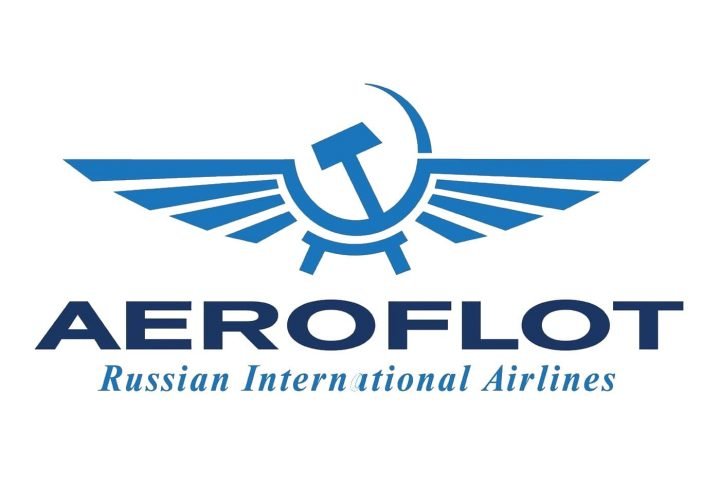
Following the dissolution of the Soviet Union, Aeroflot introduced a refined wordmark with heavier letterforms. The addition of the tagline “Russian International Airlines” signaled a shift toward global commercial aviation while maintaining continuity with the historic emblem.
2000–2002: Simplified National Positioning
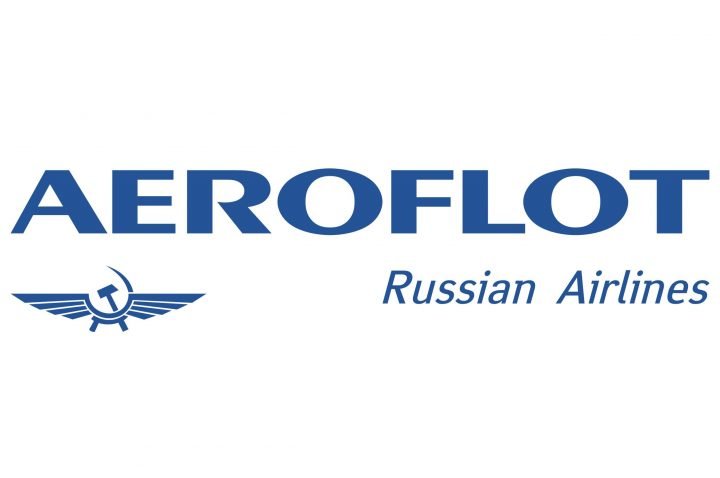
The tagline was shortened to “Russian Airlines,” reflecting a clearer, more direct brand message. This update emphasized Aeroflot’s role as the national carrier while aligning with international airline branding standards.
2003–2004: Temporary Removal of the Winged Emblem
In 2003, Aeroflot briefly removed the winged hammer from its logo, replacing it with the Russian flag positioned beside the wordmark. This marked the only period in which the airline fully stepped away from its historic symbol, testing a more politically neutral visual identity.
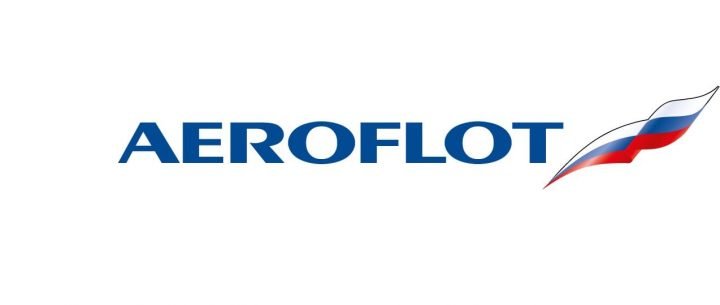
2005–Present: Restored Heritage with Modern Refinement
In 2005, the winged hammer and sickle returned, accompanied by a yellow curved accent that added dynamism and visual balance. This redesign successfully merged heritage symbolism with modern airline branding, reinforcing Aeroflot’s legacy while supporting its international ambitions.
Aeroflot Logo Heritage and Global Recognition
Aeroflot’s logo heritage is among the most distinctive in aviation history. While many airlines have completely reinvented their identities to distance themselves from political pasts, Aeroflot chose selective continuity. This decision preserved brand recognition while allowing for modernization through typography, color balance, and layout refinement.
Compared to airline identities explored in British Airways logo history or KLM logo symbolism, Aeroflot stands out for maintaining a symbol that transcends branding trends. Its logo functions as both a corporate mark and a historical artifact, recognized worldwide.
Aeroflot Logo as a Bridge Between Eras
The Aeroflot logo history illustrates how visual identity can function as a bridge between radically different eras. From revolutionary symbolism to global airline branding, Aeroflot refined its logo without erasing its origin. Within global airline logo history and broader logo heritage studies, the Aeroflot emblem remains a rare example of continuity, authority, and symbolic endurance.
FAQ: Aeroflot Logo Meaning and History
What does the Aeroflot logo symbolize?
The logo symbolizes aviation progress combined with labor, unity, and national identity.
Who designed the winged hammer and sickle logo?
The emblem was designed by artist Alexander Rodchenko.
Has Aeroflot ever removed the hammer and sickle from its logo?
Yes, briefly in 2003, when the symbol was replaced by the Russian flag.
Why did Aeroflot restore the historic emblem?
The return reinforced brand continuity, heritage, and global recognition.