FedEx Logo History: Meaning, Symbolism & Brand Heritage
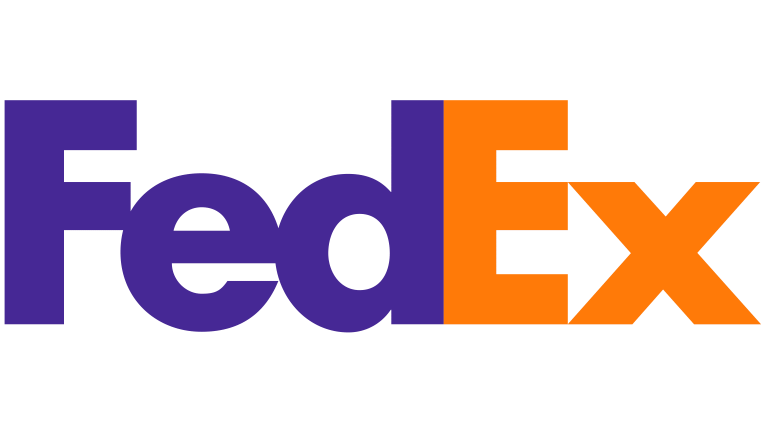
Few modern logos have achieved the level of cultural impact, design prestige, and universal recognition as the FedEx logo. What began as a straightforward identity for a young logistics company grew into one of the most celebrated examples of graphic design in history—a masterclass in simplicity, precision, and the art of negative space.
Today, FedEx stands as the largest logistics network in the United States and a global powerhouse of transportation and delivery services. But its visual identity carries weight far beyond corporate symbolism. It has become a case study in how design can perfectly embody a company’s purpose. That subtle arrow—quietly nestled between the “E” and the “X”—tells a story of movement, accuracy, confidence, and relentless forward momentum.
To appreciate the brilliance of the FedEx logo, we must explore not just its evolution, but the remarkable heritage of the company that shaped it.
The Early Origins: How Federal Express Took Flight
The story of FedEx begins long before the arrival of the iconic arrow. In the mid-1960s, Frederick W. Smith, then a student at Yale University, conceptualized a revolutionary system for urgent, time-sensitive shipments. His idea materialized in 1971 when he founded Federal Express in Memphis, Tennessee. Two years later, FedEx officially took off with a fleet of just 14 aircraft and 389 employees, launching its now-famous slogan, “The World On Time.”
In its early years, the company explored both ground and air transportation, but by the early 1980s, it became clear that the future of Federal Express lay in the skies. International expansion followed quickly—first to Canada, then throughout major global markets—cementing FedEx as a transformative force in modern logistics.
The growing scale demanded a new identity, one that could reflect both the company’s bold ambitions and its increasing international presence. What followed was one of the most interesting branding evolutions of the century.
1973–1994: The Federal Express Era
The earliest Federal Express logo carried a distinctly governmental tone. The name was chosen in part to attract early business from the Federal Reserve, and the design reflected that intention. It featured a split rectangular badge—purple on top, orange on bottom—with “Federal” written in white over purple, and “Express” written in orange over white.
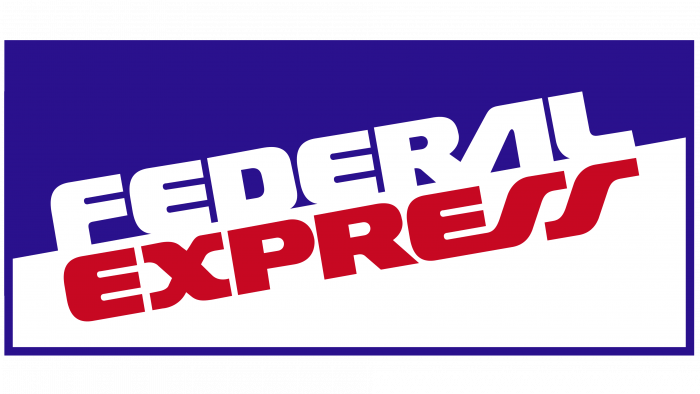
This early identity was bold, functional, and unmistakably of its time. Yet even then, FedEx was experimenting with a now-familiar color pairing: purple and orange. This palette would eventually become one of the brand’s most enduring signatures.
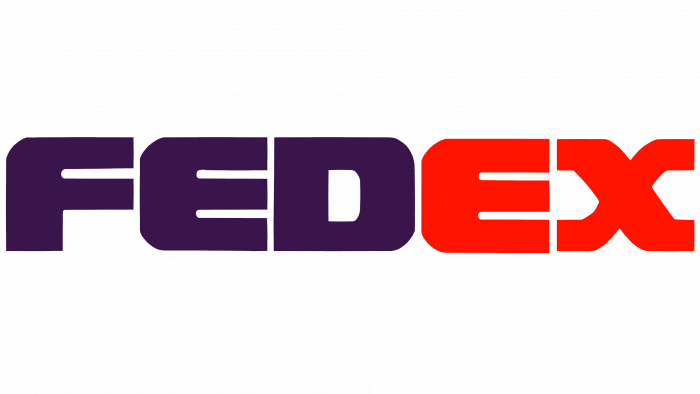
As the company grew and acquired the Flying Tigers network in 1991—becoming the world’s largest all-cargo airline at the time—it took the next step in its identity journey. The name was shortened to FedEx, marking a shift toward a more modern, agile brand image.
This transitional wordmark, used briefly between 1991 and 1994, dropped the rectangle but kept the purple-orange palette and rounded typography. It served as a gentle bridge between the old identity and the design icon that was about to emerge.
1994–Today: The Iconic FedEx Arrow—A Design Revolution
The breakthrough came in 1994, when FedEx partnered with the legendary branding firm Landor Associates. Under the direction of senior design director Lindon Leader, the company explored over 200 potential logo concepts developed by multiple design teams. Among them, one stood apart—but not immediately.
Leader had always been fascinated by negative space and the way clean, minimalist systems could carry deeper meaning. Inspired partly by the clever hidden symbolism in the Northwest Orient Airlines logo, he began to experiment with letterforms in search of something unexpected.
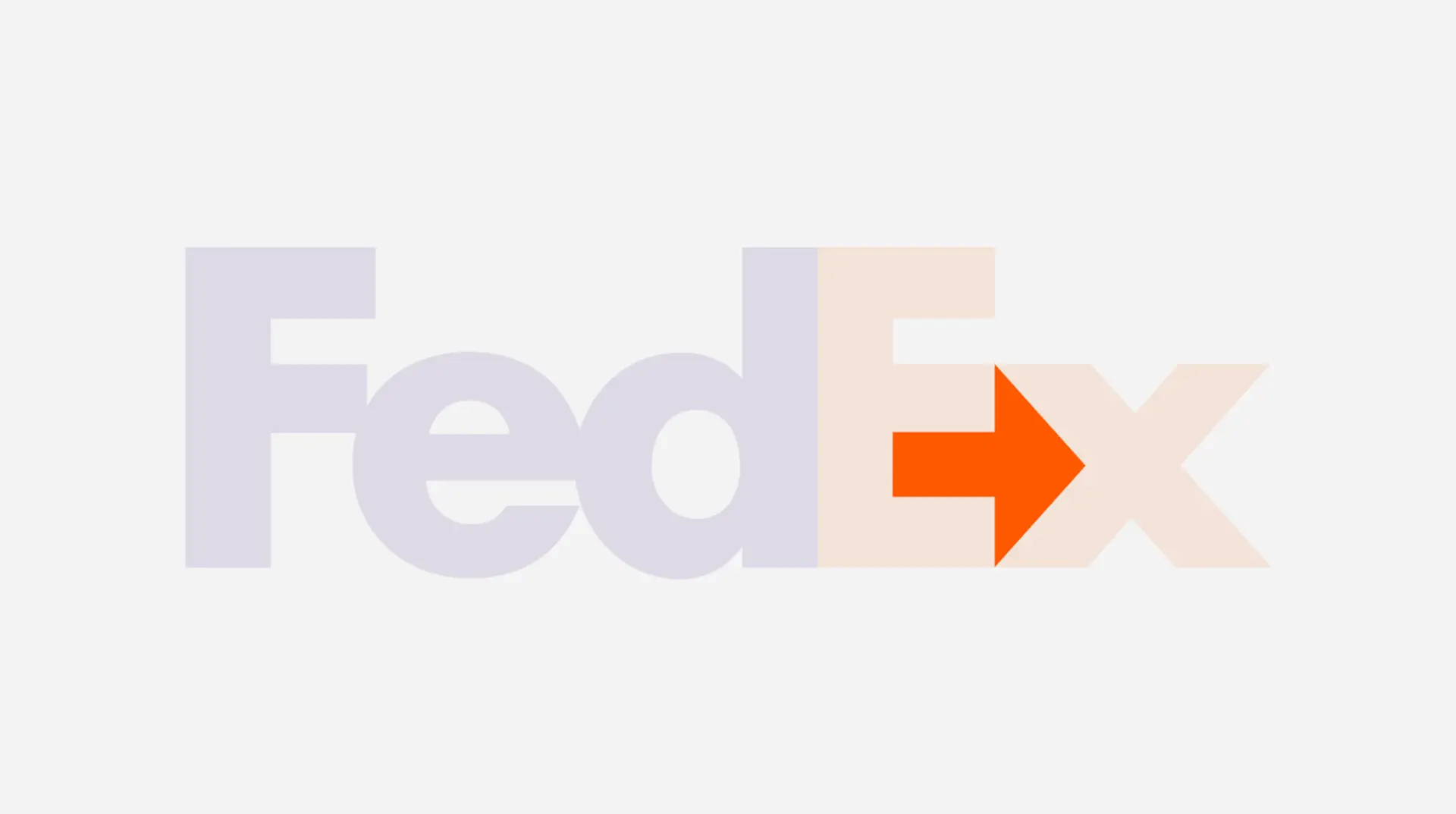
What emerged was a moment of design magic: an unmistakable arrow revealed by the negative space between the “E” and the “X.”
Not a drawn arrow.
Not a stylized arrow.
A purely optical one—visible only through the precise alignment of the letter shapes.
Many early viewers missed it entirely. Most executives didn’t notice it. Only the CEO Fred Smith and the global brand manager caught it immediately—and that intuitive recognition sealed its fate. The concept became the new logo.
Leader achieved the effect by merging two typefaces—Univers 67 and Futura Bold—then heavily modifying them. The resulting wordmark was strong, modern, and perfectly balanced. But the arrow carried the deeper heritage: speed, accuracy, reliability, and forward motion.
The new FedEx logo instantly became one of the world’s most studied and admired brand symbols. It has since won over 40 international design awards and consistently ranks among the greatest logos of all time.
The Meaning Behind the Arrow
The FedEx arrow functions on multiple levels. At first glance, the logotype appears clean and geometric. On closer inspection, the arrow becomes unmistakable—and once noticed, it cannot be unseen.
Its symbolism is powerful:
speed, direction, accuracy, innovation, and continuous forward movement.
Combined with the bold typography and vivid colors, the arrow communicates the very essence of FedEx’s brand promise. This interplay of form and meaning is what makes the logo a global benchmark in visual identity design.
Color as Identity: Purple, Orange, and a System Built on Meaning
One of the most sophisticated aspects of FedEx branding is its color system. Instead of using a single palette, FedEx assigned different secondary colors to represent each division:
FedEx Express – Orange
FedEx Ground – Green
FedEx Freight – Red
FedEx Office – Blue
FedEx Trade Networks – Yellow
The word “Fed” remains purple across all versions, while the “Ex” shifts colors depending on the service line. This structure makes the FedEx brand simultaneously unified and flexible—an elegant solution for a global logistics ecosystem.
Purple signifies stability, authority, and professionalism. Orange, meanwhile, reflects energy, momentum, and speed. Together, they form one of the most recognizable color duos in corporate history.
Typography: Precision in Every Stroke
Leader’s work with the Univers and Futura families created a custom hybrid that balances bold geometry with seamless readability. The angled cuts, spacing, and weight distribution were fine-tuned to make the arrow feel intentional yet invisible.
The FedEx wordmark is more than typography—it is a demonstration of how thoughtfully engineered type can embody a company’s mission.
The Cultural Legacy of the FedEx Logo
The FedEx logo is more than a brand element—it is a symbol that redefined how designers think about negative space. It inspired an entire generation of identity designers, earned a place in design textbooks worldwide, and became part of the cultural lexicon.
Its success is not just aesthetic but philosophical. It shows that the most memorable logos are often the simplest. Not overloaded with meaning, not screaming for attention, but operating quietly, cleverly, and confidently.
FedEx didn’t just build a powerful logistics empire. It built a powerful visual heritage—one that will be studied, referenced, and admired for decades to come.
The Enduring Heritage of the FedEx Logo
The FedEx logo remains one of the most iconic and intelligently constructed brand identities ever created. Its genius lies in its simplicity, its clarity, and its quiet brilliance—the perfect encapsulation of a company built on precision and motion.
Through thoughtful typography, symbolic color, and the masterstroke of the hidden arrow, FedEx has crafted a visual identity that will outlive trends and generations. It stands as a timeless reminder that design is at its best when it disappears, leaving only meaning behind.
FedEx Logo FAQ
What does the FedEx logo represent?
The FedEx logo represents speed, precision, and forward movement. Its most famous feature is the hidden white arrow between the “E” and the “X,” symbolizing accuracy and the company’s commitment to delivering with efficiency and purpose. Once noticed, the arrow becomes impossible to ignore, reinforcing the brand’s promise every time you see it.
Why is there a hidden arrow in the FedEx logo?
The arrow—formed entirely through negative space—was a deliberate design decision that captures the spirit of FedEx as a global leader in logistics. It communicates progress, direction, and momentum without adding any graphic clutter. This clever detail transformed the FedEx wordmark into one of the smartest logos ever created.
Who designed the FedEx logo?
The iconic FedEx logo was created in 1994 by Lindon Leader, a senior design director at Landor Associates. Leader’s fascination with negative space and clean visual systems led to the discovery of the hidden arrow, a breakthrough that made the logo world-famous and internationally awarded.
What do the FedEx colors mean?
FedEx uses a unique color system across its divisions, but two tones appear most often: purple and orange. Purple reflects professionalism, stability, and reliability. Orange represents energy, speed, and movement. Together, they form a bold and instantly recognizable identity that mirrors the company’s dynamic services.
Why is the FedEx logo considered one of the best in history?
The FedEx logo is celebrated for its precision, simplicity, and clever design. Its hidden arrow is a masterclass in subtlety—an example of how thoughtful typography and negative space can communicate complex brand values without relying on ornamentation. The logo has won more than 40 major design awards and is frequently listed among the greatest logos of all time.
Do all FedEx logos use the same colors?
Not exactly. While the “Fed” portion always appears in purple, the “Ex” changes color depending on the division: orange for Express, green for Ground, red for Freight, blue for Office, and yellow for Trade Networks. This system creates a cohesive brand family while distinguishing specific services.
What font does the FedEx logo use?
The FedEx wordmark is based on a custom hybrid of Univers 67 and Futura Bold. Designer Lindon Leader modified these fonts extensively to achieve perfect letter alignment and create the hidden arrow. The result is a uniquely balanced, highly readable typeface that remains central to FedEx’s identity.