
Airbnb Logo History: Meaning, Symbolism & Brand Heritage
Few brands in modern history have reshaped an industry as profoundly as Airbnb. What began as a scrappy solution to pay rent in San Francisco quickly became one of the most influential forces in global travel. Today, Airbnb is not just a marketplace. It is a philosophy, a cultural movement, and a new way of seeing the world—one centered on people, community, and belonging.
At the center of this movement stands the Airbnb logo, the now-iconic Bélo, a symbol deliberately crafted not just to represent a company, but to embody an idea: that anyone can belong anywhere. In many ways, the Bélo is the first truly participatory logo in the digital era—a symbol built to be shared, adapted, and lived with by hosts and guests across the globe.
This is the story of how that logo came to be, how it evolved from the humble days of “Air Bed & Breakfast,” and why its symbolic weight continues to define Airbnb’s identity.
A Brand That Rewired Global Travel
Airbnb was born from a simple act of improvisation. In 2007, Brian Chesky and Joe Gebbia couldn’t afford rent for their San Francisco apartment, so they bought air mattresses and turned their living room into a “bed and breakfast” for travelers visiting a local conference. They built a small website. They charged guests for a night on an airbed. And, unknowingly, they triggered the beginning of a revolution.
From those inflatable mattresses grew a platform that redefined the relationship between travel, community, and home. Airbnb’s founders—Chesky, Gebbia, and later Nathan Blecharczyk—believed that hospitality could be democratized. They imagined a world where travel wasn’t about hotels, but about people. Not about transactions, but about connection. Not about tourism, but about belonging.
This ethos eventually crystallized into one of the most recognizable brand symbols of the 21st century: a minimalist, looping, coral-colored glyph that feels part-location pin, part-heart, part-human, part-A. The Bélo.
But before the Bélo became an icon, Airbnb cycled through a series of early experimental logos during its startup adolescence—each marking a step forward in brand maturity, identity, and ambition.
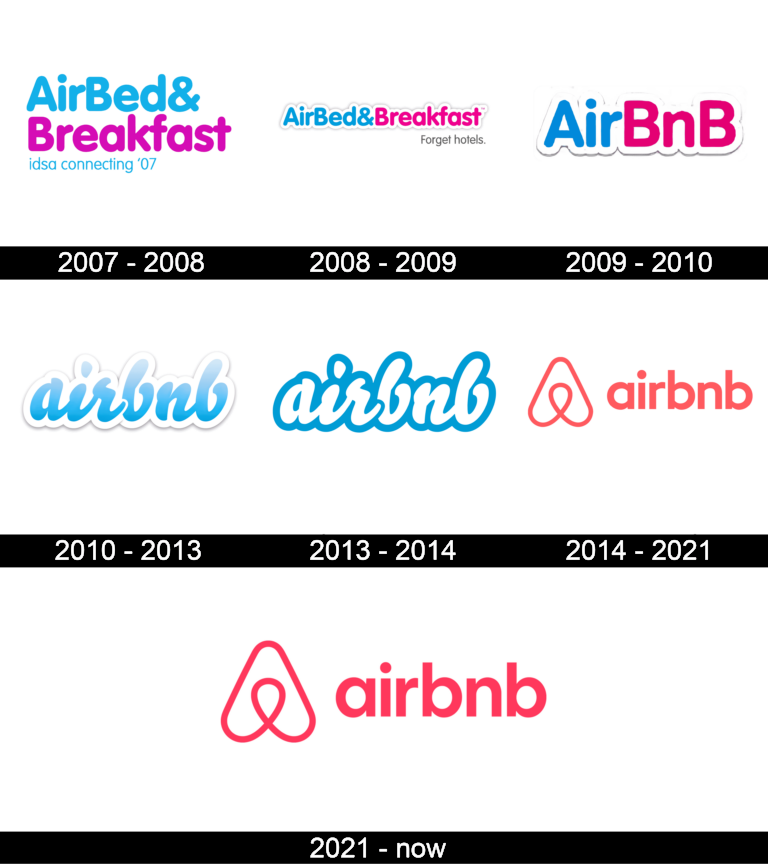
Early Identity: When Airbnb Was Still Air Bed & Breakfast (2007–2010)
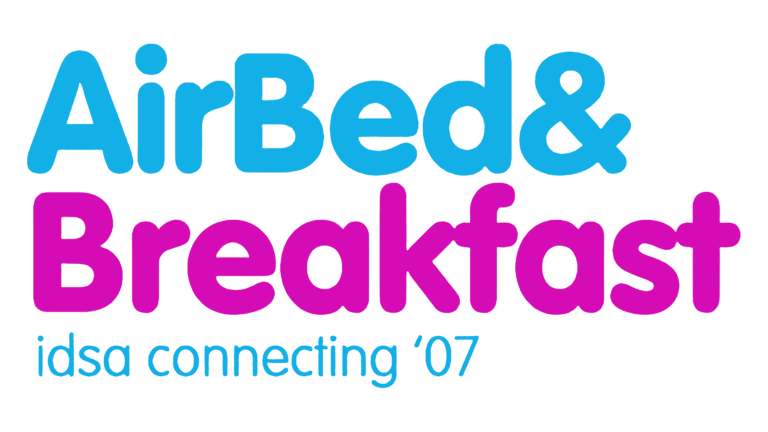
In its earliest days, Airbnb’s branding captured its homemade, playful nature. The first logo resembled the aesthetic of small 2000s-era startups: rounded fonts, pastel colors, and informal styling. It leaned heavily into the “AirBed & Breakfast” name, using a mix of pink and sky blue to signal friendliness and affordability.
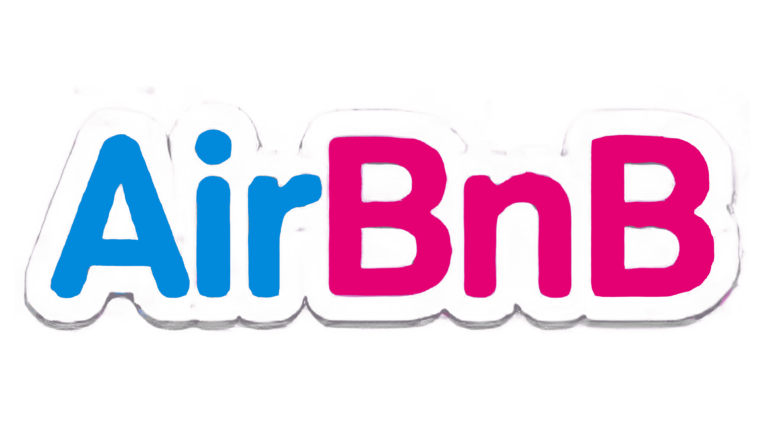
When the name shortened to “Airbnb,” the palette and structure stayed familiar. Blue and pink lettering, soft edges, bubbly curvature—everything about the early logos communicated the youthful optimism of a company still experimenting with its identity. These visual cues felt approachable and human, but also slightly unfocused, belonging to a brand still discovering what it wanted to become.
By 2010, a cursive logotype emerged, featuring a gradient of powder-blue tones. It was warm and whimsical, echoing the community-centric spirit of early Airbnb experiences. Yet it still lacked a strong, scalable visual identity—something global, timeless, and unmistakably iconic.

All of that would change in 2014.
The Birth of the Bélo: Airbnb’s Defining Logo (2014–Today)
In 2014, Airbnb unveiled a radically reimagined identity created in partnership with London-based DesignStudio. The centerpiece was the Bélo, a shape designed not simply as a corporate logo, but as a universal symbol of belonging.
Airbnb sent the design team around the world to meet real hosts and guests. The insights gathered shaped the very DNA of the new brand symbol. The goal wasn’t just to create a logo—it was to craft a cultural emblem that captured Airbnb’s values in a single distilled form.
The Four Elements of the Bélo
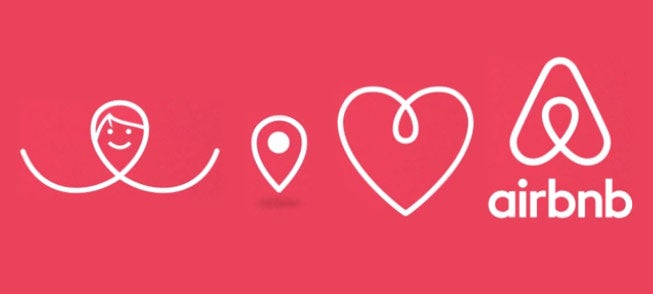
The Bélo was intentionally constructed from four interlocking ideas:
A head – representing people and community.
A location pin – representing place.
A heart – representing love, warmth, and compassion.
An abstract “A” – representing Airbnb itself.
Together, these elements created a symbol that felt both deeply personal and universally resonant. Its coral-red color was chosen to evoke warmth, passion, and humanity—an emotional contrast to the colder blues commonly used in tech branding.
Belong Anywhere
The Bélo helped Airbnb articulate its most important narrative: the idea that belonging is not tied to geography, culture, or background. The logo became a beacon for the entire community. Anyone could draw it. Anyone could adapt it. Anyone could use it. In an era defined by user-generated content and global connectivity, Airbnb created the first truly shareable brand icon.
Symbolism, Controversy, and Cultural Impact
The Bélo made headlines immediately after launch—not always for the reasons Airbnb expected. Some viewers noted unintentional anatomical resemblances, sparking a round of viral commentary. Airbnb commissioned a study through Survata, which confirmed that the association appeared only among a minority of viewers, validating the decision to keep the design intact.
Over time, the logo transcended the initial chatter. It became the unifying symbol of a worldwide movement. The Bélo represented trust between strangers, local economic empowerment, and a new form of global citizenship.
From storefronts in Lisbon to mountain cabins in Japan, the Bélo started to appear everywhere—etched onto doors, displayed in windows, and printed on welcome guides. It became one of the most recognizable symbols in contemporary travel culture.
Typography, Color, and the Airbnb Design Language
To accompany the Bélo, Airbnb introduced a custom wordmark and typeface. Friendly but confident, rounded yet modern, the typography mirrored the warmth and accessibility embedded in the company’s mission. The lowercase styling reinforced humility and approachability, while carefully proportioned curves ensured readability across platforms.
Airbnb’s primary color, a vibrant shade of coral-red, communicated energy, love, and emotional resonance. It distinguished the brand instantly in a tech landscape dominated by blues, blacks, and grays.
Together, the logo, typography, and color system formed a cohesive identity—one rooted in human expression rather than corporate coldness.
Airbnb Today: A Global Brand with a Human Heart
Today, Airbnb stands as one of the most influential travel platforms in history. It connects millions of hosts and travelers across more than 220 countries. It has reshaped how people explore, work, and live. And its logo—the Bélo—remains the visual shorthand for a brand built around trust, hospitality, and human connection.
The Bélo is more than a mark of ownership. It is a badge of participation. A shared cultural symbol. And one of the strongest examples of logo heritage in the modern digital age—where community, not corporations, give meaning to a symbol.
The Heritage of the Bélo: A Modern Icon of Belonging
The Airbnb logo is one of the rare symbols that transcends typical branding. It captures a feeling—a desire to belong, to explore, to be welcomed—and transforms it into a universally understandable visual language. The Bélo stands as a landmark in contemporary logo history: simple, emotional, participatory, and profoundly human.
Airbnb’s journey from air mattresses to a global network is mirrored in the evolution of its visual identity. What began as playful lettering matured into an emblem of global belonging—proving that when a brand’s mission is rooted in connection, its logo becomes more than a design. It becomes a cultural icon.
FAQ Airbnb Logo
Why is the Airbnb logo called the Bélo?
The Bélo name comes from the concept of “belonging.” It reflects Airbnb’s mission to make everyone feel they can belong anywhere.
Who designed the Airbnb logo?
The Bélo was created by DesignStudio in collaboration with Airbnb’s founders after extensive global research within the Airbnb community.
Why did Airbnb rebrand in 2014?
Airbnb wanted a visual identity that reflected its global scale and emotional mission—not just its role as a booking platform.
Is the Airbnb logo really a heart, a person, and a map pin?
Yes. The Bélo was deliberately designed to blend symbols of people, love, location, and the letter A.
What color is the Airbnb logo?
Airbnb uses a signature coral-red tone chosen for its warmth, vibrancy, and emotional appeal.