Dell Logo History: Meaning, Symbolism & Brand Heritage
Few technology brands carry a legacy as deeply tied to modern computing as Dell. In an era when personal computers were still a luxury and digital connectivity was in its infancy, a young Michael Dell was already imagining a world transformed by accessible, customizable machines. What began as a college dorm-room experiment soon evolved into one of the most influential companies in the global technology landscape—one that reshaped how computers were built, sold, and understood.
Dell’s story is one of ambition, precision, and relentless innovation. Yet its identity has also been shaped by an unmistakable visual symbol: a simple, confident wordmark with a slanted “E,” a typographic twist that has become one of the most recognizable marks in the world of tech branding. The Dell logo has remained remarkably consistent over the decades, subtly refined as the company scaled from a tiny mail-order operation to a multinational corporation powering entire industries.
This is the heritage of the Dell logo—its origins, evolution, symbolism, and enduring influence on modern brand design.
A Brief History of Dell: The Brand Behind the Logo
Michael Dell founded the company in 1984 under the name PC’s Limited, armed with only $1,000 and an unconventional business model. Instead of selling pre-built machines, he assembled custom systems based on customer needs—a revolutionary idea in a market dominated by fixed configurations and retail markups.
His early success was staggering. By 19, Dell dropped out of college to pursue the business full-time, and just a few years later, the company went public with an explosive market debut. Through the 1990s and early 2000s, Dell grew into a global powerhouse, pioneering direct-to-consumer PC sales, server solutions, and enterprise technologies.
Throughout this meteoric rise, one element remained surprisingly constant: Dell’s understated yet unmistakable logo.
Logo Heritage Timeline: The Evolution of the Dell Emblem
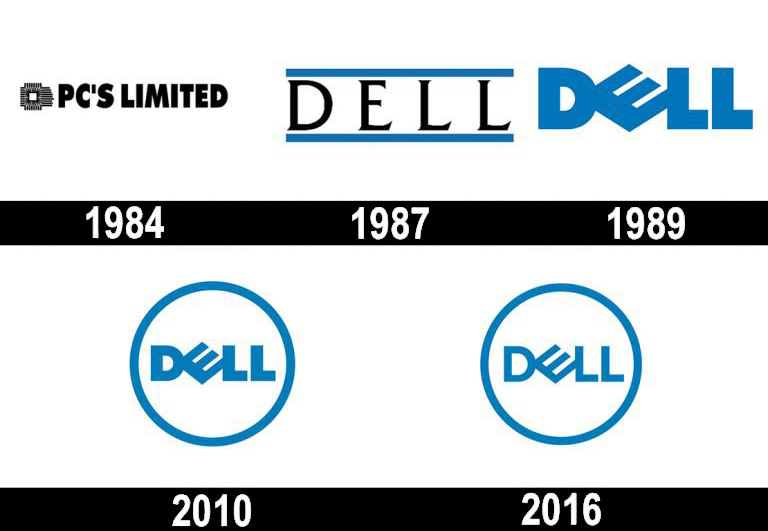
Although Dell’s technological offerings have evolved rapidly, the logo has maintained a clear, stable identity. Each redesign reflects a specific stage in the company’s growth, but the brand has never abandoned the core ingredients of its wordmark—a testament to its confidence and consistency.
1984–1987: The PC’s Limited Era
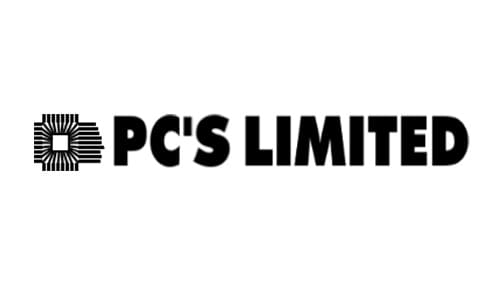
Dell’s first logo belonged to PC’s Limited, the company’s original identity. The design featured a bold, condensed sans-serif wordmark in black, paired with a compact geometric symbol resembling a microcircuit. It communicated precision, engineering, and the technical backbone of the business—a fitting beginning for a hardware startup built on customization and innovation.
1987–1991: The First “Dell” Wordmark
When PC’s Limited officially became Dell, the visual identity followed suit. The new logo introduced a serif wordmark framed between two horizontal blue lines. It was professional, confident, and more corporate, signaling Dell’s transition from a student-run venture to a serious contender in the expanding PC industry.
1989–2010: The Birth of the Slanted “E”
Designed by Siegel+Gale, this redesign cemented Dell’s identity for the next three decades. The wordmark embraced a bold, geometric sans-serif font in a striking shade of blue. The iconic slanted “E”—tilted counterclockwise—appeared for the first time. According to the brand, this design embodied Michael Dell’s ambition to “turn the world on its ear.”
The slanted “E” quickly became a hallmark of Dell’s visual heritage, especially as the company grew into the leading PC seller in the United States.
2010–2016: The Global Circle
In 2010, the logo expanded into a circular frame—a symbol of global reach, connectivity, and Dell’s transition from computers to wider technology solutions. The typeface was subtly refined, gaining more breathing room and balance. The circle unified the brand across packaging, marketing, and devices, presenting Dell as a global tech ecosystem rather than a PC manufacturer.
2016–Today: A Modern, Lightweight Dell
After Dell’s landmark merger with EMC Corporation, the logo received its most recent refinement. The signature slanted “E” remained untouched, but the line weight became thinner, the circular frame sleeker, and the composition cleaner. The updated design reflected Dell’s evolution into a sophisticated enterprise technology provider, emphasizing clarity, reliability, and modernity.
The Meaning and Symbolism Behind the Dell Logo
At first glance, the Dell logo appears minimal—a straightforward wordmark with a geometric twist. Yet each element carries meaning deeply tied to the company’s founder, philosophy, and heritage.
The Slanted “E”
Perhaps the most iconic feature, the tilted “E” is a metaphor for thinking differently and challenging the status quo. It reflects Michael Dell’s mission from the beginning: to disrupt the traditional PC market and reshape what computers could be.
The Circle (2010–Present)
The circular frame introduced in 2010 symbolizes global connectivity and Dell’s expansion into worldwide markets. It also resembles a globe, reinforcing the brand’s international reach.
The Color Blue
Throughout Dell’s history, blue has remained a constant—a symbol of trust, reliability, and technological excellence. In a sea of competing tech brands, Dell’s signature blue communicates stability and competence.
Simplicity as Identity
Dell’s wordmark proves how powerful minimalism can be. Instead of complex symbols, animals, or abstract shapes, the brand built its identity around typography. This choice aligns Dell with other timeless minimalists such as Sony, Samsung, and IBM—brands built on clarity, not ornamentation.
Typography and Craft: The DNA of Dell’s Design
The Dell wordmark has historically been set in variations of Futura Extra Bold, a geometric sans-serif typeface renowned for its stability and modern proportions. Over time, Dell refined the letterforms, adjusting spacing, line weight, and geometry to keep the design contemporary.
The font’s strength lies in its purity—clean geometry, smooth curves, and a balance that feels precise but approachable. In its latest form, the typeface assumes a lighter, more modern profile that aligns with Dell’s shift toward cloud computing, enterprise solutions, and sleek, minimalist hardware.
Color Heritage: Why Dell Blue Endures
The Dell color palette is centered on three tones:
Blue (trust, intelligence, reliability)
Black (strength, authority, professionalism)
White (clarity, simplicity, balance)
Blue is especially significant. For decades, Dell Blue has represented technological integrity and customer loyalty. It reflects the brand’s promise of durability and performance—key attributes in a competitive tech landscape.
Dell’s Logo Legacy: A Symbol of Stability in a Fast-Changing Industry
In a sector defined by rapid change, mergers, disruptive startups, and shifting consumer habits, Dell’s logo has remained one of the industry’s most stable visual identities. Its consistency reflects a brand deeply confident in its purpose and heritage.
What began in a dorm room is now a multinational technology corporation present in over 180 countries. The Dell logo has grown with the company, evolving gently as the brand expanded its influence—from desktops and laptops to servers, cloud infrastructure, cybersecurity, monitors, and enterprise-grade solutions.
The logo is more than a corporate mark; it is a symbol of loyalty, innovation, and the enduring vision of Michael Dell.
The Enduring Heritage of the Dell Logo
The Dell logo stands as a masterclass in typographic branding—simple, memorable, and built on meaning rather than ornament. Its evolution mirrors the company’s journey from a college startup to a global technology powerhouse, while its consistency reflects Dell’s values of reliability, innovation, and long-term vision.
Through a slanted “E,” a circle of global connectivity, and a timeless shade of blue, Dell has crafted an identity that transcends trends and speaks directly to its brand story. The Dell logo remains one of the strongest visual symbols in the world of technology—and a lasting emblem of a company that truly turned the world on its ear.
FAQ Dell Logo
1. Why does the Dell logo have a slanted “E”?
The tilted “E” represents Michael Dell’s mission to “turn the world on its ear,” symbolizing innovation, disruption, and bold thinking.
2. What font does the Dell logo use?
Historically, the Dell logo has used variations of Futura Extra Bold, later refined into a proprietary geometric sans-serif font.
3. Why is the Dell logo blue?
Blue reflects trust, reliability, and technological precision, aligning with Dell’s long-standing brand values.
4. When was the Dell logo first created?
The first logo appeared in 1984 under the company’s original name, PC’s Limited. The iconic slanted “E” debuted in 1989.
5. What does the circle around the Dell logo mean?
Introduced in 2010, the circle symbolizes global presence, unity, and Dell’s expansion beyond personal computers.