
NFL Logo History: Meaning, Symbolism & Brand Heritage
The National Football League is one of the most influential sports organizations in the world, and its visual identity reflects more than a century of tradition, patriotism, and cultural impact. The NFL logo—built on the familiar shield shape—has evolved slowly yet purposefully. Each redesign captures a moment in league history, from the early days of fragmented football teams to the modern era of global recognition.
More than a graphic emblem, the NFL logo functions as a symbol of unity, national pride, and the collective identity shared by players, teams, and millions of fans across the world.
Meaning & Symbolism of the NFL Logo
Since its earliest iterations, the NFL shield has been tied to two core ideas: American identity and organized competition. The stars and stripes echo the U.S. flag, reinforcing football’s standing as a national sport. The football placed in the top section of many versions symbolizes the essence of the game, while the shield shape conveys authority, protection, and tradition.
Today’s NFL emblem continues this lineage. Its design emphasizes clarity, structure, and prestige—qualities associated with a long-standing professional league. The stars represent the NFL’s divisions, the serif lettering reflects institutional strength, and the overall layout underscores continuity between past and present.
NFL Logo Evolution: Timeline & Design Changes
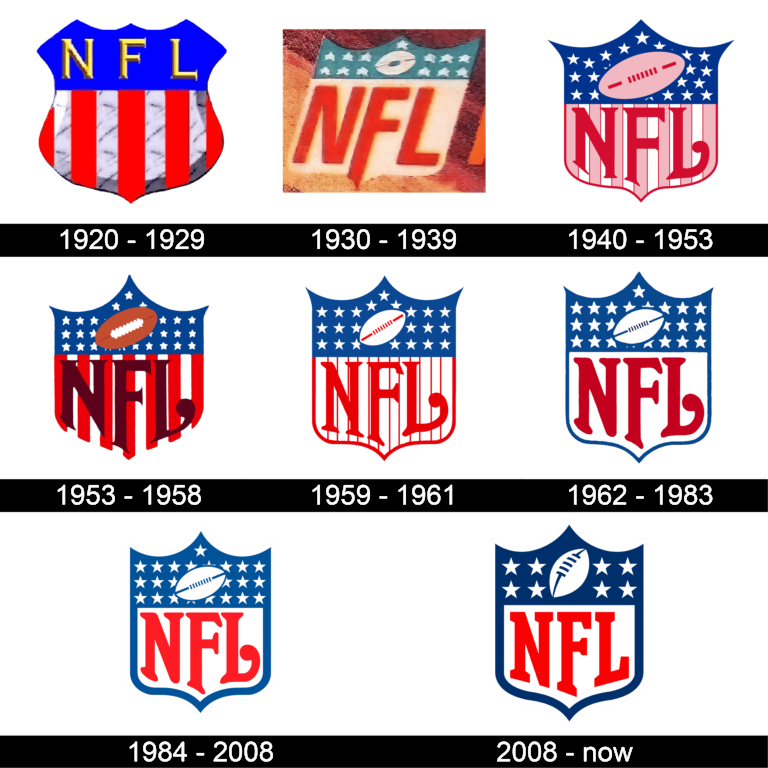
Below is the complete and historically accurate evolution of the NFL logo from 1920 to the present.
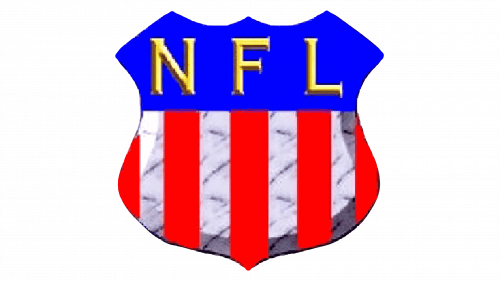
1920–1929: The Early Patriotic Shield
The league’s earliest official logo featured a two-field shield with colors referencing the U.S. flag. The top section displayed a solid blue field with yellow “NFL” lettering, while the lower portion carried vertical red stripes on a white background. This design established the league’s enduring link to American symbolism.
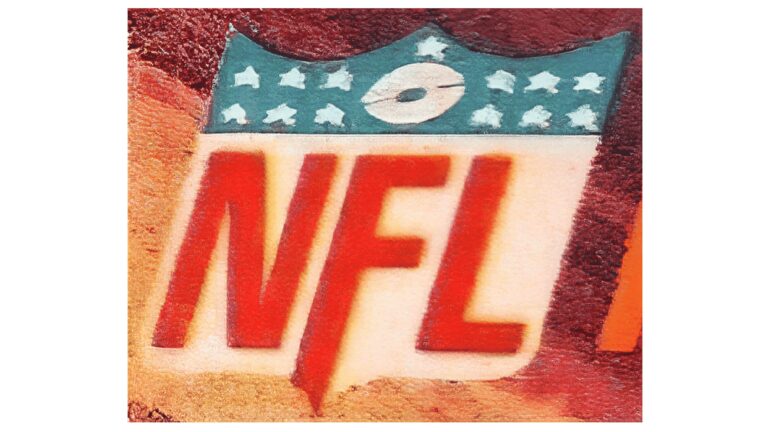
1930–1939: Thirteen Stars for Thirteen Colonies
The redesign of 1930 strengthened the patriotic theme. The blue field at the top now included thirteen white stars, representing the original colonies. The “NFL” lettering moved to the lower half of the shield, set in a bold red sans-serif style. The logo appeared more structured and explicitly national in tone.
1940–1953: A Football Icon Enters the Crest
The 1940 update introduced additional detail and greater visual refinement. The stars remained in the upper section, while the lettering became more stylized. A new oval football—featuring panel stitching and horizontal laces—was added to the blue field, bringing the sport itself into the identity. Colors deepened and the overall shape grew more polished.
1953–1958: A Brighter, Cleaner Shield
During this period, the familiar crest remained but gained several adjustments. The red-and-white striped lower portion brightened, while the “NFL” letters adopted a deeper burgundy tone and sharper contours. The football in the upper section shifted to a brown color, improving its visibility against the blue background.
1959–1961: Lighter Tones and a Larger Football
The 1959 redesign modernized the composition. The stripes became thinner, creating more space for the wordmark, which now appeared in bright red. The football in the top portion enlarged and changed to white, making it more prominent and visually balanced within the crest.
1962–1983: Refinements with Stable Structure
Between 1962 and 1983, the NFL logo retained its structure but underwent subtle refinements. Designers experimented with color tones, stroke widths, and minor shifts to the lettering. Despite these alterations, the shield remained instantly recognizable and consistent with the league’s visual tradition.
1983–2007: A Wider Frame and Improved Geometry
The update of 1983 is easily distinguishable by its wider outer border. The football’s placement within the blue field also shifted slightly for improved alignment. This version represented the league’s move toward cleaner, more stable branding in the television era, when clarity at a distance became increasingly important.
2008–Today: Modern Precision and Eight Stars
The most significant redesign of the modern era arrived in 2008. While the shield shape remained intact, the emblem became more streamlined. Key changes included:
-
Reduction of the star count from many to eight, symbolizing the league’s eight divisions
-
A larger football with a more realistic, pointed shape
-
A refined serif typeface for the “NFL” name
-
A symmetrical layout emphasizing balance and clarity
This version aligns with digital platforms, high-resolution media, and global branding needs.
The NFL Logo as a Cultural Symbol
Beyond its graphic evolution, the NFL shield has become a powerful image in American culture. It appears on jerseys, helmets, stadium fields, broadcasts, and charitable initiatives. It supports campaigns such as “Salute to Service” and “Crucial Catch,” linking the logo to philanthropy and social engagement.
The shield is also legally protected, heavily trademarked, and rigorously defended to maintain authenticity across merchandise and licensing.
Globally, the emblem represents American football in London, Mexico City, Germany, and beyond—helping international audiences associate the sport with one recognizable mark.
Font & Color
Font:
The NFL logo uses a strong, balanced serif typeface designed for readability across uniforms, broadcasts, and digital formats. Its sharp serifs and sturdy proportions reinforce authority, tradition, and the league’s long-standing identity.
Color:
The palette combines navy blue, bright red, and white — a nod to American heritage and national pride. Blue conveys stability and trust, red adds energy and competitive spirit, while white brings clarity and contrast. This combination ensures the shield remains instantly recognizable across all platforms.
The NFL logo
The NFL logo carries over a century of history within its design. From the earliest patriotic shields to the refined identity used today, each version has marked a chapter in the league’s growth. The modern emblem balances heritage with precision, reflecting a sport that is deeply rooted in American culture yet continuously evolving. Its strength lies not only in design but in the unity, loyalty, and passion it represents for millions of fans around the world.
FAQ
What do the eight stars on the NFL logo represent?
They symbolize the league’s eight divisions across the AFC and NFC.
Why did the NFL redesign its logo in 2008?
To modernize the emblem for digital use, improve legibility, and align stars with league organization.
What does the football in the logo symbolize?
It represents the essence of the sport and appears in nearly every version of the crest.
Why is the NFL logo shaped like a shield?
The shield conveys authority, tradition, and competitive integrity—allowing it to function as an institutional badge.
Does the NFL logo always use red, white, and blue?
Yes. While it may appear in monochrome for specific uses, the official palette always reflects the colors of the United States.
5 Facts You Probably Didn’t Know About the NFL Logo
1. The earliest 1921 version featured only three letters and a simplified patriotic pattern
2. The football icon has changed shape multiple times, including a dramatic enlargement in 2008.
3. The 1930s design used thirteen stars to mirror the original American colonies.
4. The 2008 redesign took four years of research, testing, and refinement.
5. The logo’s trademark generates significant revenue through licensing across apparel and memorabilia.