
Bell Logo History: Meaning, Symbolism & Brand Heritage

Bell is one of the oldest and most influential telecommunications brands in North America, and its visual identity has evolved alongside the very technology it helped invent. Founded in the late 19th century by pioneers of telephony, the company grew from a regional telephone provider into a national communications powerhouse shaping how millions of people connect every day. The Bell logo history mirrors this transformation, reflecting shifts in technology, corporate independence, and branding philosophy across more than a century.
What makes Bell’s identity especially compelling is its long relationship with symbolism. Few brands have relied so heavily—and for so long—on a single visual metaphor. Much like the long-running visual narratives explored in the AT&T logo history and the Verizon logo history, Bell’s logo heritage demonstrates how a brand can gradually move from literal representation to abstract modernism while preserving recognizability and trust. Within the broader telecommunications brand logo heritage, Bell stands as a textbook example of disciplined, historically grounded evolution.
Meaning and History: The Origin of the Bell Identity
Bell Canada was founded in 1880 as a regional division of the National Bell Telephone Company, with one of its co-founders being Alexander Graham Bell, the inventor of the telephone. For decades, Bell Canada operated as part of the Bell System, closely aligned with AT&T, sharing not only technology and infrastructure but also visual identity standards.
This relationship shaped the early logo meaning of Bell. The bell symbol itself was both literal and symbolic: it referenced the telephone, communication, and the act of calling, while also conveying authority, reach, and reliability. The brand identity remained closely tied to this emblem until the 1970s, when Bell Canada gained greater independence and began redefining its visual language to reflect autonomy and modernization.
Logo Symbolism: From Literal Device to Abstract Signal
For much of its history, Bell relied on a highly literal form of logo symbolism. The bell icon directly represented the telephone, making the brand instantly understandable in an era when telecommunications were still novel. Over time, additional symbolic layers were introduced, including national motifs such as maple leaves and industrial imagery emphasizing infrastructure and service.
As technology advanced and the company diversified into media, internet, and wireless services, the literal bell gradually lost relevance. The shift toward a pure wordmark reflected a broader change in logo symbolism, where sound, signal, and connection were implied through typography rather than depicted through objects. The modern Bell logo no longer shows a bell, yet it still evokes communication through clarity, simplicity, and rhythm.
Bell Logo History Timeline
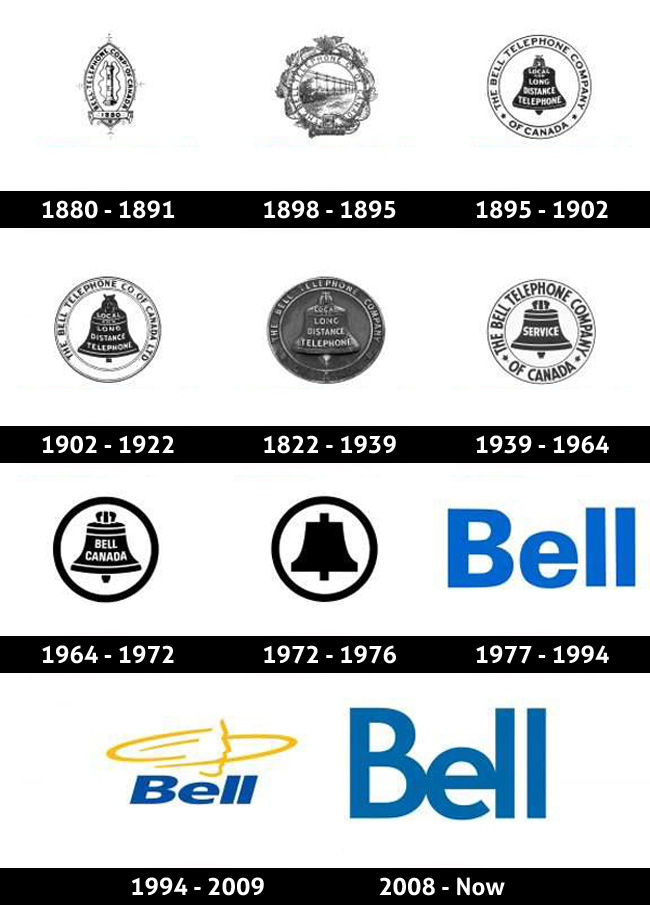
1880–1891: Early Telephone Emblem with Receiver Imagery
The first Bell logo was introduced when the company operated as the Bell Telephone Company of Canada. It featured an elliptical shield containing an early telephone receiver, surrounded by the full company name. Decorative patterns and a ribbon marked “1880” reinforced legitimacy and origin, while the detailed illustration emphasized the novelty of telephone technology.

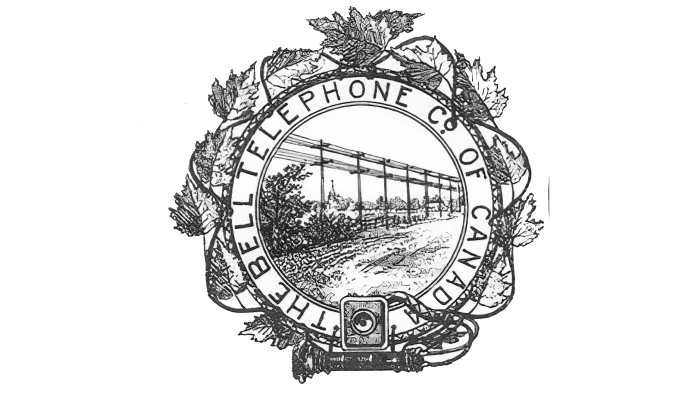
1891–1895: Circular Ivy-Framed Industrial Identity
In 1891, the emblem adopted a circular shape, with the company name placed in a surrounding ring. Ivy leaves formed a decorative frame, symbolizing growth and continuity. At the center, an industrial landscape with telephone lines reinforced Bell’s expanding infrastructure and role in national connectivity.
1895–1902: Introduction of the Bell Symbol
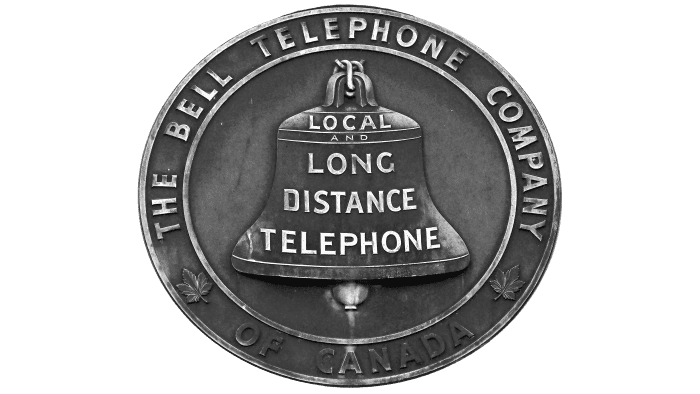
The iconic bell symbol appeared for the first time in 1895. Placed within a circular frame, the bell carried an inscription reading “Local and Long Distance Telephone.” This marked the beginning of Bell’s long association with the bell as its primary visual identifier.

1902–1922: Refined Bell Emblem with Corporate Detailing
In the early 20th century, the bell shape was refined, typography was updated, and additional rings were added to the frame. The logo gained a more structured and corporate appearance, reflecting Bell’s growing scale and organizational maturity.

1922–1939: National Identity with Maple Leaf Accents
The 1922 redesign replaced decorative stars with maple leaves, explicitly linking the brand to Canada. This version reinforced national identity while maintaining the familiar bell symbol at the center.
1939–1964: Service-Oriented Bell Pendant
By the late 1930s, the logo emphasized service rather than technology. The word “Service” appeared prominently, while the bell emblem became more streamlined. Typography grew bolder, improving legibility across print and signage.

1964–1972: Bell Canada Name Integration
Following the official adoption of the Bell Canada name, the logo was simplified. The bell contained only the company name, while surrounding text and ornamentation were removed. The ring turned black, signaling a move toward modern corporate minimalism.

1972–1976: Saul Bass Minimalist Bell Redesign
In the early 1970s, Saul Bass & Associates were commissioned to modernize the Bell identity. The resulting logo reduced the bell to a clean geometric form with no internal text or dividing lines. This design reflected the modernist philosophy of clarity, abstraction, and timelessness.

1977–1994: Transition to Blue Wordmark Identity
After Bell Canada separated from the Bell System and became part of BCE, the traditional bell symbol was abandoned. A blue “BELL” wordmark replaced it, marking a decisive break from shared corporate imagery and asserting brand independence.

1994–2009: Dynamic Italic Wordmark with Graphic Motifs
In 1994, the wordmark became italicized, accompanied by curved yellow lines suggesting motion, human connection, and future-oriented communication. This phase aligned with the rapid expansion of digital and wireless technologies.

2008–Today: Modernized Connected Wordmark
The current Bell logo, introduced in 2008, returned to a clean wordmark based on Don Black’s original concept but with refined typography. The connected lowercase letters, asymmetrical “B,” and angled “e” convey fluidity, speed, and modern digital communication. The design remains wordmark-only, underscoring Bell’s confidence in brand recognition.
Typography and Color Palette
Bell’s contemporary wordmark is set in a geometric sans-serif typeface closely related to Century Gothic Bold. The typography emphasizes round forms and consistent stroke widths, supporting legibility across digital platforms. Subtle asymmetries add character without compromising clarity.
Color has shifted subtly over time, moving through various shades of blue. These changes reflect refinements rather than reinvention, with blue consistently symbolizing trust, reliability, and technological competence—core values in telecommunications branding.
Conclusion: Bell Logo as a Reflection of Technological Progress
The Bell logo history tells the story of a company that evolved alongside communication itself. From literal depictions of early telephone devices to a minimalist wordmark representing digital connectivity, Bell’s logo heritage demonstrates how a brand can shed outdated symbolism while preserving continuity and trust. By embracing simplicity and typographic confidence, Bell has ensured that its identity remains relevant in an industry defined by constant innovation.
FAQ: Bell Logo Meaning and History
What does the Bell logo represent?
The logo represents communication, connection, and reliability, evolving from a literal bell symbol to a modern typographic identity.
Why did Bell remove the bell symbol from its logo?
The bell symbol was removed to modernize the brand and reflect Bell’s expansion beyond traditional telephone services into digital communications.
Who designed the modern Bell logo?
The foundational wordmark concept was created by Don Black, with later refinements introduced in the 2008 redesign.
Is Bell still associated with AT&T?
No, Bell Canada became independent from the Bell System and AT&T in the 1970s and now operates under BCE.