Cinnabon Logo History: Meaning, Symbolism & Brand Heritage
The visual identity of Cinnabon is inseparable from one of the most recognizable baked goods in the world. Since its debut in the mid-1980s, the brand has built its entire logo heritage around a single promise: indulgence, warmth, and sensory pleasure. Unlike many food brands that shift visual focus over time, Cinnabon anchored its identity to its flagship product, allowing the logo history to evolve while never abandoning its core symbol.
This product-centric branding approach mirrors strategies explored in Auntie Anne’s logo history, while the emphasis on emotional craving aligns with patterns seen in Starbucks logo heritage within the broader bakery and dessert brand logo heritage space. The logo meaning of Cinnabon has always been immediate and intuitive, translating aroma, texture, and comfort into visual form.
Meaning and History: The Origin of the Cinnabon Identity
Cinnabon was founded in 1985 as an American bakery brand dedicated to a single standout product: the cinnamon roll. From the beginning, the company’s goal was not menu diversity, but perfection of a specific indulgence. This philosophy shaped the brand’s origin and directly influenced its visual language.
As the brand expanded rapidly, eventually reaching more than one thousand locations across nearly 50 countries, its visual identity became a critical tool for global recognition. The logo history reflects this expansion, evolving from playful, almost confectionery visuals into a more refined and premium badge, without losing its connection to the iconic roll.
Throughout its development, Cinnabon resisted abstract symbolism. Instead, the brand consistently translated its product’s form, texture, and swirl into graphic elements. This continuity reinforced trust and craving simultaneously, anchoring the logo meaning in sensory familiarity.
Logo Symbolism: Indulgence, Warmth, and Sensory Memory
The Cinnabon logo symbolism is rooted in physical experience rather than metaphor. The swirl, present in every version of the logo, directly references the spiral shape of the cinnamon roll. This repetition creates instant association, allowing customers to recognize the brand even without reading the name.
Curved lines dominate the logo description, evoking softness, warmth, and richness. These curves contrast deliberately with sharp or rigid forms often used in fast-food branding, signaling indulgence rather than speed. Even when sharper peaks were introduced in later designs, they served to frame and elevate the curves rather than replace them.
Color plays a decisive symbolic role. Deep blue communicates trust and stability, while white reinforces cleanliness and clarity. Accents inspired by cinnamon tones subtly reference flavor and aroma, grounding the logo meaning in taste and comfort rather than abstraction.
Cinnabon Logo History Timeline
1985–1994: Playful Product-Centric Identity
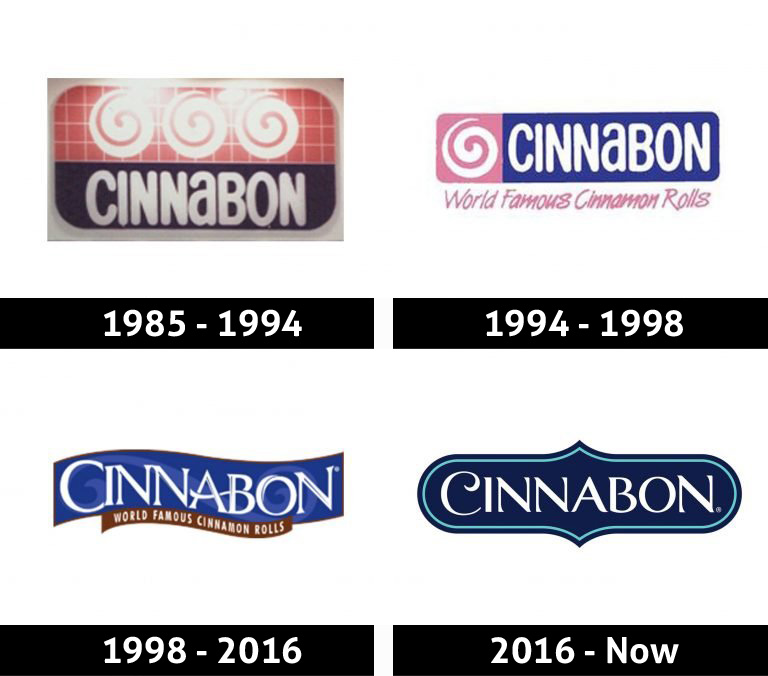
The original Cinnabon logo featured a rounded rectangular badge divided horizontally. The upper section displayed a pink background with a white checkered pattern and three stylized cinnamon rolls, immediately emphasizing the product. The lower blue section contained a bold white wordmark in a rounded sans-serif typeface. This composition balanced playfulness with legibility, creating a friendly and approachable identity during the brand’s early expansion.
1994–1998: Simplified Banner and Swirl Emphasis
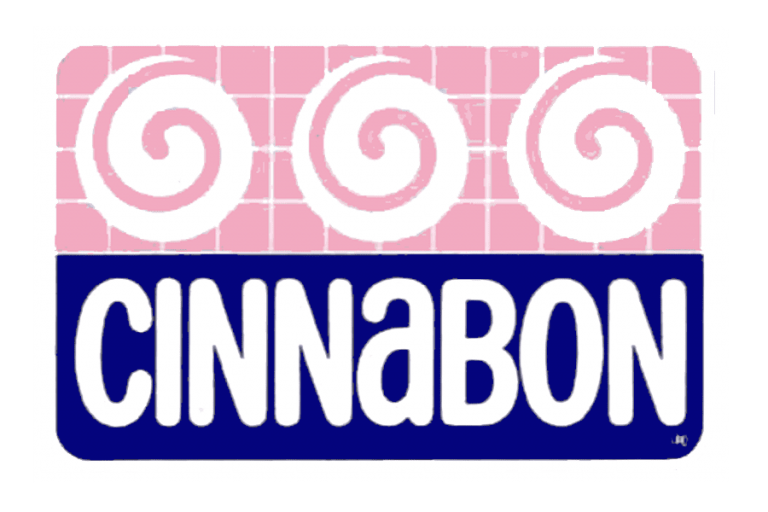
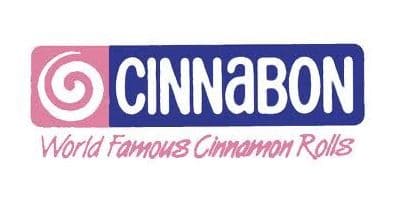
In 1994, the logo was streamlined while retaining its original color palette. The cinnamon roll imagery was reduced to a single white swirl emblem placed on a pink background, positioned to the left of the wordmark. The blue banner remained, now paired with the tagline “World’s Famous Cinnamon Rolls” rendered in a cursive script. This update reinforced brand confidence while improving visual clarity and adaptability.
1998–2016: Ornamental Badge and Premium Refinement
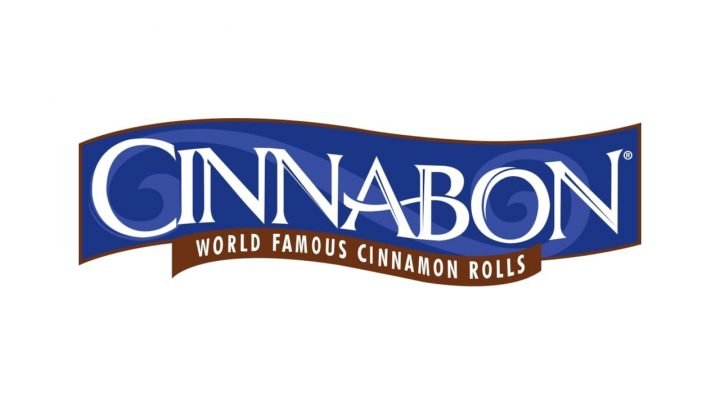
The 1998 redesign introduced a more sophisticated visual language. A deep blue badge with flowing, ornamental lines referenced the curves of the cinnamon roll in a more abstract and elegant way. The serif wordmark appeared in all capitals, with an enlarged initial letter and a subtly open “O” echoing the roll’s spiral shape. Brown accents in the tagline mirrored the color of cinnamon, strengthening the sensory connection. This version marked Cinnabon’s transition into a globally recognized premium indulgence brand.
2016–Today: Modernized Heritage Emblem
The current logo preserves the established blue palette while introducing sharper peaks and a double-outline badge structure. The refined serif wordmark remains central, with the enlarged “C” featuring a curved tail that once again references the roll’s iconic form. This redesign balances modern branding expectations with strong logo heritage continuity, ensuring instant recognition across digital and physical environments.
Cinnabon Logo Heritage and Product-Driven Identity
The Cinnabon logo history demonstrates the power of unwavering product focus in brand identity. Rather than reinventing its symbolism, the brand refined and elevated it, allowing the logo meaning to mature alongside global expansion. Every iteration reinforced the same sensory promise: warmth, indulgence, and familiarity.
Within the bakery and dessert category, Cinnabon’s logo heritage stands as a benchmark for consistency and emotional branding. Its visual identity proves that when a product becomes iconic, the logo’s role is not to distract, but to amplify recognition and desire.
FAQ: Cinnabon Logo Meaning and History
What does the Cinnabon logo represent?
The logo represents indulgence, warmth, and sensory pleasure, directly inspired by the shape and texture of the cinnamon roll.
Why does every Cinnabon logo include a swirl?
The swirl references the iconic cinnamon roll, ensuring immediate product association and brand recognition.
Has the Cinnabon logo changed significantly over time?
The logo has evolved stylistically, but its core elements and symbolism have remained consistent since 1985.
What do the blue and white colors in the Cinnabon logo symbolize?
Blue conveys trust and reliability, while white adds clarity and balance, allowing the indulgent product imagery to stand out.