
Bank of America Logo History: Meaning, Symbolism & Brand Heritage

Bank of America is one of the most influential financial institutions in the United States, not only because of its scale, but also due to the way it has consistently aligned its corporate identity with national values, trust, and stability. Few banking brands have managed to combine heritage and modernity as effectively, and the evolution of its logo reflects this balance with remarkable clarity.
Similar to the long institutional refinement seen in the Chase logo history and the patriotic symbolism embedded in the Wells Fargo logo history, Bank of America’s visual identity tells a story of continuity, adaptation, and deliberate restraint. Within the broader landscape of American banking logo heritage, it stands as a textbook example of how visual consistency strengthens credibility over time.
Meaning and History: The Origin of the Bank of America Identity
Bank of America was founded in 1904 by Amadeo Giannini under the name Bank of Italy. Its original mission was to serve immigrants and working-class Americans who were often ignored by established financial institutions. In 1930, as the bank expanded nationally, it adopted the name Bank of America, signaling its ambition to become a truly nationwide financial organization.
Although the institution itself predates many modern banks, its recognizable logo history begins in the 20th century, when branding became an essential component of corporate identity. Unlike brands that frequently reinvent themselves, Bank of America introduced only two core logo concepts, refining them gradually rather than replacing them outright.
This approach ensured that logo meaning and public perception evolved together, reinforcing trust rather than disrupting it.
Logo Meaning: National Identity and Financial Security
The Bank of America logo meaning is closely tied to national identity and institutional stability. From the late 20th century onward, the brand intentionally incorporated visual elements that echo the American flag, positioning itself as a pillar of the national financial system.
Rather than relying on abstract symbols, the logo communicates reassurance through familiar forms, balanced geometry, and restrained typography. The message is clear: Bank of America is established, dependable, and deeply embedded in the economic fabric of the country.
Logo Symbolism: Patriotism and Protection
In terms of logo symbolism, the modern Bank of America emblem functions on multiple levels. Its red, white, and blue color scheme directly references the United States flag, evoking patriotism, unity, and trust. At the same time, the emblem’s structure resembles a woven blanket or shield, subtly suggesting protection and security.
This dual symbolism aligns with the bank’s role as both a national institution and a personal financial guardian, serving individuals, businesses, and governments alike.
Bank of America Logo History Timeline
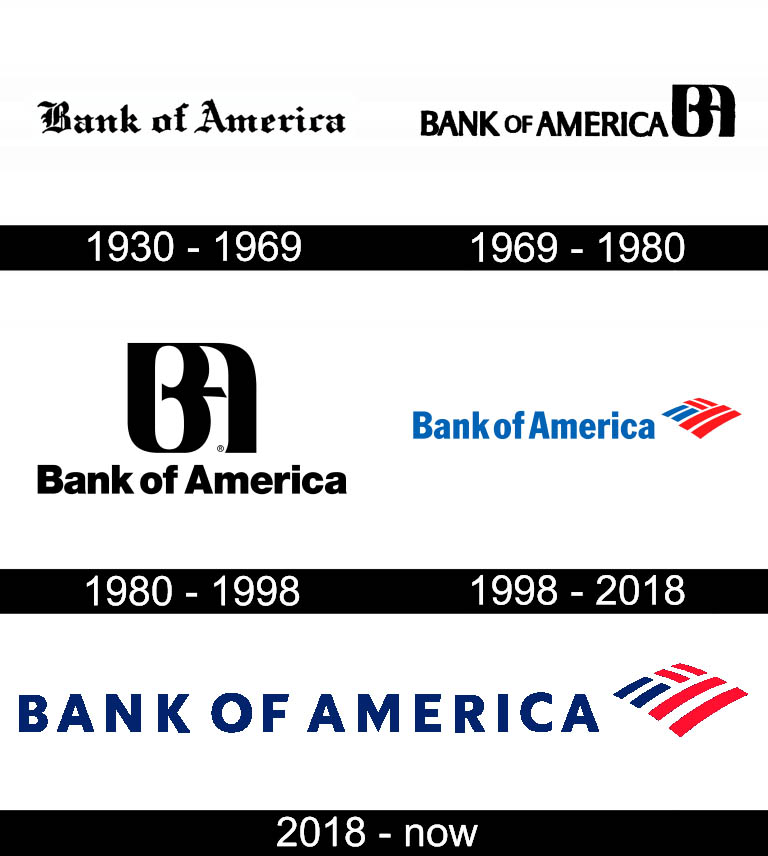
1930–1969: Gothic Authority
The first widely recognized Bank of America logo, used from 1930 to 1969, relied entirely on typography. The name appeared in a bold Gothic typeface, a stylistic choice that conveyed seriousness, permanence, and authority. At a time when financial trust was paramount, this heavy lettering projected stability and institutional strength without the need for additional symbols.

1969–1980: The Monogram Era
In 1969, Bank of America introduced its first emblem alongside the wordmark. The logo featured an elegant all-caps inscription paired with a stylized “BA” monogram placed to the right. The monogram’s smooth, rounded lines softened the identity while maintaining professionalism, signaling a more modern and approachable banking experience.

1980–1998: Emblem-Centered Identity
The 1980 redesign elevated the monogram to a central position above the wordmark. The typography shifted to a bold, straightforward sans-serif similar to Helvetica, emphasizing clarity and responsibility. This version marked a transition toward a more contemporary corporate image while preserving visual continuity.

1998–2018: The Flag-Inspired Emblem
A major transformation occurred in 1998, introducing the now-iconic red and blue emblem. The wordmark appeared in a bold blue sans-serif typeface, while the emblem took the form of a rhombus composed of six rectangular segments separated by white lines.
Resembling the American flag, the emblem also evoked the idea of a protective blanket, reinforcing themes of safety, warmth, and trust. This redesign positioned Bank of America as a modern yet deeply patriotic institution.

2018–Today: Refined Modernity
The 2018 update refined the existing concept rather than replacing it. White lines within the emblem became thicker, the blue darkened for stronger contrast, and the wordmark gained more spacing between letters. These adjustments enhanced legibility and digital performance while preserving the logo’s established symbolism.
Typography and Color Palette
Typography plays a critical role in the Bank of America logo description. Early serif and Gothic typefaces emphasized tradition and authority, while later sans-serif designs introduced clarity and modernity. The current uppercase wordmark uses a clean, heavy sans-serif typeface with generous spacing, projecting confidence and professionalism.
The color palette is intentionally patriotic. Blue represents trust and expertise, red conveys strength and determination, and white adds clarity and balance. Together, these colors reinforce the bank’s national presence and emotional resonance.
Logo Heritage and Brand Continuity
Bank of America’s logo heritage demonstrates how visual identity can evolve without sacrificing recognition. By maintaining core elements and refining them thoughtfully, the bank ensured that each redesign strengthened rather than diluted brand equity.
Within discussions of financial institution logo history, Bank of America is often cited as a model of controlled evolution, where symbolism, typography, and color work together to support long-term trust.
Bank of America Logo as a Symbol of National Trust
The Bank of America logo is more than a corporate mark; it is a visual statement of national identity, financial security, and institutional confidence. From Gothic lettering to a refined flag-inspired emblem, each stage of its evolution reflects a careful balance between heritage and progress. Its enduring presence proves that strong logo heritage is built through consistency, meaning, and respect for origin.
FAQ: Bank of America Logo Meaning and History
What does the Bank of America logo represent?
The logo represents national identity, financial stability, and protection through patriotic colors and structured geometry.
Why does the Bank of America logo use red, white, and blue?
These colors reference the U.S. flag and evoke trust, strength, and unity.
When was the current Bank of America logo introduced?
The current refined version was introduced in 2018.
Has Bank of America changed its logo often?
No, the bank has relied on only two major logo concepts, refining them over time rather than redesigning completely.