
Cleveland Browns Logo History: Meaning, Symbolism & Brand Heritage
Few NFL franchises have built a stronger identity through what they don’t show than the Cleveland Browns. Founded in 1944 in Ohio, the Browns remain one of the most unconventional case studies in professional sports branding. While most teams rely on mascots, crests, or aggressive symbols, Cleveland transformed a plain orange helmet into one of the strongest statements in modern logo history.
This disciplined approach to visual identity places the Browns in the same conversation as other heritage-driven franchises explored in the Green Bay Packers logo history and the color-first tradition seen in the Chicago Bears logo history. Within American football branding, the Browns stand apart as a rare example where logo heritage is built on consistency and restraint rather than constant reinvention.
Meaning and History: The Origin of the Cleveland Browns Identity
The Cleveland Browns were founded by businessman Arthur McBride, who turned to journalist John Dietrich for advice on hiring a head coach. Dietrich recommended Paul Brown, then a rising coaching figure from Ohio State. Brown’s appointment in 1945 shaped not only the team’s sporting philosophy, but its name and identity.
A public contest was held to name the team, with “Cleveland Panthers” emerging as the winner. Paul Brown rejected it due to historical associations with a defunct local club. With no alternative proposed, McBride unilaterally named the team the Cleveland Browns—after the coach himself—without Brown’s approval. Ironically, the name would become one of the most enduring in professional sports.
From the beginning, the Browns emphasized discipline, function, and seriousness. This mentality later extended to visual identity. While early logos featured mascots, the franchise gradually moved toward an identity stripped of illustration, relying instead on color, equipment, and tradition. The logo meaning evolved from character-driven imagery to pure symbolism through uniform and helmet design.
Cleveland Browns Logo History Timeline
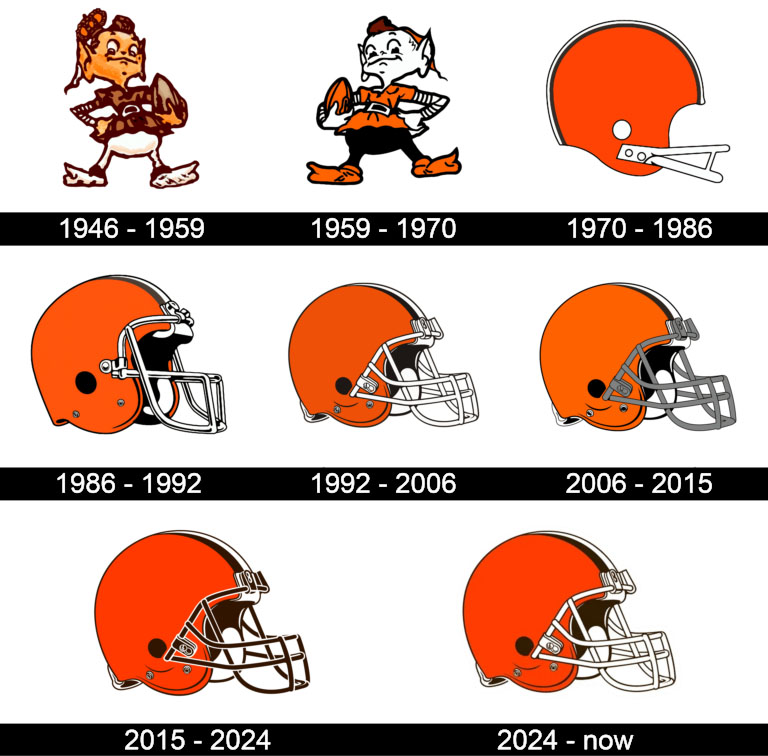
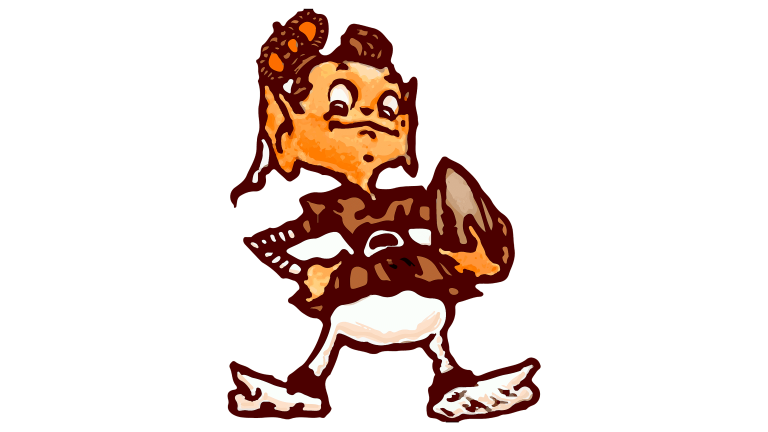
1946–1959: Brownie the Elf and Playful Beginnings.
The first Cleveland Browns logo debuted in 1946 and featured Brownie the Elf, a cartoonish figure dressed in brown and white, holding a football. The character embodied confidence, optimism, and competitive spirit. At a time when sports branding leaned heavily on mascots, Brownie fit perfectly into the visual language of mid-century American football.
This version reflected a lighter, more approachable side of the franchise, emphasizing personality and fan engagement rather than intimidation.
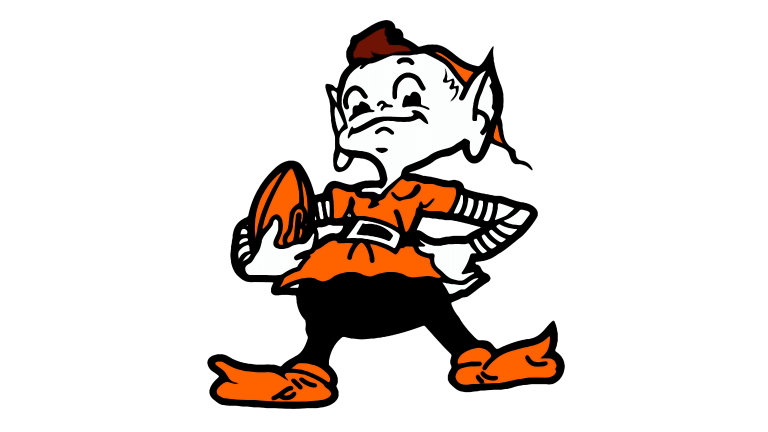
1959–1970: Modernized Brownie and Energy Shift.
In 1959, Brownie the Elf was redesigned. The color palette shifted toward orange and white, aligning more closely with what would become the team’s signature colors. The illustration became bolder, with thicker outlines and more dynamic posture. The elf’s head turned slightly, adding movement and intensity.
Despite its refinement, this logo marked the end of the mascot-dominated era. The Browns were already moving toward a more austere identity.
1970–1986: The Birth of the Plain Helmet.
In 1970, the Cleveland Browns introduced what would become their defining symbol: the plain football helmet. Rendered in profile, the helmet was orange with a white facemask and no logo whatsoever. This was a radical departure from NFL norms.
What appeared minimal was, in fact, deeply symbolic. The absence of a logo emphasized team-first mentality, discipline, and tradition. The helmet itself became the logo, redefining logo symbolism in professional sports.
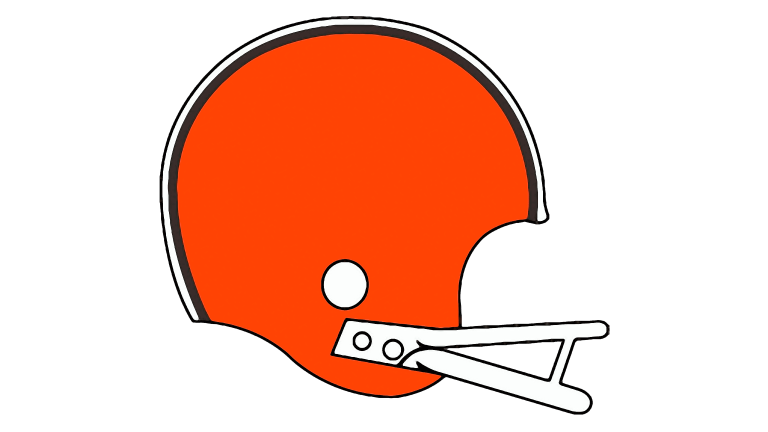
1986–1992: Orange Dominance and Dimensional Realism.
The helmet was redesigned in 1986, now shown in a three-quarter view and colored in a deeper orange. The facemask gained depth through white and gray shading, adding realism. This version reinforced orange as the Browns’ defining color—energetic, bold, and unmistakable.
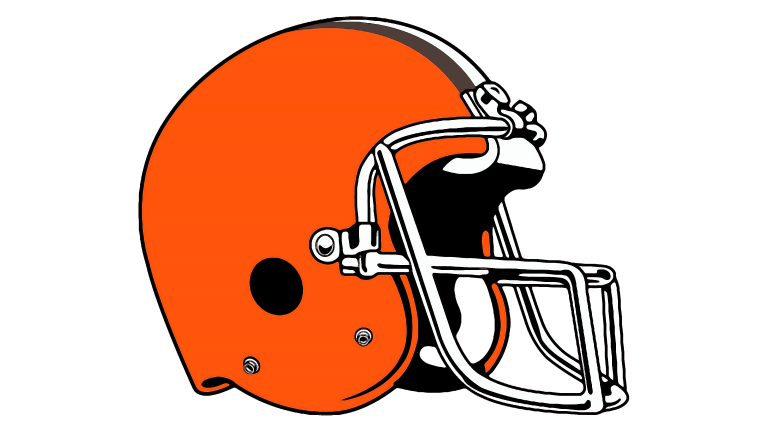
1992–2006: Refinement and Structural Detail.
In 1992, the helmet received further refinements. White padding was added to the back, contrast was increased, and proportions became more precise. These updates reflected advances in equipment design while preserving the identity’s minimalist core.
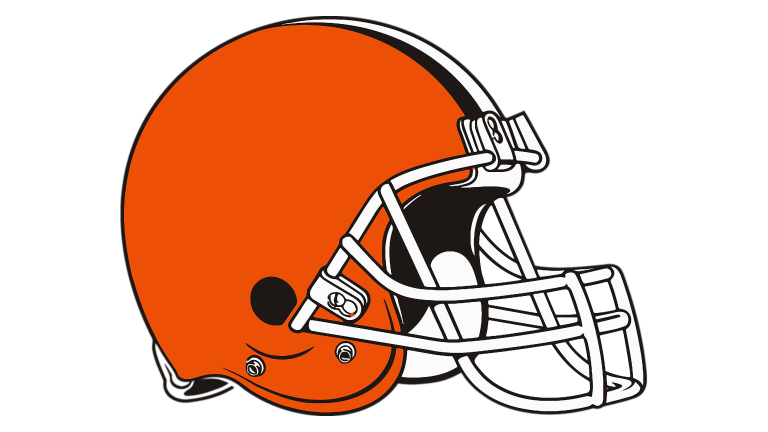
2006–2015: Stability and Professional Gravity.
The 2006 update introduced gray into the color palette, signaling maturity and seriousness. While the helmet’s structure remained unchanged, the tonal adjustment suggested a more professional, grounded era for the franchise.
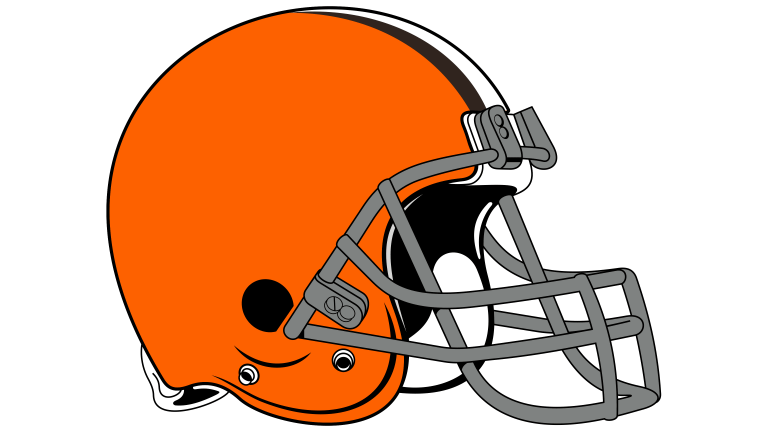
2015–2024: Aggression and Modern Contrast.
In 2015, the Browns intensified their orange and introduced a black facemask. The result was more aggressive and contemporary. This version coincided with the introduction of the Dawg Pound secondary logo, a snarling dog face used in alternate branding. Still, the primary identity remained the helmet.
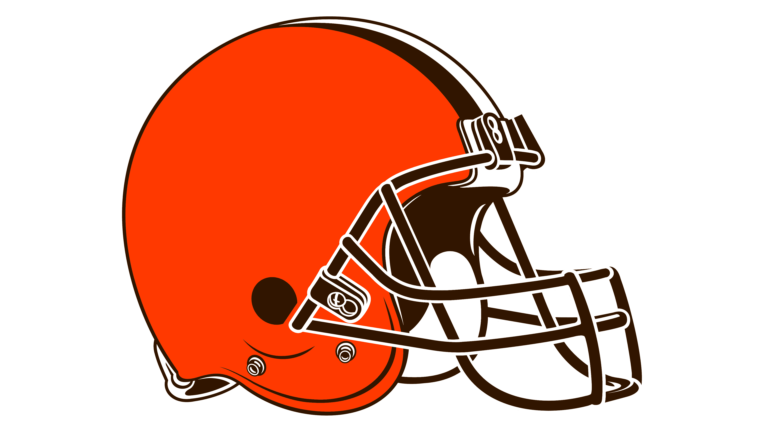
2024–Today: Return to Heritage Balance.
The most recent update returned the facemask to white, restoring a brighter, more classic look. This move reaffirmed the Browns’ commitment to tradition and historical continuity, reinforcing their unique position in NFL logo heritage.
Logo Symbolism: Identity Through Absence
The Cleveland Browns logo symbolism is defined by what it refuses to show. No animal. No lettermark. No mascot. The helmet itself—plain, orange, unbranded—communicates discipline, unity, and resistance to trends.
Orange symbolizes energy, resilience, and visibility. Combined with white and brown accents, it creates one of the most recognizable color systems in the NFL. The helmet’s emptiness becomes its power, turning minimalism into identity.
Helmet, Uniform, and Visual System
The helmet is the Browns’ primary emblem. Its design—solid orange with a central stripe—has remained consistent for decades. This visual restraint extends to uniforms, which rely on orange, brown, and white in carefully balanced combinations.
The Browns’ visual system proves that logo description does not always require graphic elements. Sometimes, color, equipment, and repetition are enough to build one of the strongest brand identities in sports.
Cleveland Browns Logo Heritage and Cultural Impact
The Cleveland Browns logo history challenges conventional branding wisdom. By rejecting overt symbols, the franchise created one of the most distinctive identities in professional sports. Their logo heritage is not about change, but about conviction.
In a league where reinvention is constant, the Browns stand apart. Their identity is rooted in continuity, memory, and cultural stubbornness. The plain helmet is not an absence—it is a statement. And within the broader conversation of sports logo heritage, the Cleveland Browns remain unmatched.
FAQ: Cleveland Browns Logo Meaning and History
What is the Cleveland Browns logo?
The Cleveland Browns logo is a plain orange football helmet with no emblem, making them the only NFL team without a helmet logo.
Why don’t the Cleveland Browns have a logo on their helmet?
The team chose minimalism to emphasize tradition, discipline, and uniqueness, turning the helmet itself into the logo.
What was the original Cleveland Browns logo?
The original logo featured Brownie the Elf, a mascot symbolizing confidence and competitive spirit.
Where does the name Cleveland Browns come from?
The name honors Paul Brown, the team’s first head coach and co-founder.