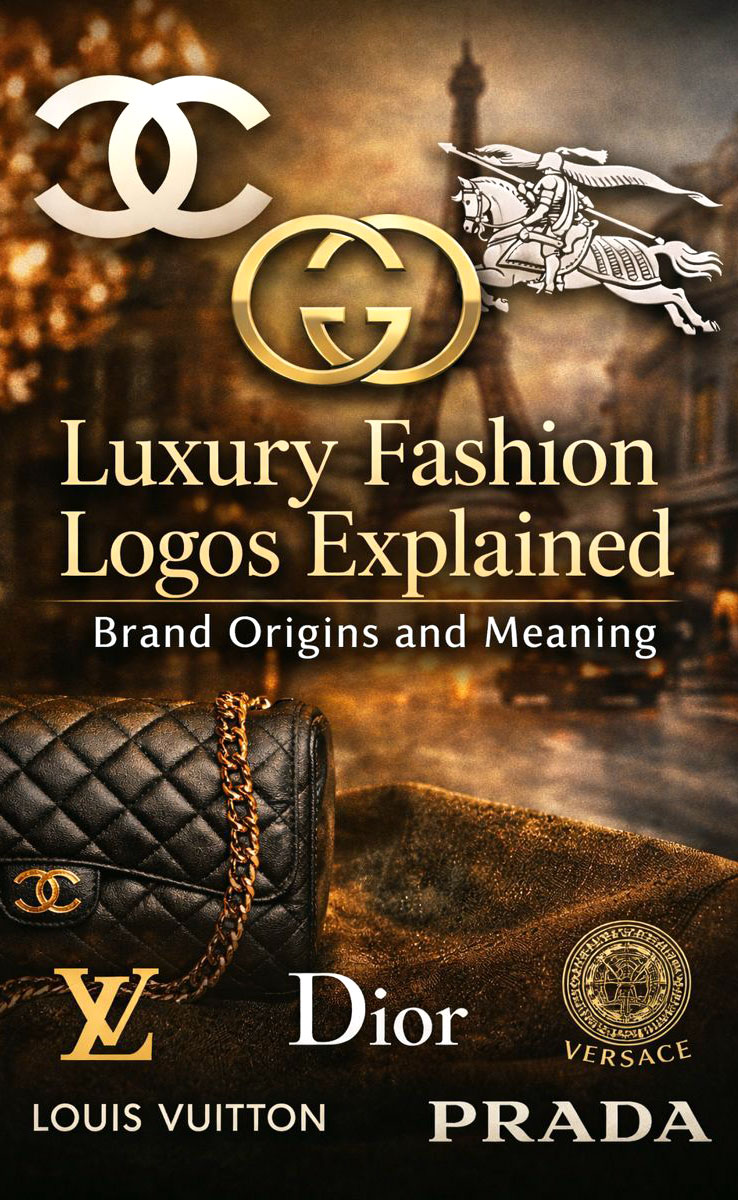
Luxury Fashion Logos Explained: Brand Origins and Meaning
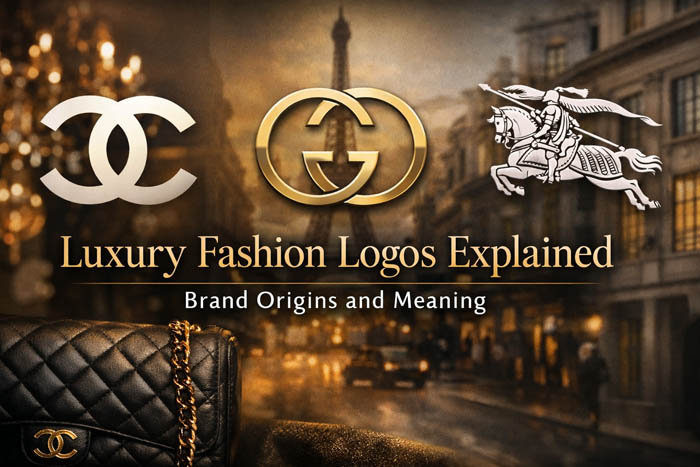
Luxury fashion logos are not designed to explain themselves. They exist to be recognized, remembered, and desired. Unlike logos in mass-market industries, luxury fashion branding relies on continuity, restraint, and cultural symbolism rather than constant reinvention. Over time, these logos become shorthand for craftsmanship, heritage, and social status.
To understand luxury fashion logos is to understand how geography, history, and national identity shape visual language. Paris, Milan, London, and New York did not merely produce fashion houses — they shaped entire branding philosophies that continue to define how luxury looks today.
What Luxury Branding Means in Fashion
Luxury branding in fashion is built on scarcity, storytelling, and emotional value. A luxury logo does not compete for attention; it assumes it. Many of the most powerful luxury fashion logos rely on typography, monograms, or restrained emblems that gain authority through repetition rather than spectacle.
In this context, logos become cultural markers. They signal belonging, aspiration, and taste. Their strength lies in what they represent rather than what they depict. This is why luxury fashion logos tend to evolve slowly, preserving recognizability across generations.
France: The Foundation of Modern Luxury Fashion Logos
France stands at the core of modern luxury branding. Parisian fashion houses established the visual rules that many brands still follow: elegant typography, minimal symbolism, and an emphasis on heritage.
The Chanel logo history represents the pinnacle of restrained luxury. The interlocking double “C” is symmetrical, monochrome, and instantly recognizable. Chanel’s refusal to modernize aggressively has allowed the logo to transcend trends, becoming a permanent symbol of timeless elegance.
The Louis Vuitton logo meaning tells a different but equally powerful story. Created as a mark of craftsmanship and protection against counterfeiting, the LV monogram evolved into a decorative pattern that dominates luxury fashion. Its repetition transformed the logo into a design language rather than a simple identifier.
The Dior logo symbolism relies almost entirely on typography. The serif wordmark communicates refinement and authority, reinforcing the brand’s roots in haute couture. Dior’s logo has changed little over time, reinforcing continuity and trust.
The Yves Saint Laurent logo history, designed by Cassandre, remains one of the most influential fashion monograms ever created. By stacking the initials into a single vertical composition, YSL blurred the line between art and branding, shaping decades of fashion logo design.
French luxury fashion logos prioritize balance, proportion, and cultural authority. Their restraint communicates confidence rather than distance.
Italy: Emotion, Craftsmanship, and Expressive Identity
Italian luxury fashion branding embraces emotion, ornament, and sensuality. Rooted in craftsmanship and artistic heritage, Italian logos are often more expressive and symbolic than their French counterparts.
The Gucci logo history centers on the interlocking double “G,” a monogram that functions both as identity and ornament. Gucci’s branding thrives on visibility and repetition, turning the logo into a pattern that defines entire collections.
In contrast, the Prada logo meaning reflects intellectual luxury. Prada’s understated typography and minimal visual identity communicate restraint, modernity, and conceptual fashion. The logo’s power lies in its refusal to perform.
The Versace logo symbolism, featuring Medusa, draws directly from classical mythology. Unlike typographic wordmarks, Versace’s emblem is bold and confrontational, reinforcing the brand’s association with glamour, excess, and dramatic self-expression.
Italian luxury fashion logos celebrate personality and narrative. They are not afraid to evoke history, mythology, or emotion, reinforcing Italy’s role as a center of expressive design.
The United Kingdom: Heritage, Tailoring, and British Identity
British luxury fashion logos are shaped by tradition, craftsmanship, and a deep sense of history. Unlike the overt drama of Italian branding or the purity of French logos, British luxury identities emphasize authenticity and continuity.
The Burberry logo history reflects this approach. From its equestrian knight emblem to its refined modern wordmark, Burberry’s branding communicates resilience, tradition, and national identity. Even recent redesigns preserve the brand’s historical foundation.
British luxury logos often draw from aristocratic symbolism, military tailoring, and understated elegance. Their authority comes from longevity rather than reinvention.
The United States: Lifestyle, Accessibility, and Modern Luxury
American luxury fashion logos developed in a different cultural environment. Rather than centuries-old couture traditions, American brands emphasize lifestyle, aspiration, and global accessibility.
The Ralph Lauren logo meaning, symbolized by the polo player, represents an idealized vision of luxury rooted in leisure, heritage, and social aspiration. The emblem communicates status while remaining approachable.
The Calvin Klein logo history demonstrates the power of minimal typography in modern branding. Its clean wordmark reflects youth, confidence, and cultural relevance, relying on repetition and visibility rather than historical symbolism.
American luxury logos often blur the boundary between high fashion and mass culture, making luxury feel attainable while preserving aspiration.

Monograms, Wordmarks, and the Language of Luxury
Luxury fashion logos rarely rely on complex imagery. Instead, they favor monograms and wordmarks that function as flexible visual systems.
Monograms, such as those used by Louis Vuitton, Gucci, and Yves Saint Laurent, serve both decorative and protective roles. They reinforce identity through repetition while discouraging imitation.
Wordmarks, preferred by brands like Dior, Prada, and Calvin Klein, emphasize clarity and authority. Typography becomes the logo itself, allowing brands to remain adaptable across products and platforms.
This typographic focus allows luxury fashion logos to remain timeless while adapting to new contexts.
Modern Evolution and Digital Adaptation
As luxury brands expand across digital platforms, logos have undergone subtle refinements. Flat design, simplified typography, and improved legibility have become essential, particularly for mobile and e-commerce environments.
However, the core identities remain unchanged. Successful luxury brands modernize without abandoning heritage, ensuring continuity while embracing technological change.
Why Luxury Fashion Logos Endure
Luxury fashion logos endure because they are built on meaning rather than novelty. They represent accumulated cultural value, craftsmanship, and aspiration. Over time, these logos transcend products, becoming symbols of taste, status, and identity.
Within the broader context of logo history, luxury fashion branding stands apart for its discipline and longevity. While trends shift rapidly, luxury logos remain anchors of stability and recognition.
Luxury Logos as Cultural Signatures
Luxury fashion logos are cultural signatures shaped by origin, history, and identity. From French refinement and Italian expression to British tradition and American lifestyle branding, these logos reflect the values of the cultures that created them.
By examining luxury fashion logos through their origins, we gain insight into how branding reflects society itself. In a global fashion landscape driven by constant change, luxury logos endure precisely because they remain rooted in meaning.
FAQ — Luxury Fashion Logos
What defines a luxury fashion logo?
A luxury fashion logo is defined by restraint, consistency, and long-term recognizability. Rather than relying on trends, luxury logos communicate heritage, craftsmanship, and symbolic value through typography, monograms, or minimal emblems.
Why do many luxury fashion brands use monograms?
Monograms allow luxury brands to combine identity and decoration. They reinforce brand recognition through repetition while serving as a visual signature that can be integrated into patterns, accessories, and packaging.
How does country of origin influence luxury fashion logos?
National culture plays a major role in luxury branding. French logos emphasize elegance and typography, Italian logos express emotion and ornament, British logos reflect heritage and tradition, while American logos focus on lifestyle and accessibility.
Why do luxury fashion logos change so slowly?
Luxury brands prioritize continuity over novelty. Frequent logo changes can weaken brand equity, so most luxury fashion houses refine proportions and typography subtly rather than redesigning their logos entirely.
Are minimalist logos more effective in luxury fashion?
Minimalist logos often perform well in luxury fashion because they convey confidence and authority. Simplicity allows logos to remain timeless, adaptable, and recognizable across different cultural and digital contexts.
How have luxury fashion logos adapted to the digital era?
Luxury fashion logos have been refined for digital platforms through flatter designs, cleaner typography, and improved legibility, while preserving their core identity and historical elements.