Stranger Things Logo History: Meaning, Symbolism & Brand Heritage
Stranger Things is more than a television series; it is a carefully constructed cultural artifact rooted in nostalgia, genre memory, and visual storytelling. Launched in 2016 by Netflix, the show quickly became a global phenomenon, spanning four seasons and redefining how modern audiences engage with retro-inspired narratives. Set in the fictional town of Hawkins, Indiana, the series blends supernatural horror with coming-of-age drama, wrapped in a meticulously recreated 1980s atmosphere.
The Stranger Things logo history plays a critical role in this success. From its first appearance, the logo established tone, genre, and emotional expectation before a single scene unfolded. Its logo meaning is inseparable from the show’s narrative identity, while its logo symbolism draws heavily from the visual language of classic horror literature and cinema. Few modern TV shows demonstrate such a disciplined and intentional approach to logo heritage.
Meaning and History: The Origin of the Stranger Things Logo
Stranger Things was created by Matt Duffer and Ross Duffer, commonly known as the Duffer Brothers. Before Stranger Things, they were relatively unknown, with only minor projects behind them. The series became their breakthrough, in part because of its ability to channel familiar influences into something original.
From the beginning, the creators envisioned a project that felt like a lost artifact from the 1980s. The show was initially conceived as a reimagining of themes found in the works of Stephen King, combined with the cinematic sensibilities of early Steven Spielberg and Ridley Scott. This vision extended beyond story and characters into every visual element, including the logo.
The logo origin was therefore not a branding afterthought, but a foundational design decision. It needed to feel authentic to the era, instantly recognizable, and emotionally charged. The title treatment had to signal “school horror,” mystery, and danger while remaining legible and iconic.
Stranger Things Logo History Timeline
2016 (Season One): Establishing the Visual Identity
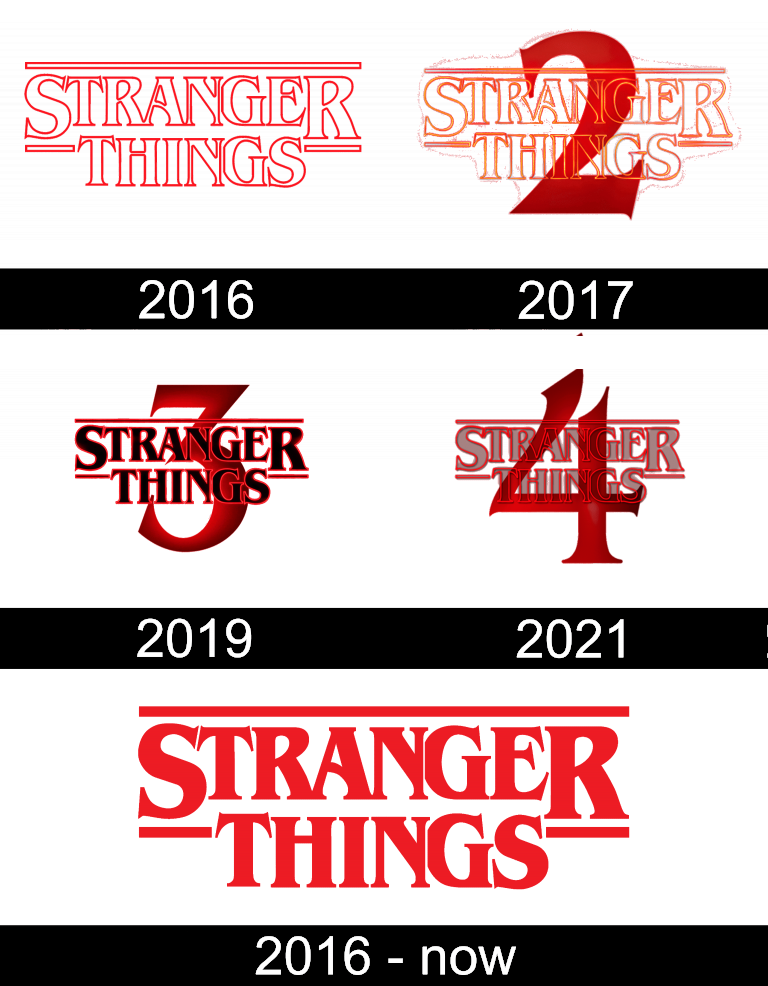
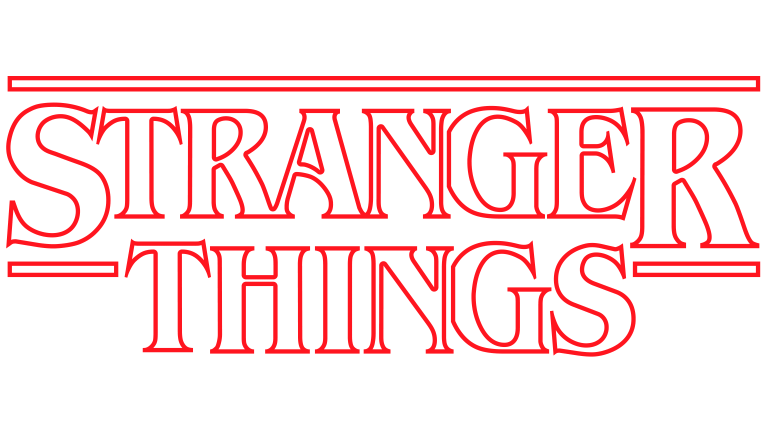
The original Stranger Things logo introduced in 2016 featured a two-level uppercase wordmark rendered in a sharply contoured serif typeface. Executed in red and placed against a black background, the lettering was accompanied by three horizontal lines: one long line above the title and two shorter lines flanking the lower word.
A subtle neon glow effect softened the edges of the red contours, evoking the look of illuminated motel signs and paperback book covers from the late 1970s and early 1980s. This design immediately positioned the show within a specific cultural and aesthetic context, setting it apart from contemporary television branding.
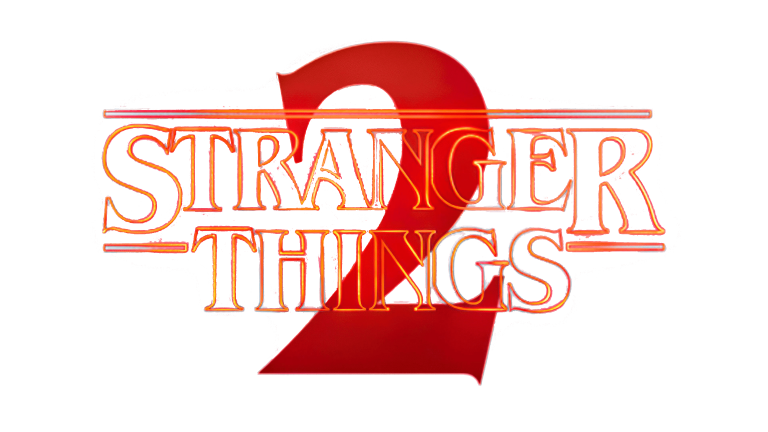
2017 (Season Two): Numerical Integration and Heightened Drama
With the release of the second season, the logo was modified to include a large numeral “2” placed behind the wordmark. The typography remained unchanged, but the color treatment shifted slightly toward a more vivid red-orange gradient. The number appeared darker and heavier, reinforcing a sense of escalation and deepening danger without disrupting brand continuity.
2019 (Season Three): Contrast and Visual Density
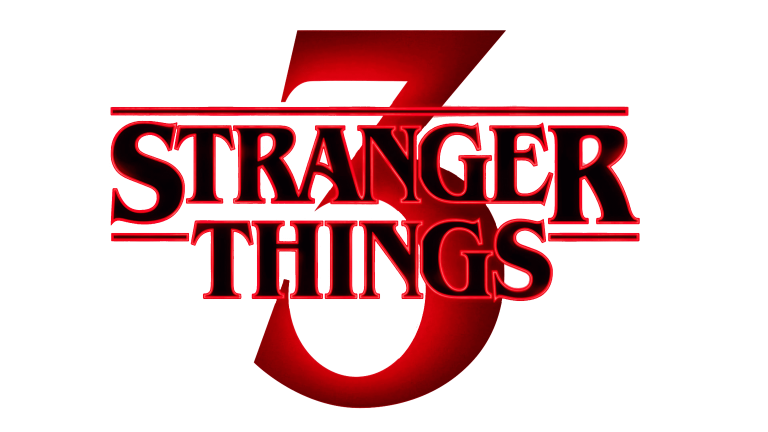
For the third season, the logo introduced stronger contrast. The letters themselves became black, outlined in red, and layered over a large red-to-black gradient numeral “3.” This version emphasized visual density and intensity, mirroring the more expansive and chaotic narrative of the season.
2021 (Season Four): Refinement and Elegance
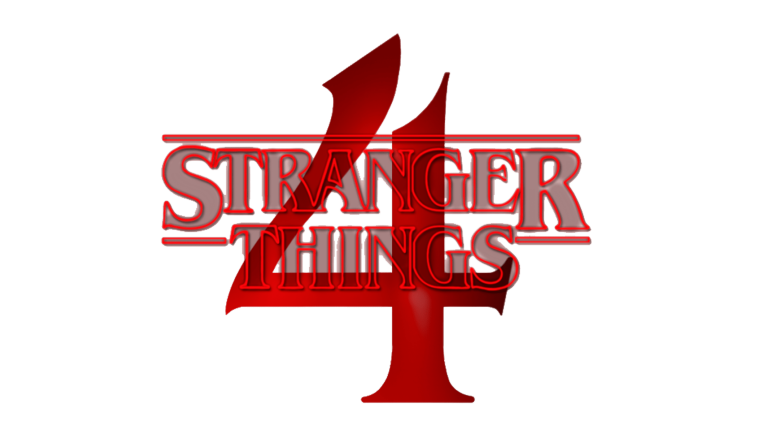
The fourth-season logo retained the established structure but refined its execution. The lettering appeared in a translucent gray, allowing the background numeral “4” to dominate visually. The numeral featured more elegant curves and sharper angles, signaling a darker, more mature chapter in the story.
2016–Today: The Core Logo System
Despite seasonal variations, the core Stranger Things logo has remained consistent since 2016. The two-line wordmark, horizontal rules, and distinctive serif typography form a stable identity system. Outside of season-specific materials, the logo is most often presented as a flat red wordmark on black or white backgrounds, reinforcing long-term recognition.
Logo Symbolism: Horror, Nostalgia, and Suspense
The symbolism of the Stranger Things logo is deeply embedded in horror and science-fiction traditions. The red color does not signify romance or passion, but danger, fear, and the unknown. Paired with black, it evokes darkness, secrecy, and psychological tension.
The horizontal lines framing the title serve both aesthetic and symbolic purposes. Visually, they anchor the typography and enhance balance. Symbolically, they resemble chapter dividers or cinematic framing devices, reinforcing the idea of episodic storytelling and suspense.
The logo’s restrained complexity mirrors the show’s narrative approach: familiar elements arranged in unsettling ways.
Typography and Color in the Stranger Things Logo
Typography is the defining feature of the Stranger Things visual identity. The logo is based on ITC Benguiat, a decorative serif font designed in 1977 by Ed Benguiat. Originally inspired by Art Nouveau typography, ITC Benguiat became closely associated with Stephen King book covers during the late 1970s and 1980s.
For Stranger Things, the font was heavily customized. Letter spacing was tightened, characters were vertically stretched, and several serifs were reshaped to create a more compact and ominous appearance. The initial “S” and “T” were modified for greater visual weight, while letters such as “A,” “R,” and “G” were adjusted to improve cohesion.
Color usage is equally intentional. The red gradient against black recalls neon signage and vintage horror posters. It creates a hypnotic, slightly unsettling effect, reinforcing the show’s atmosphere of mystery and dread.
Creative Direction and Design Influence
The logo and title sequence were developed in collaboration with Imaginary Forces, a studio known for cinematic title design. According to interviews, the Duffer Brothers supplied the design team with numerous Stephen King novels to study their cover typography and composition.
The goal was not imitation, but immersion. The logo needed to feel as though it belonged to the same cultural moment as the inspirations that shaped the show itself.
Stranger Things Logo Heritage and Brand Identity
The Stranger Things logo heritage demonstrates how typography alone can carry narrative weight. Without symbols, mascots, or abstract marks, the logo relies entirely on letterform, spacing, and color to communicate identity.
This approach has proven remarkably durable. Across multiple seasons and global marketing campaigns, the logo remains instantly recognizable. It has become synonymous not just with the show, but with a broader revival of retro horror aesthetics in contemporary media.
A Modern Logo Built from the Past
The Stranger Things logo history is a masterclass in deliberate visual storytelling. By anchoring its identity in typographic tradition and cultural memory, the series created a logo that feels timeless rather than trendy.
Its success lies in restraint, consistency, and respect for its influences. The Stranger Things logo does not simply label a TV show; it sets the emotional stage, acting as a gateway into a world where nostalgia and terror coexist. As a piece of logo heritage, it stands among the most effective and culturally resonant identities of modern television.
FAQ: Stranger Things Logo Meaning, Symbolism, and History
What does the Stranger Things logo represent?
The logo represents mystery, danger, and nostalgia, inspired by 1980s horror literature and cinema.
What font is used in the Stranger Things logo?
The logo is based on a customized version of the ITC Benguiat typeface.
Who created the Stranger Things logo?
The logo was developed by Imaginary Forces in collaboration with the Duffer Brothers.
Why is the Stranger Things logo red?
Red symbolizes danger, suspense, and horror rather than romance or passion.
Does the Stranger Things logo change every season?
The core logo remains the same, with seasonal variations adding numerals and stylistic refinements.
Is the Stranger Things logo copyrighted?
While the typography is based on a commercial font, Stranger Things is a registered trademark owned by Netflix.