
Ford Mustang Logo History: Meaning, Symbolism & Brand Heritage
Few automotive brands are as deeply woven into popular culture as Mustang. Introduced in 1964 by the Ford Motor Company, the Mustang was conceived as a youthful, stylish, and affordable sports car that could redefine the American driving experience. What followed was not merely the launch of a new model, but the birth of an icon. Over the decades, more than ten million Mustang vehicles have been produced, each carrying one of the most recognizable automotive emblems in history.
The Mustang logo history is inseparable from the car’s cultural impact. From the very beginning, the brand relied on a powerful visual symbol to communicate freedom, speed, and individuality. The logo meaning goes far beyond decoration; it reflects a philosophy rooted in motion, independence, and American identity. Unlike many automotive marques that evolved their symbols repeatedly, Mustang built its logo heritage around a single, enduring idea.
In the broader context of automotive branding, Mustang occupies a unique position. While it is part of a larger corporate structure, its visual identity has always stood apart, much like other legendary performance-driven brands. This approach has allowed the Mustang logo to become a standalone cultural symbol, instantly recognizable even outside the context of Ford.
Meaning and History: The Origin of the Mustang Logo
The first Ford Mustang was unveiled in 1964, following an extensive development and naming process. Early prototypes carried the name “Cougar,” complete with a matching animal logo. Other potential names, including Allegro, Torino, and Avanti, were also considered before Ford ultimately settled on “Mustang.”
Despite common assumptions, the name was officially inspired by the P-51 Mustang fighter plane rather than the horse itself. However, the symbolism of the mustang horse proved far more powerful and enduring than the aviation reference. The image of a free-running horse captured the spirit Ford wanted to convey: speed without restraint, style without excess, and performance accessible to a younger audience.
Once the name and emblem were finalized, Ford committed fully to the concept. Unlike brands that frequently revisit their logo origin, Mustang’s visual identity was refined but never reimagined. This commitment laid the foundation for one of the strongest logo heritage stories in automotive history.
Mustang Logo History Timeline
The Birth of the Running Horse Emblem
The Mustang logo made its debut together with the first production model of the car. From the beginning, the brand adopted the image of a horse in motion, chosen to represent freedom, speed, and independence. The earliest version of the emblem depicted the horse in a more elongated galloping posture, with the head and neck positioned almost horizontally. This initial design conveyed raw movement rather than refined aggression, aligning with the Mustang’s original positioning as an affordable yet aspirational sports car.
Transition from Gallop to Run
As the Mustang evolved, the horse emblem gradually shifted from a galloping pose to a more controlled running stance. The silhouette became more compact, and the anatomy of the horse was adjusted to emphasize muscular structure and balance. This stage marked the beginning of the emblem’s transformation into the iconic running pony recognized today. The changes were subtle, aimed at improving visual clarity and adaptability across different car bodies rather than redefining the logo’s meaning.
Sharpening the Silhouette
Over time, the Mustang emblem became visually stronger and more assertive. The contours of the horse were sharpened, unnecessary details were removed, and the overall form gained a more aggressive character. This refinement reflected the growing performance reputation of the Mustang and its shift toward a bolder design language. Despite these adjustments, the emblem retained its core proportions and direction, reinforcing continuity rather than change.
The Modern Running Pony
In its current form, the Mustang logo represents the most refined expression of the original concept. The horse appears leaner, faster, and more dynamic, with crisp edges and a confident forward motion. The emblem communicates precision and power while remaining faithful to the identity established at the brand’s inception. Rather than introducing a new symbol, Ford chose to perfect the existing one, strengthening the Mustang’s logo heritage through restraint.
Consistency as a Design Philosophy
What defines the Mustang logo history is not a series of redesigns, but a disciplined approach to evolution. Each adjustment built upon the previous version, preserving the emotional meaning of the running horse. This consistency allowed the emblem to transcend design trends and become a timeless symbol of American automotive culture.
Logo Symbolism: Freedom in Motion
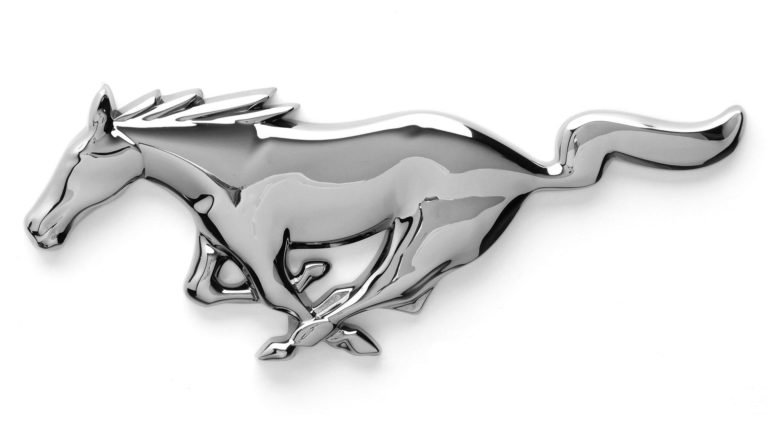
The symbolism of the Mustang logo is built around one central idea: freedom. The mustang horse represents untamed motion, independence, and raw energy. Unlike heraldic animals used by many European car brands, the Mustang horse is not static or defensive. It is depicted in full motion, embodying progress rather than authority.
One of the most distinctive aspects of the logo symbolism is the horse’s direction. The emblem famously shows the horse running from right to left, opposite the conventional left-to-right movement seen in many logos. Various interpretations exist, ranging from artistic convenience to deliberate symbolism. Regardless of the origin, this unconventional direction reinforces the idea that Mustang moves against the norm.
This focus on emotional symbolism places Mustang alongside other iconic automotive brands where identity is driven as much by feeling as by engineering.
Typography and Color in the Mustang Logo
While the emblem itself dominates the visual identity, color plays an essential supporting role. The Mustang horse is most commonly rendered in metallic silver, a color associated with precision, performance, and modern engineering. Silver also allows the emblem to adapt seamlessly across different body colors and design generations.
Red has frequently been used as a background or accent color, particularly in branding materials and special editions. This combination of silver and red reinforces the brand’s association with speed, passion, and controlled power. Occasional variations, such as patriotic color treatments or awareness ribbons, have appeared over the years, but the core palette remains restrained and timeless.
Typography has always taken a secondary role in the Mustang identity. When used, it tends to be bold, clean, and understated, ensuring that the running horse remains the undisputed focal point.

Mustang Logo Heritage and Brand Identity
The Mustang logo heritage is defined by continuity. In nearly six decades, Ford has never abandoned the running horse concept. This consistency has allowed the emblem to transcend its role as a car badge and become a cultural symbol recognized far beyond the automotive world.
Unlike many sub-brands within large automotive groups, Mustang maintains a distinct identity that often eclipses its parent brand in recognition. This strategy mirrors approaches seen in other performance-oriented marques, where visual identity serves as a badge of belonging rather than a corporate signature.
Conclusion: An Enduring Symbol of American Automotive Culture
The Mustang logo history demonstrates how a single, well-chosen symbol can define a brand for generations. From its 1964 debut to the present day, the running horse has remained a powerful representation of freedom, speed, and individuality.
By refining rather than reinventing its emblem, Mustang preserved the emotional core of its identity while adapting to changing eras. The result is a logo heritage that remains instantly recognizable, culturally relevant, and deeply embedded in the story of American automotive design.
FAQ: Mustang Logo Meaning, Symbolism, and History
What does the Mustang logo represent?
The Mustang logo represents freedom, speed, independence, and the spirit of open-road driving.
When was the Mustang logo introduced?
The Mustang logo was introduced in 1964 alongside the first Ford Mustang.
Who designed the Mustang emblem?
The original Mustang horse emblem was designed by Phil Clark.
Why is the Mustang horse running from right to left?
The direction has multiple interpretations, including artistic choice and symbolic independence, and has become part of the logo’s unique identity.
Has the Mustang logo changed over time?
The logo has been refined over the years but has never undergone a complete redesign.
What colors are most associated with the Mustang logo?
Silver is the primary color of the emblem, often paired with red accents.