Unilever Logo History: Meaning, Symbolism & Brand Heritage
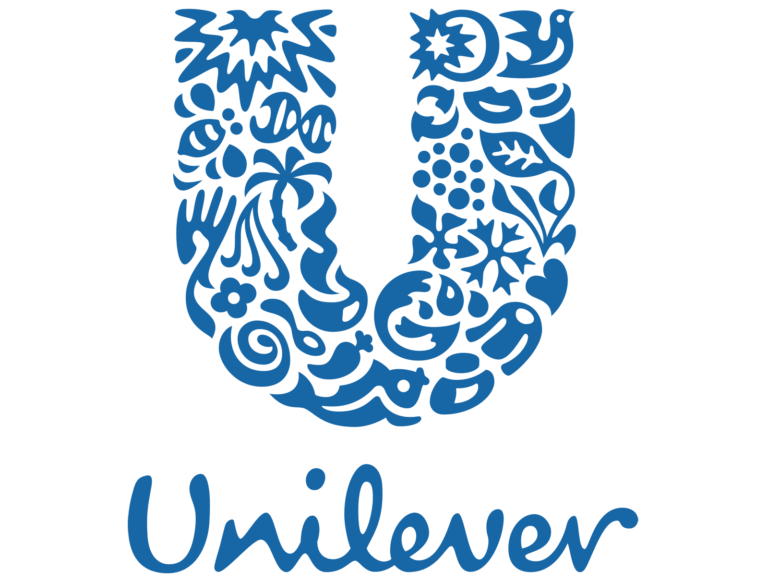
As one of the world’s largest consumer goods companies, Unilever manages hundreds of brands that shape everyday life, from food and beverages to personal care and household products. Behind this vast portfolio stands a corporate logo that is both unusually poetic and rigorously structured: a large blue “U” composed of dozens of small symbols.
The Unilever logo is not merely an initial. It is a visual manifesto—an attempt to condense the company’s philosophy, values, and global scope into a single letter. Its restrained evolution over time makes it a strong example of modern corporate logo heritage.
Meaning and History: The Origin of the Unilever Logo
Unilever was founded in 1929 through the merger of British soapmaker Lever Brothers and Dutch margarine producer Margarine Unie. Despite the company’s early establishment, Unilever did not adopt a unified corporate logo until decades later. For much of its early history, the group operated primarily through its individual brands, each with its own identity.
This changed in the second half of the 20th century, as Unilever grew into a truly global corporation. The need for a strong parent-brand identity became apparent—not to overshadow its brands, but to quietly endorse them with credibility, trust, and consistency.
The logo origin reflects this intent. Rather than using a literal emblem or abstract mark, Unilever centered its identity on its initial: the letter “U.” Over time, this letter would become a container for meaning rather than just a typographic sign.
Unilever Logo History Timeline
1967–2004: Structural Authority and Corporate Stability
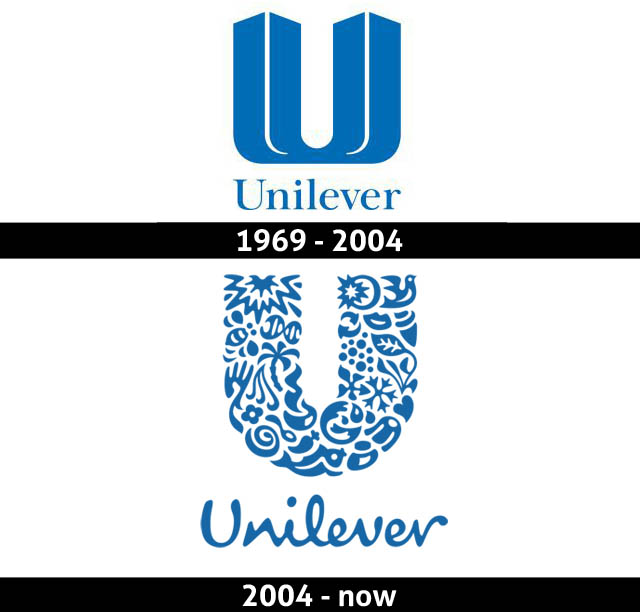
The first official Unilever logo was introduced in 1967. It featured a large, stylized capital “U” positioned above a traditional wordmark. The color palette—blue and white—was deliberately chosen to convey clarity, trust, and professionalism.
The “U” itself was architectural in nature. Its vertical strokes had sharp, triangular edges, resembling towers or arrowheads. This gave the emblem a sense of strength, structure, and authority. The letter felt monumental, almost institutional, reflecting Unilever’s growing global influence.
Beneath the emblem, the word “Unilever” appeared in title case, set in a refined serif typeface. This typography added gravitas and balance, reinforcing the company’s image as stable, established, and dependable.
For nearly four decades, this logo remained unchanged—an exceptional lifespan for a multinational corporation.
2004–Today: Symbolic Complexity and Humanization
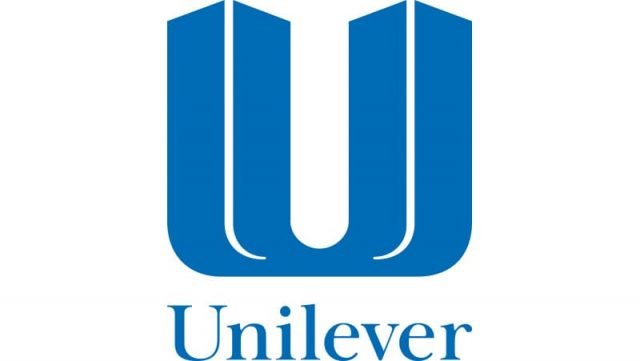
In 2004, Unilever introduced its first and only major redesign, created by Wolff Olins. While the overall structure was preserved—a large “U” above the wordmark—everything else was reimagined.
The new “U” became rounded, softer, and more approachable. Most significantly, it was no longer a single solid shape. Instead, it was constructed from 25 distinct icons, each representing an aspect of Unilever’s business, values, or mission. These include symbols related to food, nature, science, hygiene, sustainability, and culture.
The color blue was deepened and enriched, giving the logo greater visual weight and confidence. The wordmark was transformed completely, shifting from a formal serif to a handwritten cursive script. This change humanized the brand, suggesting care, creativity, and accessibility—qualities increasingly important for a company whose products are used daily by billions of people.
Logo Symbolism: A Letter Built from Meaning
The symbolism of the Unilever logo is unusually explicit for a corporate identity. Each icon within the “U” has a defined meaning, collectively forming a visual narrative of the company’s scope and values.
Common interpretations include:
-
A leaf, symbolizing nature and sustainability
-
A bee, representing creativity, hard work, and environmental responsibility
-
A double helix, referencing science, nutrition, and health
-
A spoon, fish, and chili, pointing to food and taste
-
A hand and heart, suggesting care and human connection
Rather than relying on abstraction, Unilever chose literal symbolism, trusting that transparency and storytelling would strengthen emotional connection. The result is a logo that invites exploration rather than demanding instant comprehension.
Typography and Color in the Unilever Logo
Typography plays a critical role in balancing complexity. The handwritten cursive wordmark softens the intricate emblem above it, preventing the logo from feeling overly corporate. Its rounded strokes and fluid rhythm communicate warmth and approachability.
The consistent use of blue anchors the entire identity. Blue has long been associated with trust, reliability, and intelligence—qualities essential for a parent brand overseeing food, health, and hygiene products. By avoiding multiple colors at the corporate level, Unilever allows its sub-brands to express themselves freely while maintaining a coherent umbrella identity.
Unilever Logo Heritage and Brand Architecture
Unilever’s logo heritage is defined by restraint. In nearly a century of existence, the company has used only two official logos. This consistency signals confidence and long-term thinking.
Importantly, the Unilever logo is not designed to dominate packaging. Instead, it often appears subtly, acting as a seal of trust rather than a primary brand marker. This approach respects the independence of flagship brands like Dove, Lipton, Knorr, Domestos, Magnum and Axe, while still unifying them under a shared philosophy.
Unilever Logo Meaning and Evolution: Conclusion on Corporate Logo Heritage
The Unilever logo history demonstrates how a corporate identity can be both stable and expressive. Its meaning evolved from architectural authority to symbolic storytelling, without abandoning its core structure.
By transforming a single letter into a mosaic of ideas, Unilever created a logo that reflects complexity without chaos. It stands as a rare example of corporate logo heritage done thoughtfully—where evolution adds depth rather than noise, and symbolism reinforces trust rather than obscuring it.
FAQ: Unilever Logo Meaning, Symbolism, and History
What does the Unilever logo represent?
The logo represents the company’s values, activities, and global mission through a “U” made of symbolic icons.
When was the first Unilever logo introduced?
The first official Unilever logo was introduced in 1967.
Who redesigned the Unilever logo in 2004?
The redesign was created by branding agency Wolff Olins.
Why is the Unilever logo blue?
Blue symbolizes trust, reliability, and professionalism.
How many symbols are inside the Unilever “U”?
The logo is composed of 25 individual symbols, each with a specific meaning.