
GMC Logo History: Meaning, Symbolism & Brand Heritage
GMC stands as one of the most enduring names in American automotive history, a brand whose identity has been forged alongside the rise of trucks, utility vehicles, and the culture of work and durability that defines them. As a subsidiary of General Motors, GMC has always occupied a distinct position within the broader GM universe. While Chevrolet often represents mass accessibility and Cadillac embodies luxury, GMC has consistently focused on strength, professional-grade engineering, and a premium interpretation of utility. This positioning is reflected not only in its vehicles but also in the evolution of its logo, which mirrors more than a century of industrial ambition, technological progress, and brand refinement.
Originally founded in 1900 as the Grabowsky Motor Company, GMC entered the General Motors family in 1911, at a time when the American automotive industry was still defining itself. Over the decades, the brand evolved from a manufacturer of basic commercial trucks into a producer of sophisticated pickup trucks, SUVs, and performance-oriented utility vehicles such as the Denali line and the modern Hummer EV. Throughout this transformation, GMC’s visual identity has remained closely tied to ideas of power, reliability, and engineering precision. The GMC logo history is therefore not just a record of graphic changes, but a visual narrative of how the brand has consistently aligned itself with professional-grade performance.
GMC Logo History & Evolution Timeline
The visual history of GMC closely mirrors the brand’s transformation from a regional truck manufacturer into one of the most recognizable names in American automotive engineering. While the logo has never chased decorative excess, it has continuously evolved to reflect strength, reliability, and industrial confidence—values that sit at the core of GMC’s logo heritage.
1911–1947: The Birth of GMC Identity
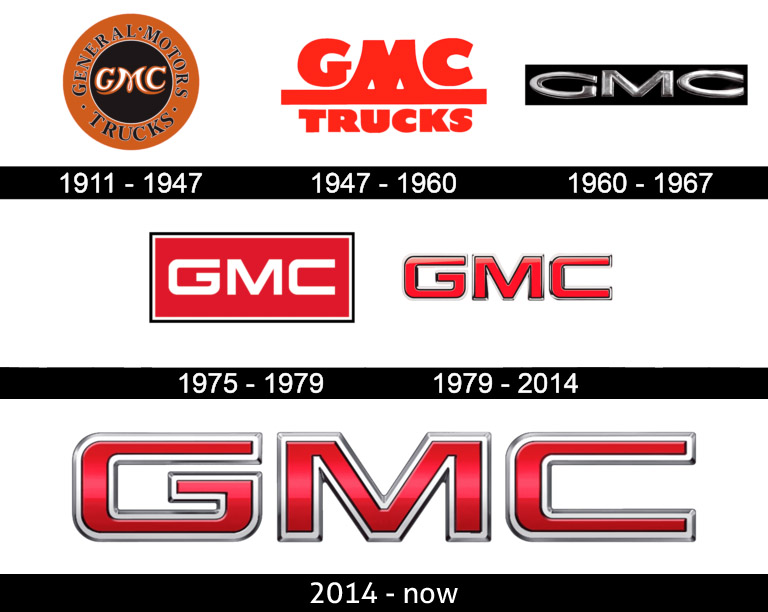
GMC’s earliest logo appeared shortly after the brand was absorbed into General Motors in 1911. At the time, the company was still known formally as the General Motors Truck Company, and its emblem reflected this transitional phase. The badge resembled a tire-like roundel, symbolizing motion, durability, and mechanical purpose. At the center, the initials “GMC” appeared in stylized lettering, surrounded by the full name “General Motors Trucks.” The typography leaned toward a serif and slightly gothic aesthetic, common in early 20th-century industrial branding. The use of orange and black added visibility and authority, reinforcing GMC’s position as a serious player in the truck manufacturing space.
1947–1960: Post-War Simplification and Strength
Following World War II, GMC simplified its visual identity to match the new industrial optimism of the era. The logo was reduced to a bold “GMC” wordmark, eliminating decorative frames and secondary text. The letters became heavier and more compact, conveying strength and dependability. Red emerged as the dominant color, marking a turning point in GMC logo history. This shift aligned the brand with confidence and power while improving visibility on vehicles and signage during a period of massive infrastructure growth in the United States.
1960–1967: Metallic Modernism
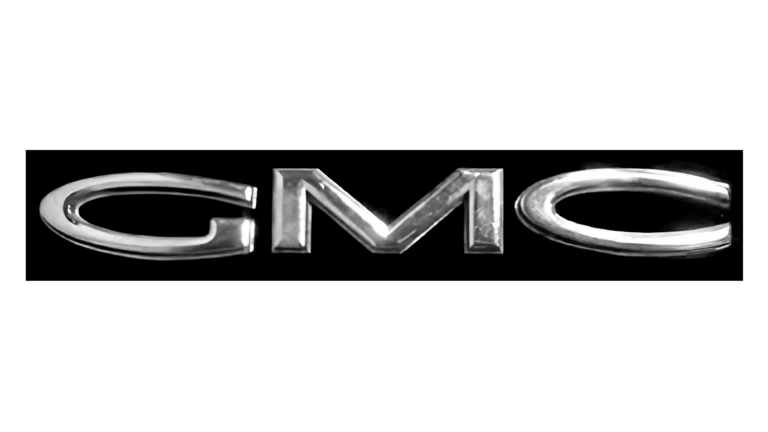
In the early 1960s, GMC embraced a more automotive-focused aesthetic. The logo evolved into a metallic, three-dimensional wordmark that mimicked chrome vehicle badges. The letters grew wider and flatter, with reflective highlights that emphasized precision and engineering. Often placed against black backgrounds, this version reinforced GMC’s association with heavy-duty vehicles and professional-grade manufacturing at a time when design and technology were becoming increasingly intertwined.
1975–1979: Framed Authority
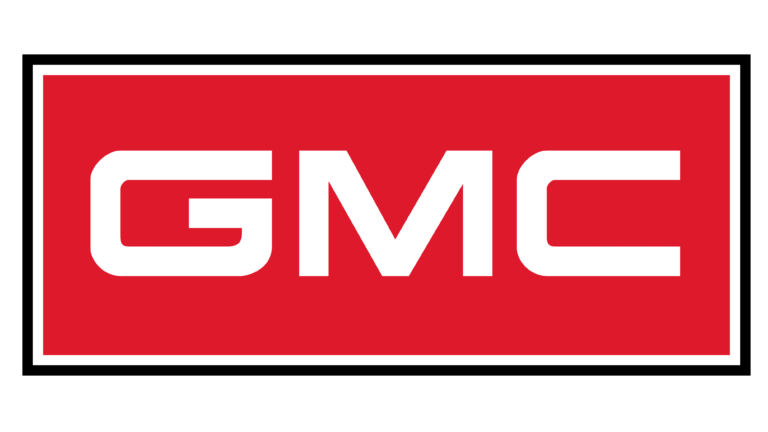
After a brief period of experimentation, GMC introduced a more structured logo in the mid-1970s. The red “GMC” lettering was placed inside a rectangular badge outlined in white and black. This version felt authoritative and controlled, mirroring the era’s corporate branding trends. The typography became more angular and geometric, laying the foundation for the letterforms that would define GMC’s logo heritage for decades.
1979–2014: The Iconic Red GMC Wordmark
In 1979, GMC removed the surrounding frame and allowed the wordmark to stand on its own. This marked one of the most important moments in GMC logo history. The letters became bold, red, and dimensional, featuring subtle gradients and metallic edges. This version of the logo became deeply ingrained in public consciousness, appearing consistently across trucks, SUVs, advertising, and dealerships. It communicated ruggedness, scale, and authority, reinforcing GMC’s positioning as a premium truck brand within the General Motors portfolio.
2014–Today: Refined Power and Precision
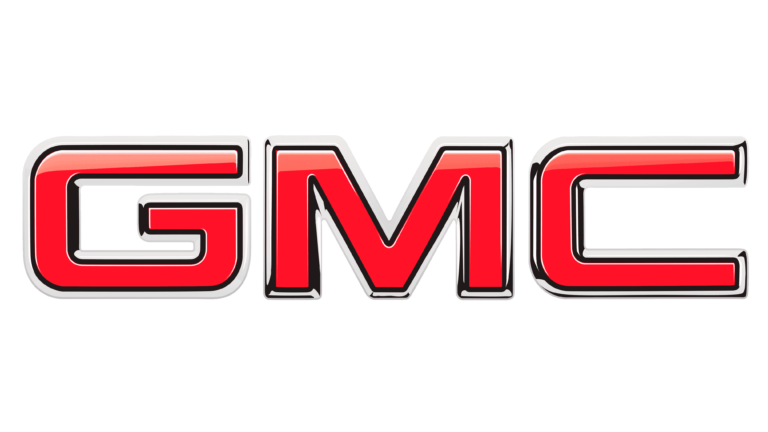
The most recent evolution of the GMC logo refined rather than reinvented the established identity. Introduced in 2014, the current logo retains the iconic red “GMC” wordmark but enhances contrast, depth, and clarity. The letters are broader, darker, and more sharply defined, with cleaner edges and a stronger three-dimensional effect. This modernized execution aligns with contemporary automotive design while preserving the unmistakable character built over more than a century.
From its early emblematic roots to its current bold wordmark, the GMC logo history is a study in consistency, restraint, and evolution. Each redesign has respected the brand’s core values, allowing the GMC symbol to remain timeless while adapting to changing eras in automotive design and branding.
The Meaning Behind the GMC Symbol
Unlike brands that rely on abstract icons or symbolic imagery, GMC has consistently placed its name at the center of its visual identity. This approach underscores confidence and clarity. The GMC logo does not attempt to tell a story through metaphor; instead, it asserts the brand itself as the symbol.
The wide, geometric letterforms suggest stability and structural integrity, qualities essential to trucks and utility vehicles. The use of red conveys power, determination, and industrial energy, while metallic finishes reinforce associations with machinery and automotive craftsmanship. Together, these elements create a logo that feels authoritative, dependable, and unmistakably American.
Typography and Color as Brand Anchors
Since the 1970s, GMC has relied on a custom geometric sans-serif typeface that emphasizes width, balance, and controlled angles. The softened corners prevent the logo from feeling overly aggressive, while still maintaining a strong mechanical character. This careful balance reflects GMC’s dual identity as both a work-focused and premium-oriented brand.
Color has played an equally important role in GMC’s logo heritage. Red has remained central for more than half a century, supported by black, white, and metallic gray accents. This palette reinforces visibility, strength, and automotive authenticity, while allowing the logo to adapt seamlessly across vehicles, advertising, and digital platforms.
GMC Logo Heritage in the Modern Automotive Landscape
Today, GMC operates in a highly competitive market where branding must communicate capability, innovation, and trust at a glance. The current logo succeeds by honoring its historical roots while embracing modern design standards. It reflects a brand that has evolved from early 20th-century truck manufacturing into a technologically advanced producer of premium utility vehicles.
The GMC logo history illustrates a rare consistency of purpose. While styles have changed and details have been refined, the core message has remained the same for over a century: GMC builds vehicles designed to perform, endure, and lead. In that sense, the logo is not just a visual mark, but a distilled expression of the brand’s heritage, meaning, and enduring symbol of professional-grade engineering.
FAQ GMC Logo
What does the GMC logo mean?
The GMC logo is built around the brand name itself, emphasizing clarity, strength, and authority. Its wide, geometric letters signal stability and durability, while the long-running red palette reinforces power, energy, and a “professional grade” identity tied to trucks and utility vehicles.
When was the GMC logo first introduced?
GMC began using early brand marks after it entered the General Motors family in 1911, when the truck business adopted “GMC” as a core identifier and started developing recognizable emblems tied to the truck division.
Why is the GMC logo red?
Red has been a defining GMC brand color since the mid-20th century because it stands out strongly on vehicles, signage, and advertising, while also communicating confidence, strength, and industrial intensity—qualities aligned with truck and heavy-duty engineering.
Has GMC always used the same logo?
No. GMC’s logo has evolved through multiple redesigns, shifting from early emblem-style marks to the bold “GMC” wordmark that became dominant in the late 20th century. Modern updates typically refine proportions, outlines, and dimensional effects rather than changing the core idea.
What font is used in the GMC logo?
GMC uses a custom geometric sans-serif style rather than a standard off-the-shelf font. The letterforms are intentionally wide and engineered, with squared structure and controlled curves to feel mechanical and automotive.
What is the difference between the GMC logo and the GM logo?
GMC is a vehicle brand under General Motors, while “GM” is the corporate parent brand. GMC uses the bold “GMC” wordmark, whereas GM is typically represented by the “GM” initials in a separate corporate mark.