Oreo Logo History: Meaning, Symbolism & Brand Heritage
Few consumer brands hold the emotional power and global familiarity of Oreo. Introduced in 1912 and now sold in more than a hundred countries, Oreo has become far more than a cookie—it is a cultural icon, a symbol of childhood joy, and one of the most recognizable products in modern food history. Manufactured by Nabisco and now part of Mondelēz International, Oreo’s identity blends nostalgia with energy, trust with playfulness, and tradition with innovation.
The Oreo logo reflects this unique heritage. Over more than a century, the brand has undergone one of the most extensive visual evolutions in packaged goods, experimenting with color, lettering, symbolism, and style. Despite the numerous redesigns, each version reveals something about the era in which it was created and the brand’s commitment to freshness and delight. Understanding the meaning and history behind the Oreo logo gives us a deeper look into how an American cookie became a worldwide phenomenon.
Oreo Meaning and Symbolism
The Oreo logo has always balanced boldness with charm. Whether rendered in ornate serif letters or modern sans-serif forms, the wordmark communicates joy, reliability, and delicious indulgence. The choice of blue and white in modern versions symbolizes purity, trust, and nostalgia, while the stylized volume and shadows evoke the cookie’s iconic layered structure.
The roundness of the letters mirrors the circular shape of the product itself, reinforcing visual consistency between the logo and the cookie. As the brand matured, the logo’s meaning expanded to represent not only a treat but an emotional experience—one shared between families, friends, and generations around the world.
Brand Heritage
Oreo’s heritage is rooted in early twentieth-century American baking traditions. Launched in 1912 as part of the National Biscuit Company (Nabisco), Oreo rose quickly in popularity, benefiting from the industrial boom and the growing availability of packaged goods. Its distinctive flavor, combined with clever marketing and continuous visual experimentation, helped it stand out among competitors.
Throughout the decades, Oreo has adapted to cultural shifts and global tastes while preserving its unmistakable identity. The brand’s visual evolution reflects that journey—each redesign capturing a moment in history while reinforcing the timeless appeal of the world’s best-selling cookie.
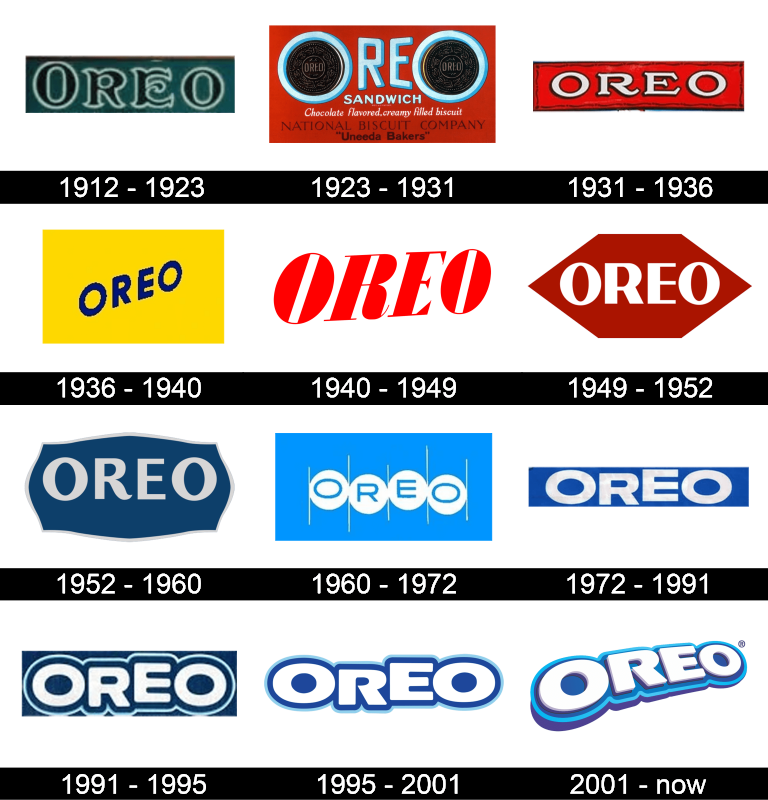
Oreo Logo History & Evolution Timeline
1912 – 1923: The Elegant Origins
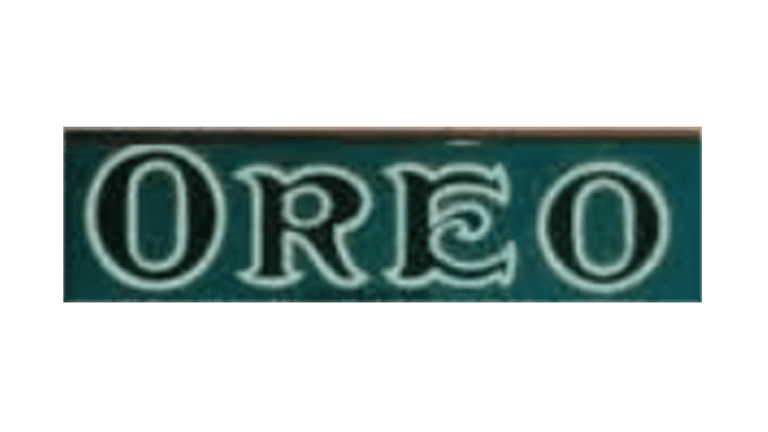
The first Oreo logo introduced in 1912 was ornate, refined, and unmistakably early-twentieth-century in style. The wordmark was set in uppercase serif lettering, with the initial “O” enlarged to anchor the design. The white-outlined black letters were placed on a deep sea-blue background, giving the logo a luxurious and premium aura. This early design reflected Oreo’s position as a high-quality biscuit at a time when packaged cookies were still relatively new.
1923 – 1931: A Bold Advertising Era
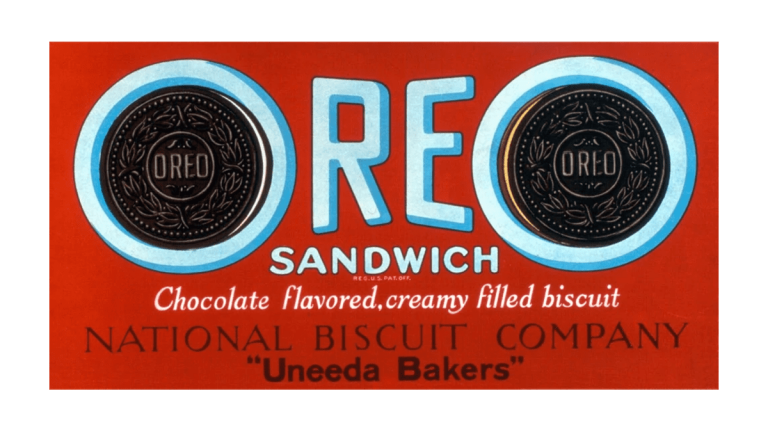
The redesign of 1923 marked a shift toward more complex, advertisement-style branding. The background turned vivid red, and the wordmark took on a lively and playful composition in which the first and last letters became stylized cookie illustrations. Multiple lines of supporting text surrounded the main name, rendered in various colors and type styles. This busy, energetic design echoed the exuberant advertising trends of the 1920s.
1931 – 1936: A More Structured, Framed Identity
The 1931 logo returned to the elegance of the original but introduced a new palette of white lettering with a black outline, placed within a red rectangular panel bordered by ornate black vignettes. This framed presentation conveyed a sense of craftsmanship and reliability during an era when branding became more standardized.
1936 – 1940: The Bright and Energetic Approach
Oreo adopted a brighter, more cheerful identity in 1936. The wordmark appeared in a soft blue blur placed diagonally across a vivid yellow background. This combination created instant shelf appeal and reflected the increased competition in packaged snacks during the 1930s and 1940s.
1940 – 1949: Bold Type and Strong Color
The blurred ornamental contours remained in the 1940 redesign, but the color palette shifted to a bright red wordmark set against white. The typeface was extremely bold, featuring elongated serifs that evoked strength and confidence. This update aligned with the visual design trends of the wartime decade.
1949 – 1952: A Sophisticated Geometric Rhombus
In 1949, Oreo introduced a refined geometric emblem: a burgundy rhombus on a light blue background with a crisp white wordmark in a modern sans-serif font. This design signaled elegance and modernity, foreshadowing post-war optimism and the rise of sleek mid-century branding.
1952 – 1960: Retro Framing and Delicate Typography
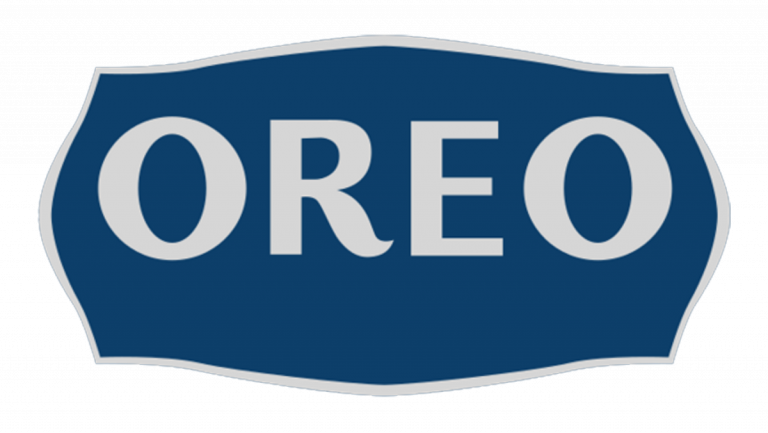
The 1952 redesign embraced softer pastel tones and a decorative frame enclosing a light gray wordmark. The elongated curve of the “R” added a distinctive personality to the inscription. This retro aesthetic represented a period of design that favored ornamentation blended with mid-century modern influences.
1960 – 1972: Circles and Modern Minimalism
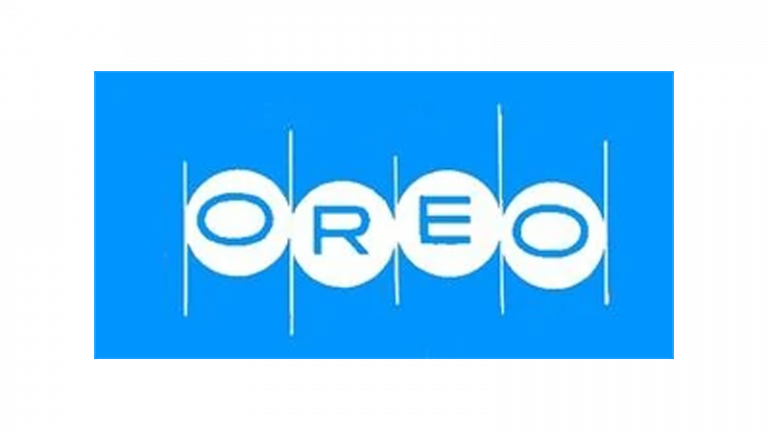
In 1960, Oreo made one of its most memorable stylistic leaps by adopting a bold blue background with four white circles, each containing a letter of the word “OREO.” The result was modern, clean, and visually impactful, echoing contemporary graphic design trends and giving the brand a youthful and fresh identity.
1972 – 1991: The Birth of the Modern Oreo Wordmark
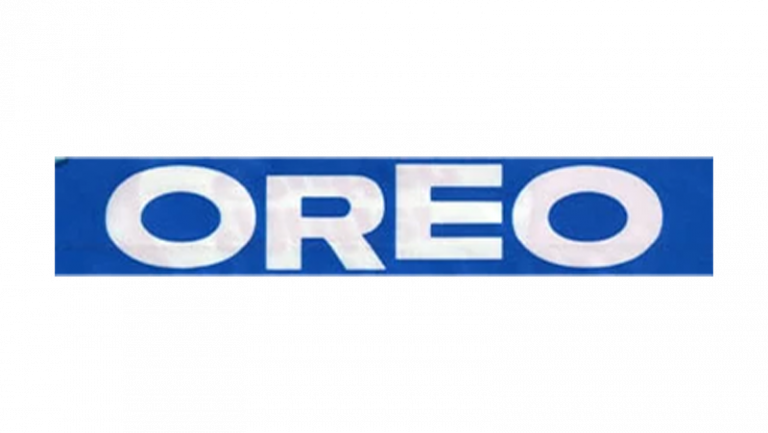
The 1972 redesign introduced the foundation of the Oreo logo we know today. The bold white letters sat on a blue background, arranged with a playful bounce that added charm and friendliness. This became the iconic visual system that millions grew up with.
1991 – 1995: Stronger Outlines and Depth
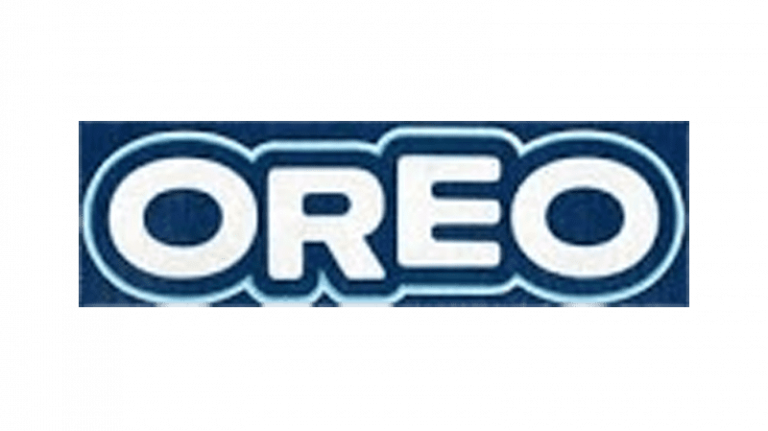
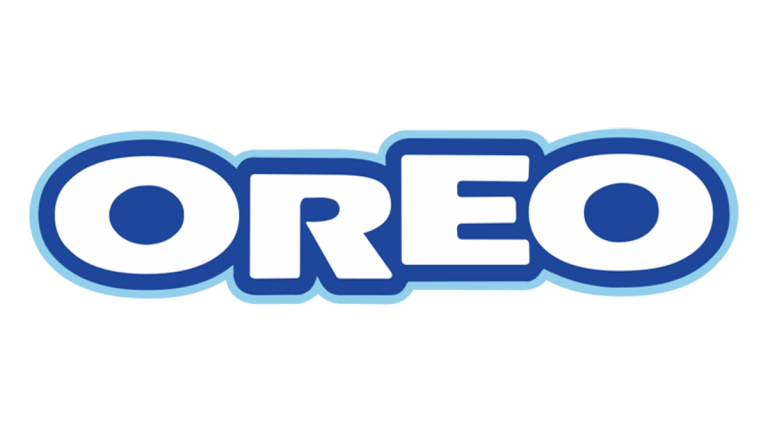
The jumping letters received a double outline in 1991: a thick dark blue band and a thinner light blue border. This gave the logo more dimension, making it pop on packaging and television advertisements alike.
1995 – 2001: Clean Refinement for a New Era
In 1995, the outlines were refined and the letters sharpened, enhancing visibility and legibility. The logo became more balanced and contemporary, preparing the brand for the digital age.
2001 – Today: The Three-Dimensional Icon
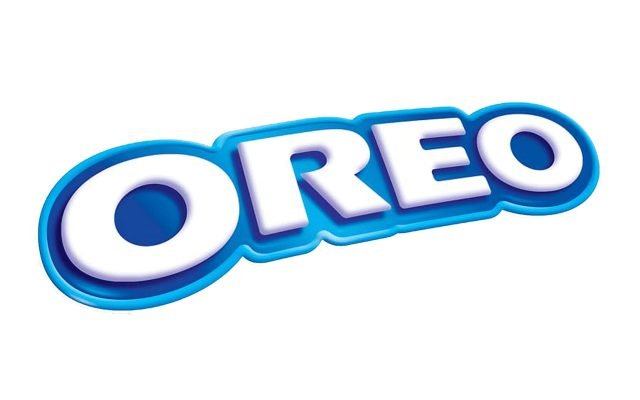
The 2001 redesign ushered in a layered, three-dimensional look. Shadows, highlights, and gradient contours gave the logo depth and energy, symbolizing the fun and flavor associated with Oreo. This evolution occurred during the Kraft Foods acquisition and has since become the globally recognized Oreo emblem.
Typography and Color
The modern Oreo logo uses an extra-bold, uppercase sans-serif typeface with thick, stable strokes and softened contours. The closest resemblance is a custom form similar to heavy geometric sans-serifs, modified to create rounded, friendly shapes.
The signature color palette—bright whites, deep blues, and layered blue gradients—evokes freshness, trust, and appetite appeal. These shades also allow the logo to stand out vividly against the dark chocolate tones of the cookie itself.
The Enduring Symbolism of the Oreo Logo
Through more than a century of redesigns, the Oreo logo has evolved alongside cultural trends while preserving its essential charm. Each iteration reflects a moment in branding history, from ornate early lettering to playful mid-century motifs and bold modern wordmarks.
The logo’s lasting success lies in its ability to communicate joy, familiarity, and indulgence with remarkable consistency. Oreo’s visual identity has become as iconic as the cookie itself—a symbol of shared moments, simple pleasures, and global heritage that transcends generations.
Oreo Logo FAQ
What does the Oreo logo symbolize?
It symbolizes joy, nostalgia, and the cookie’s playful personality through bold lettering and vibrant blue-and-white colors.
Why does the Oreo logo use blue and white?
These colors evoke trust, freshness, and approachability while enhancing visibility against the dark cookie imagery.
How many Oreo logos have there been?
More than ten distinct designs have appeared since 1912, making Oreo one of the most frequently redesigned major food brands.
What font does the Oreo logo use?
A customized extra-bold geometric sans-serif font with softened edges, designed specifically for the brand.
Why did Oreo move to a 3D logo in 2001?
To modernize the brand during the digital era and create a dynamic, energetic identity aligned with contemporary packaging trends.