Johnnie Walker Logo History: Meaning, Symbolism & Brand Heritage

Few brand symbols in the world of spirits possess the cultural weight, longevity, and instantly recognizable charm of the Johnnie Walker Striding Man. Born from the entrepreneurial spirit of John Walker, who began blending whisky in the 1820s in Kilmarnock, Scotland, the brand grew into a global powerhouse over the course of two centuries. Today, Johnnie Walker is not only the world’s most widely distributed Scotch whisky; it is a visual and cultural icon. Its label, its posture, its stride — all have become synonymous with progress, sophistication, and the refined pleasures of life.
The brand journey mirrors the evolution of modern branding itself. What began as a detailed Victorian-inspired label slowly transitioned into one of the world’s most artful examples of visual storytelling. Through each redesign, Johnnie Walker preserved its core ethos while adapting to changing aesthetics and consumer expectations. The Striding Man became more confident, more modern, more symbolic — and today stands as a testament to how a brand can cultivate deep heritage while remaining contemporary.
Johnnie Walker Meaning and Symbolism
From its earliest years, the Johnnie Walker brand embraced an identity tied to refinement, craftsmanship, and upward mobility. The figure of the walker — confident, stylish, and always in motion — encapsulates the brand’s motto: Keep Walking. This phrase, even before it was formalized as a slogan, was visually embedded into the identity from 1908 onward.
The Striding Man symbolizes progress, resilience, ambition, and perpetual forward movement. His elegant attire reflects the original target audience of distinguished Scottish gentlemen and upper-class patrons. Over time, however, the meaning expanded. Today, the figure represents not only luxury, but also personal growth, optimism, and the pursuit of excellence.
While many spirits brands rely heavily on crests or heraldic imagery, Johnnie Walker chose a character — a persona that could evolve, adapt, and embody changing cultural attitudes. The Striding Man became an ambassador for the brand, both timeless and refreshingly modern.
Johnnie Walker Brand Heritage
Johnnie Walker’s heritage is inseparable from Scottish whisky tradition. John Walker began experimenting with whisky blending instead of distilling — a radical choice that allowed him to craft balanced, consistent flavors. His son Alexander expanded the brand, introduced the slanted label, and built the commercial foundation that carried the company into global markets.
Throughout the twentieth century, Johnnie Walker became emblematic of quality and prestige. Its characteristic square bottle minimized breakage during transport, while its angled label maximized visibility on shelves. These details fused with the evolution of the Striding Man to create one of the most cohesive identities in the beverage world.
After joining Distillers Company in 1925 and later becoming part of Diageo in 1997, Johnnie Walker strengthened its worldwide distribution. Despite corporate transitions, the brand never abandoned its roots. Its heritage continues to shape the narrative of refinement and forward momentum expressed in every version of its logo.
Johnnie Walker Logo History & Evolution Timeline

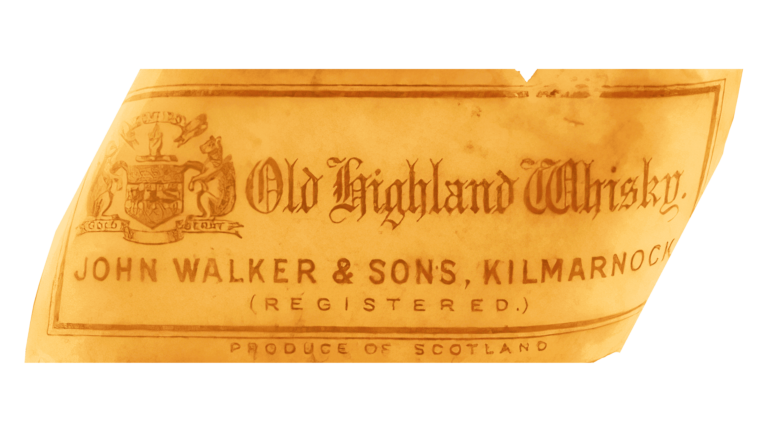
1865–1909: Heraldic Prestige and Victorian Detailing
The earliest Johnnie Walker labels were ornate, featuring heraldic shields, mythological creatures, banners, and detailed inscriptions in rich burgundy and gold. The typography employed Gothic and old-English styles, signifying craftsmanship and aristocratic appeal. These labels spoke to nineteenth-century aesthetics: opulent, symbolic, and unmistakably traditional. Long before the Striding Man existed, this early design established Johnnie Walker as a whisky of seriousness, heritage, and high quality.
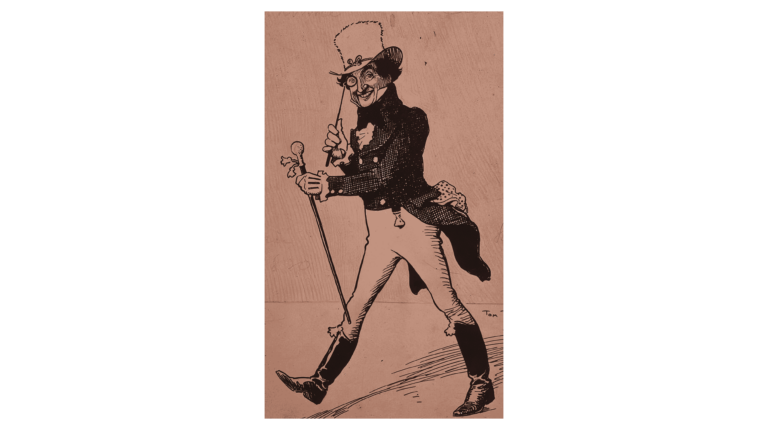
1908–1929: The Birth of the Striding Man
In 1908, the illustrator Tom Browne created a sketch that would redefine the brand forever. This playful caricature of a spirited gentleman — cane in hand, wearing boots, pince-nez, and top hat — appeared first in black-and-white. Though whimsical and humorous, the sketch captured a sense of movement and character that stood out dramatically from established whisky labels of the period. This marked the official birth of the Striding Man.
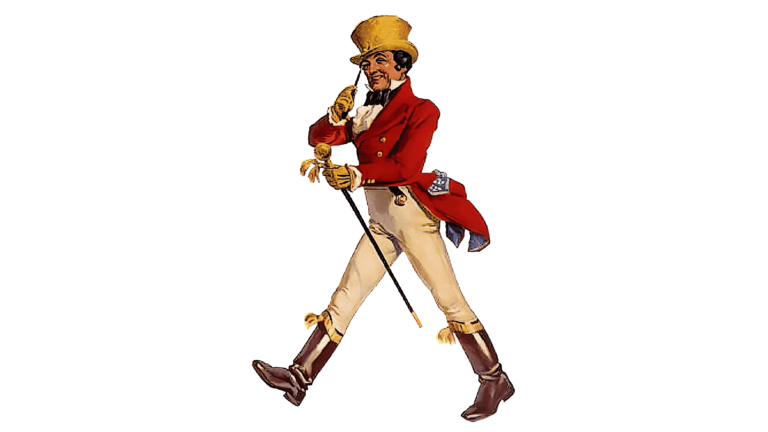
1929–1996: Color, Refinement, and Global Recognition
By 1929, the Striding Man grew more elegant and fully realized. He now wore a red tailcoat with gold detailing, white trousers, and polished brown boots. His silhouette communicated confidence and charm, while the refined brushwork imbued him with aristocratic poise. A banner carrying the phrase Born 1820 — Still Going Strong reinforced the brand’s claim to longevity and perpetual relevance. This period firmly embedded the Striding Man into global advertising culture.
1996–2015: The Minimalist Silhouette
The late twentieth century introduced a more contemporary sensibility. The Striding Man evolved into a stripped-down black-and-white silhouette. He faced a new direction, and the illustration relied on bold shapes rather than detailed strokes. The use of negative space modernized the logo dramatically, pairing the figure with a refined serif logotype. This marked Johnnie Walker’s transition into the modern luxury market, balancing heritage with minimalist aesthetics.

2015–Today: A Lively, Modern Gentleman
The most recent redesign brought humanity back to the figure. The Striding Man now features facial details, expressive posture, and greater dimension. He tips his hat with a gesture that evokes charm, confidence, and hospitality. This rendition strikes a balance between classic elegance and contemporary illustration, elevating the figure above the logotype to reclaim his iconic status. His stride remains purposeful, embodying the brand’s philosophy of continual progress.
Design Analysis, Font & Color
The Johnnie Walker logotype complements the Striding Man with graceful serif lettering, characterized by contrasting stroke weights and refined serifs. The distinctive flourish of the “J” adds character, while the elongated capitals anchor the name with authority. Fonts resembling Arlt Blanca Versalita or Hess Old Style share characteristics, but the Johnnie Walker wordmark possesses unique adjustments tailored to the brand’s persona.
Color plays an equally important role. Black and white dominate the identity due to their timeless sophistication and compatibility across packaging variations. However, Johnnie Walker frequently incorporates gold, red, and emerald hues depending on the whisky variant — from Black Label to Red Label to Green Label — making the brand adaptable while maintaining strong recognition.
Gold represents quality and tradition; red communicates warmth and boldness; green evokes rarity and craftsmanship. Across all variants, the Striding Man often appears in white, black, or gold, maintaining continuity even as colors shift.
The Legacy of the Striding Man
The evolution of the Johnnie Walker logo is a masterclass in brand storytelling. Over more than a century, the Striding Man has traveled from caricature to icon, reflecting changing artistic trends while preserving the core message of resilience and progress. His confident walk captures the essence of the brand’s motto — an invitation to move forward, to adapt, to aspire.
Few logos in the world carry such emotional resonance or historical continuity. Johnnie Walker’s identity is not just a mark on a bottle; it is a symbol of heritage, ambition, and the enduring spirit of whisky craftsmanship. The Striding Man remains one of the most recognizable figures in global branding — a timeless companion, still walking strong.
FAQ — Johnnie Walker Logo & Brand Identity
Why is the Johnnie Walker logo a walking man?
The Striding Man symbolizes progress, optimism, and ambition — values that align with the brand’s ethos and later inspired the slogan Keep Walking.
Who created the original Striding Man?
The first version was drawn in 1908 by British illustrator Tom Browne, who captured the brand’s spirit through a lively caricature.
Why did Johnnie Walker change its logo over time?
Each redesign reflected contemporary artistic trends while preserving the core personality of the Striding Man, ensuring the brand remained relevant across generations.
What font does the Johnnie Walker logo use?
The wordmark employs a refined serif typeface reminiscent of Arlt Blanca Versalita or Hess Old Style, modified uniquely for the brand.
Does the color of the logo change with whisky varieties?
Yes. The logo adapts to the color schemes of each label variant, using gold, red, green, or black while maintaining consistent form and identity.