
Target Logo History: Meaning, Symbolism & Brand Heritage

Few American retailers have achieved the level of visual recognition that Target commands. The brand’s unmistakable bullseye has become a symbol woven into the cultural fabric of the United States—an emblem that represents style, affordability, and a uniquely joyful shopping experience. While the Target logo may seem simple, its evolution reflects more than six decades of strategic branding, design refinement, and a clear understanding of what captivates consumers.
The modern Target identity feels intuitive today, but the path to this iconic red circle was shaped by the retailer’s growth, its shifting audience, and the remarkable legacy of George Draper Dayton. Behind the elegance of the bullseye lies a history rich in design experimentation, retail innovation, and the shaping of an American mass-market giant.
Logo History and Evolution Timeline
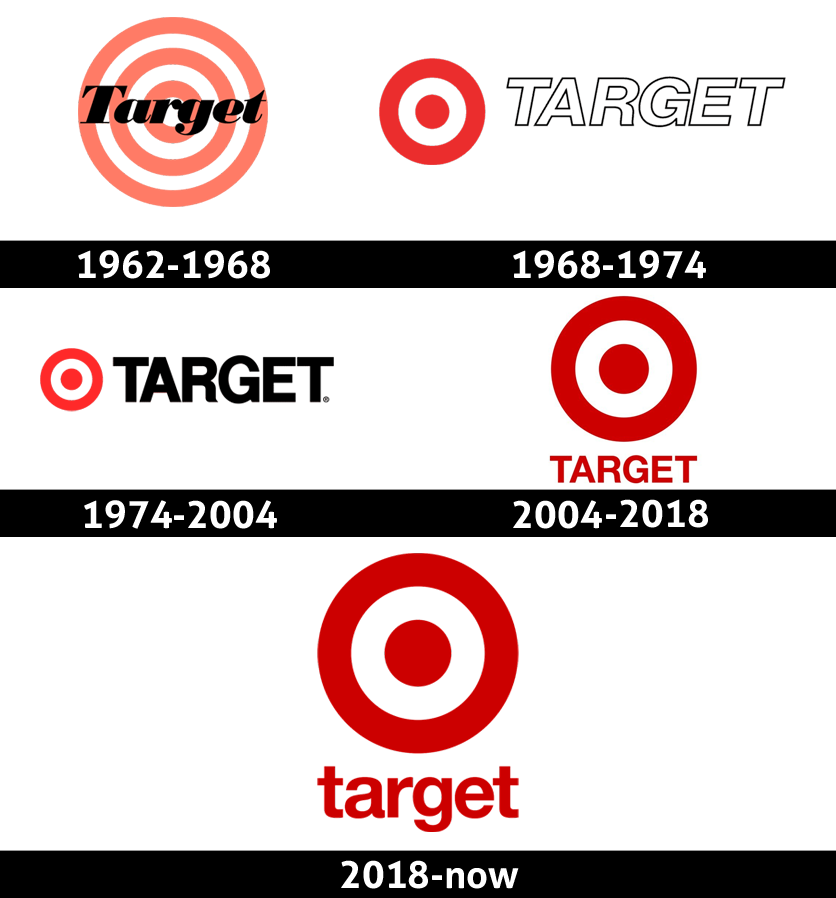
1962–1968: The First Concept
The story of the Target logo began with the debut of the company’s first discount store in 1962. The inaugural emblem featured three concentric rings with “Target” written prominently across the center in italic black lettering. The palette was restrained—white and a muted red—leaning heavily on the literal representation of a bullseye. Strong in concept yet modest in execution, this logo laid the foundation for the visual language that would soon define the brand.

1968–1974: The Bullseye Takes Shape
By 1968, Target introduced the emblem that would become one of the most recognizable retail icons in the world. The bullseye was simplified and strengthened, with bolder red rings and a clearer circular geometry. The company name appeared to the right in a clean black typeface. The new mark immediately distinguished Target from competing retailers. It signaled modernity and clarity—qualities the brand wanted customers to associate with its stores.

1974–2004: Refining the Wordmark
The next era saw refinement rather than reinvention. The bullseye remained the hero, but the wordmark adopted a thicker, more grounded sans-serif typeface. The typography grew bolder, wider, and more confident, matching the brand’s growing national presence. During these decades, the bullseye and wordmark were often separated and used independently, reflecting the emblem’s increasing strength.

2004–2018: A Unified Red Identity
Target’s 2004 redesign made one significant shift: unity. The bullseye and wordmark were now both rendered in the same vivid red, creating a cohesive visual signature. The bullseye was placed above the name, which appeared smaller and understated, signaling the company’s confidence that the icon alone could carry the brand.
2018–Today: The Modern Bullseye
The current Target logo, introduced in 2018, embraces minimalism and brand maturity. The lowercase wordmark feels warmer and more contemporary, but in many applications, Target relies on the bullseye alone. When an emblem becomes so universally recognized that text becomes optional, it indicates a rare level of branding mastery.
Meaning & Symbolism
The Target logo succeeds not because it is complex, but because it captures the brand’s essence with remarkable clarity. The bullseye is a universal symbol of precision, focus, and hitting the mark—an apt metaphor for a retailer built on offering the right products at the right prices. The circular form also communicates unity, movement, and inclusivity, reinforcing Target’s personality as a brand that welcomes everyone.
Red intensifies this message. It is energetic, confident, and impossible to ignore. For a retailer that prides itself on boldness, optimism, and vibrancy, this palette communicates emotion before a single word is spoken. Over the years, the emblem’s simplicity has allowed it to remain timeless, while its symbolism has become deeply rooted in American popular culture.
Font & Typography
Throughout its history, Target has leaned toward clean, geometric sans-serif typefaces. From the bold uppercase letters of the 1970s to the more approachable lowercase forms of today, the typography reflects the brand’s evolution from traditional retailer to lifestyle-driven, design-forward marketplace.
The current wordmark’s smooth geometry and balanced proportions offer clarity and friendliness—qualities essential for a brand that positions itself as both stylish and accessible. While the bullseye often stands alone, the typography remains a quiet but important part of the brand story.
Color Palette
Target’s signature red has stayed consistent throughout its evolution, though its exact tone has become brighter and more modern in recent decades. Paired with white, the contrast is crisp, immediate, and highly visible. The palette embodies confidence, passion, and energy—values aligned with Target’s upbeat personality and retail philosophy.
Red is also a differentiator. In a category filled with blues, greens, and neutrals, Target’s embrace of vivid scarlet has allowed it to stand out in virtually any environment—storefronts, packaging, advertisements, and digital platforms.
Why the Target Logo Endures
The Target bullseye is more than a logo—it’s a cultural landmark. Its power lies in the balance between timeless geometry and emotional storytelling. Over six decades, the emblem has adapted just enough to stay current while remaining unmistakably true to its roots. The brand’s success is a case study in how clarity, consistency, and symbolic resonance can elevate a simple mark into a global icon.
For designers, Target’s identity proves that great logos are not born from complexity but from understanding the soul of a brand and expressing it with precision. For customers, the bullseye represents reliability, joy, and a shopping experience that continues to “hit the mark,” generation after generation.
Target Logo FAQ
What does the Target logo represent?
The bullseye symbolizes precision, focus, and delivering exactly what customers want—qualities central to the brand’s retail philosophy.
Why does Target use red?
Red evokes energy, passion, and visibility. It ensures the logo stands out in physical and digital environments while conveying the brand’s bold personality.
When was the bullseye first introduced?
The modern bullseye debuted in 1968, replacing the earlier, more ornamental design. It has remained Target’s core symbol ever since.
Why did Target switch to lowercase letters in 2018?
The lowercase wordmark reflects a friendlier, more contemporary tone while allowing the bullseye to take center stage.
Is the logo ever used without text?
Yes. Target frequently uses the bullseye alone—one of the rare marks globally recognizable without a wordmark.